
Reviewed · BUDAPEST FOOD TOURS
Chimney Cake Workshop Budapest Downtown – Kürtőskalács Class
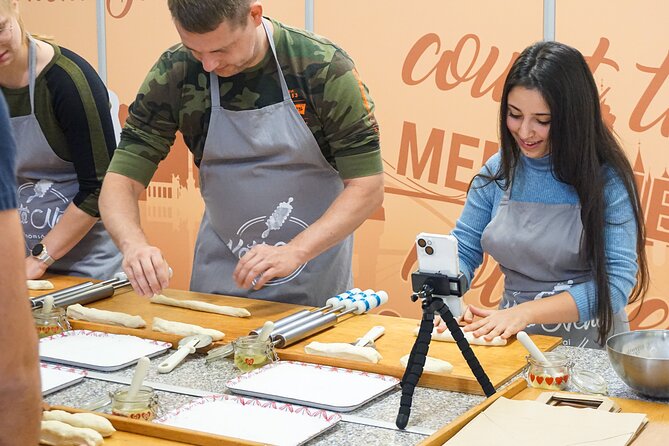
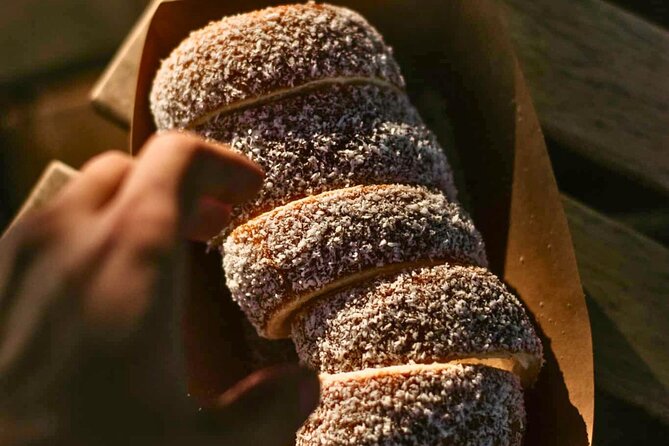
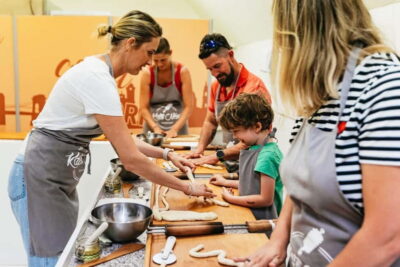
Kürtőskalács is best understood warm and hands-on: in this Budapest workshop, you shape and bake three chimney cakes, then roll them in cinnamon, coconut, or sugar. I like that you leave with both the cakes and a printed recipe, and that a small group of no more than 12 makes it easier to follow the instructor’s steps.
I also like the central location near St. Stephen’s Basilica, which fits neatly into a day of sightseeing. One caution: the class is downstairs, and some sessions can feel rushed or run shorter than the advertised 75 minutes, especially if the schedule slips.
- Make three cakes: You get several chances to practice, and can take the finished treats away in paper bags.
- Choose a classic coating: Cinnamon, coconut, and sugar are usually available.
- Learn in a small group: The workshop is capped at 12 people and runs in English.
- Find it in a downtown bakery: The meeting point is Kató Néni Finomságai, a short walk from St. Stephen’s Basilica.
- Take home more than dessert: The host provides a printed recipe and a certificate.
- Check the practical fit: The workshop is downstairs, and the class is not recommended for children under 7 or families with babies.
A Budapest sweet made by hand
Chimney cake, or kürtőskalács, is a familiar Hungarian street sweet: a rolled pastry baked until it is golden, then coated with a simple topping. This class turns a snack you might otherwise buy on the street into a short, practical lesson. Instead of watching a baker work, you follow the process yourself and come away with three cakes.
The workshop focuses on the traditional version, without extra fillings or elaborate add-ons. That simplicity is part of the appeal. You learn how the dough is made and handled, shape your cakes with the instructor’s guidance, and watch them bake before choosing a coating.
Expect a friendly cooking class rather than a long culinary seminar. The emphasis is on learning by doing: clear instructions, a few useful tips for making the cakes again at home, and enough time to see how your technique improves from one cake to the next.
From bakery counter to basement workshop

The meeting point is Kató Néni Finomságai Downtown, at Október 6. u. 6, in central Budapest. The workshop area sits below the chimney cake shop, so you arrive at a working bakery rather than a separate cooking school. That setting makes the activity feel connected to the everyday life of the dessert, though the entrance may not be what you expect if you picture a classroom at street level.
Tell the staff you are there for the workshop. The class is not open to people who have not booked, so do not expect friends or family to wait in the workshop area. The group is limited to 12, a useful size for a hands-on activity where everyone needs room and attention.
The location is practical if you are already exploring the city center. St. Stephen’s Basilica is nearby, so you can pair the class with a visit to the church or a walk through the surrounding streets. Public transportation is also nearby, though the precise route will depend on where you are staying.
More food tours in Budapest:
- Budapest: Hungarian Chimney Cake Workshop in the City Center
★ 4.8 · 885 reviews - Budapest: Guided Foodie Walking Tour with Food and Drinks
★ 4.9 · 453 reviews - Budapest Food Tour: Market to Tavern with 14+ Tasters & Wines
★ 5.0 · 434 reviews
Three cakes, one useful learning curve
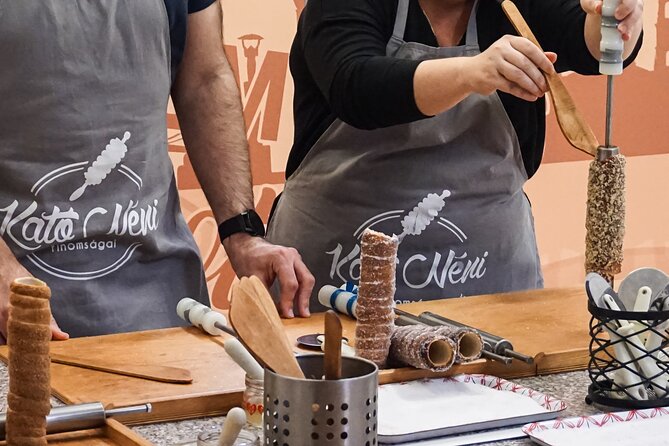
The session begins with an explanation of the dough and how to work it. You then follow the instructor step by step to shape your cakes and prepare them for baking. Some accounts of the class describe beginning with prepared dough, so think of this as a lesson in handling and forming the pastry, not necessarily a full demonstration from flour and other raw ingredients onward.
Making three cakes is a smart format. Your first may feel like a practice round; by the third, you have had time to adjust and see what works. One cake can also be your photo-ready version, while the others can be coated in different flavors. The process is simple enough for a beginner, but the repetition gives the class more substance than a quick demonstration.
Your instructor explains the key techniques and shares tips intended to help you repeat the recipe at home. Instructors named in past sessions include Mira, Tabitha, and Virag, with other classes led by teachers whose names have been remembered as Kate or Katy. The specific instructor can vary, but the most useful qualities to look for are patience and clear directions. Those matter more here than a long lecture.
Some sessions also include background on the cake’s history and how versions differ between countries. That can add welcome context, but it should not be the only reason you book. The core promise is a practical lesson in making and baking the cakes, and the amount of historical explanation may vary with the instructor and the pace of the class.
Baking, toppings, and the take-home reward
Once the cakes are ready, you choose how to coat them. The usual options are sugar, coconut, and cinnamon. These are classic, uncomplicated flavors, not a long menu of fillings and toppings. If you like your food straightforward, that is a plus; if you are hoping to customize a dessert with many extras, this is not that sort of workshop.
You receive paper bags for taking your cakes away. Three chimney cakes make a generous edible souvenir, so plan your appetite accordingly. The cakes are the main payoff, but you also leave with a printed recipe and a certificate, small keepsakes that help the class feel complete and give you something practical to use later.
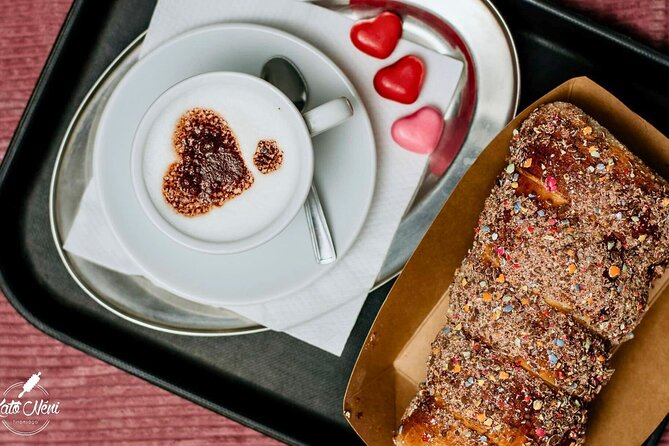
After the workshop, you can order coffee or tea and sit at the shop’s tables with some of your cake. This is a nice option if you want to pause before heading back out, though the bakery is small and the class does not guarantee a long sit-down meal together. If lingering over coffee is important to you, leave room in your schedule rather than assuming the workshop includes an extended café stop.
What 75 minutes really means
The listed duration is about 1 hour and 15 minutes, which is a manageable break in a sightseeing day. Many people find an hour or so just right: long enough to make several cakes, short enough not to consume half a day. The actual pace can vary, however. Some sessions have felt shorter than an hour, and at least one person found a class very rushed and over in about 25 minutes.
There are practical reasons for that variation. A late start can affect the schedule, and the shop may have another class coming up. If the group arrives on time and the instructor has room to explain each stage, you are more likely to get the full, unhurried lesson. Arrive promptly and be ready to begin rather than treating the start time as a flexible suggestion.
The workshop is offered in English, and the small group helps keep the instructions manageable. Still, this is a compact class with a clear task list, not a slow-paced afternoon in a large teaching kitchen. If you want a relaxed meal, extensive history, or lots of time to chat after baking, you may find the format brisk.
More hands-on workshops in Budapest:
- Budapest Cooking Class & Market Tour with Local Guide & Wines
★ 5.0 · 553 reviews - Budapest: Essentials of Hungarian Wine Tasting Class
★ 4.9 · 174 reviews - Budapest: Hungarian Cooking Class and Market Walk
★ 5.0 · 91 reviews - Hungarian Strudel Making Class: Stretch & Fill Two Ways
★ 5.0 · 76 reviews
Is $38.71 a fair price?
At $38.71 per person, this costs more than simply buying a chimney cake from a street stall. You are paying for instruction, the chance to make three cakes, the small-group setting, a printed recipe, and the take-home results. If you value learning a local food skill and want an activity that gives you something to do as well as something to eat, the price is easier to justify.
The value depends on your expectations. For a short, friendly class with hands-on practice and a tasty result, it is reasonable. If you measure the price only by the amount of pastry you take away, it will seem high. And if your session is rushed or ends much earlier than expected, the value drops sharply. The class works best when you see the cakes as part of the lesson, not the whole purchase.
The activity is booked on average about 31 days ahead, so it is worth planning early if this is a priority. That is not a rule that you must book a month in advance, but it is a helpful signal not to leave it until the last moment during a busy visit.
A few practical points before you book
The workshop takes place down a staircase behind the bakery counter. The stairs are described as steep, and there may be no seats during the class. If standing for about an hour is difficult, or stairs are a concern, contact the provider before booking and ask what assistance is possible. Help has been offered in some cases, but seating is not guaranteed.
This is not a good fit for families with babies because there is no secure place to leave a baby during the workshop. Children under 7 are also not recommended. Older children who enjoy hands-on food activities may find the format appealing, but keep the class’s standing time and staircase in mind.
Take food allergies seriously. One attendee who asked about a nut allergy before arriving was told by the instructor that it was not safe to eat the food if the allergen was present, though making the cakes without eating them was possible in that particular situation. The people answering advance questions may not know every detail of the bakery’s food handling. If you have an allergy, ask the instructor directly before participating, and do not assume that a prior email guarantees the food is safe for you.
The booking includes a mobile ticket and confirmation at the time of booking. You can cancel for a full refund up to 24 hours before the start time; cancellations or changes inside that window are not accepted. If the minimum number of participants is not met and the activity is canceled, you are offered another date or experience, or a full refund.
Who will enjoy this class most?
I would choose this workshop if you like learning by doing, want a distinctly local food activity, or have already sampled chimney cake and are curious about how it is made. It also suits a couple of friends or a parent with an older child who can stand through the session and follow instructions. The best part is the combination of practical skill and edible reward: you do not just watch someone bake, and you do not leave empty-handed.
It is less suited to anyone who wants a deep food-history talk, a long, leisurely class, or a fully accessible room with seats. The amount of background and the pace can depend on the instructor and the day. If your priority is simply tasting the dessert, buy one at the bakery instead and save the workshop fee for another activity.
Should you book the chimney cake workshop?
Book it if making three traditional cakes sounds more appealing than spending an hour only sightseeing, and if you are comfortable with a downstairs workshop and a standing class. The printed recipe and small group make it a useful souvenir activity, while the central location keeps the logistics simple.
Skip it if you need a guaranteed slow pace, have an unresolved food allergy, or are booking for a child under 7 or a baby. For everyone else, it is a cheerful, hands-on way to spend a short stretch in central Budapest, with a fresh batch of chimney cakes as the reward.
FAQ
How long does the chimney cake workshop last?
The class is listed at approximately 1 hour and 15 minutes. The actual session can be shorter, and some have felt rushed, so allow about 75 minutes without assuming every class will use the full time.
Where does the workshop meet?
Meet at Kató Néni Finomságai Downtown, Október 6. u. 6, 1051 Budapest. The workshop takes place downstairs beneath the chimney cake shop.
What language is the class offered in?
The workshop is offered in English.
How many chimney cakes do I make?
You make three kürtőskalács and take them away in paper bags.
Which coatings can I choose?
The usual options are sugar, coconut, and cinnamon.
Do I get anything besides the cakes?
Yes. The host provides a printed recipe and a certificate. You can also order coffee or tea after the class and enjoy some cake at the shop’s tables.
Is the workshop suitable for young children or babies?
It is not recommended for children under 7, and it is not recommended for families with babies because there is no secure place to leave a baby.
Is the workshop accessible if I have trouble with stairs or standing?
The class is downstairs, with a staircase described as steep. There may be no seats during the hour, so contact the provider before booking if stairs or standing are a concern.
What should I do if I have a food allergy?
Ask the instructor directly before participating. Advance answers may not cover the bakery’s food-handling details, and the activity may not be safe to eat if an allergen is present.
What is the cancellation policy?
You can cancel up to 24 hours before the start time for a full refund. Changes or cancellations made less than 24 hours before the start time are not accepted.
Fresh additions in Budapest
- Best of Budapest Tour★ 5.0 · 7 reviews
- Be a movie star! Film Tour, Escape room, in Budapest and Etyek★ 5.0 · 3 reviews
- Shooting package 70★ 5.0 · 14 reviews
- Best Historical Sights of Budapest Tour★ 5.0 · 7 reviews
- Capital Budapest – Half Day Private Tour (4hr)★ 5.0 · 7 reviews
- BUSÓJÁRÁS Unesco Heritage Folklore Carnival in Mohács★ 5.0 · 4 reviews
- Budapest 4 Hour Tour with a Local: Private & Custom, See the City Unscripted★ 4.0 · 7 reviews
- Analog Photo Trip★ 5.0 · 5 reviews
Budapest Food Tours, compared.
Hungarian Chimney Cake Workshop in the City Center
Read our review →
Guided Foodie Walking Tour with Food and Drinks
Read our review →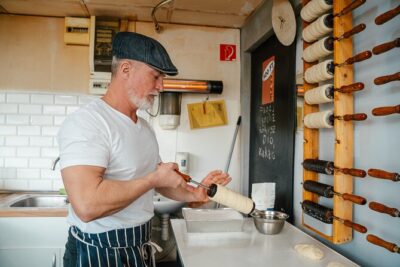
Budapest Food Tour: Market to Tavern with 14+ Tasters & Wines
Read our review →

10PM Budapest Danube Cruise with Live Music & Food or Drinks
Read our review →
Budapest Food Tasting Tour with Nelli & her local guides
Read our review →Browse the lists this tour appears in