Reviewed · BUDAPEST TOURS
Budapest: Guided Tour of the House of Music, Hungary
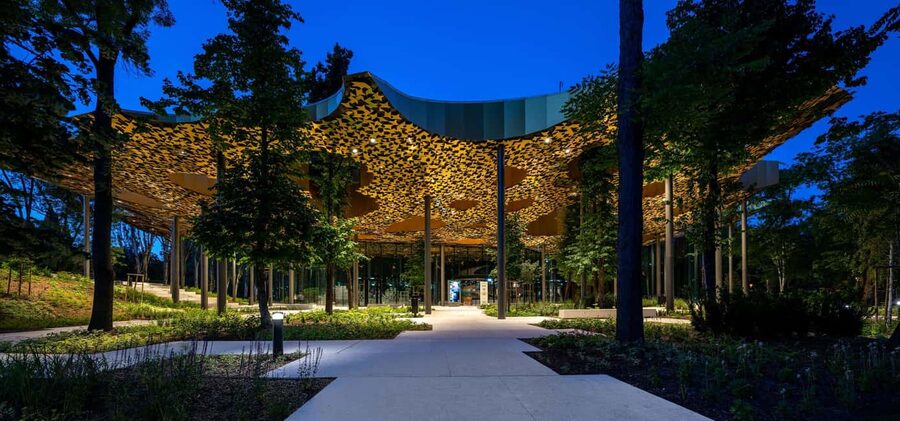
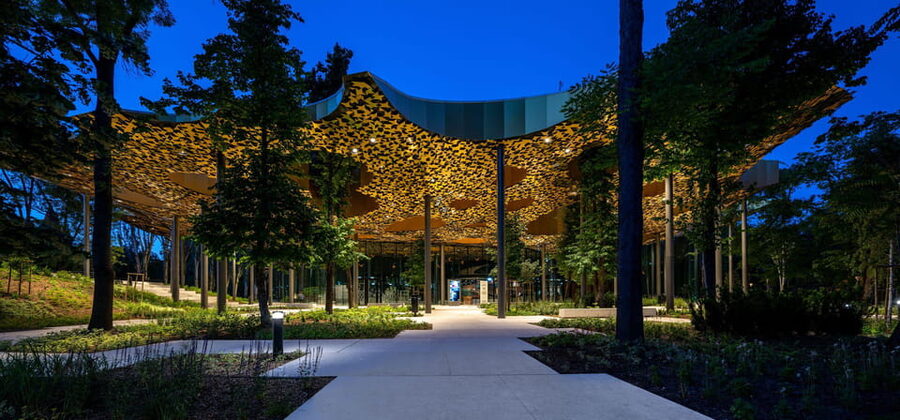
The House of Music Hungary makes a striking first impression: a broad, floating roof punctured by circular openings, with glass walls that let City Park seem to continue right through the building. This one-hour guided tour explains how Japanese architect Sou Fujimoto shaped the building around music, natural light and its green setting.
I like two things in particular: the chance to understand the building’s unusual details with a guide, and the way the visit moves between indoor spaces and the park beyond the glass. Guides such as Dora have been praised for making the architecture clear and keeping the hour lively.
One important limit: this is an architecture tour, not an exhibition ticket. Entry to the exhibitions, Sound Dome and Creative Sound Space is not included, so book it for the building and its design, not for hands-on music activities.
Key points to know
- Look up outside: The undulating roof is made from thousands of leaf-like metal elements, with circular openings that bring daylight into the building.
- Follow the design story: Sou Fujimoto’s organic approach aims to make the House of Music feel like a continuation of City Park.
- Notice the staircase: The spiral staircase is one of the building’s most striking interior features.
- Hear how sound shaped the building: Your guide explains the role of form and materials in the acoustics.
- Know what your ticket covers: You’ll see architectural spaces, including the concert hall, library and archives, but not the exhibitions or sound attractions.
Start in the foyer, then look out to City Park
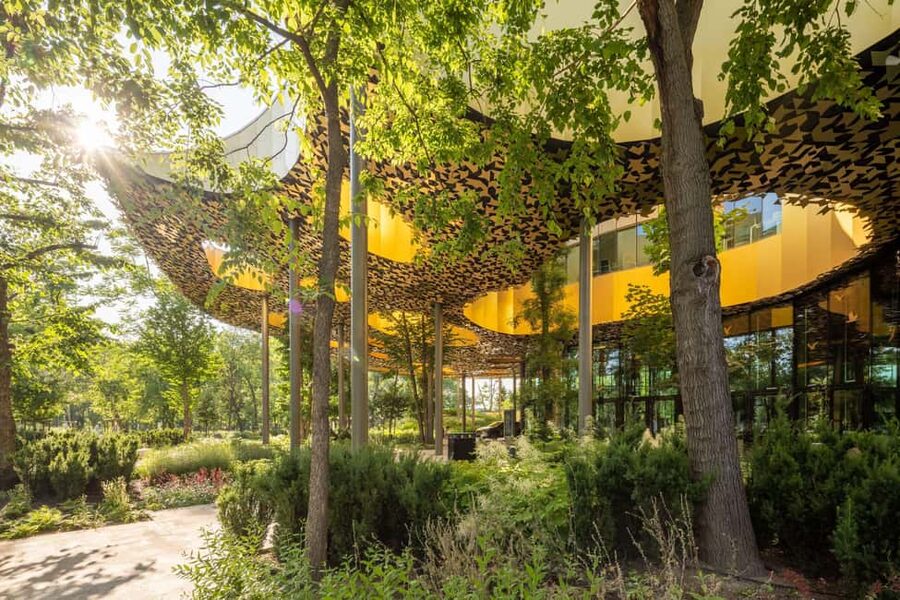
The tour begins inside the foyer, a spacious place to get oriented before you turn your attention to the architecture. Glass is a major part of the experience here. It draws in daylight and keeps the park visible, so you can see how the building relates to its setting rather than treating it as a separate object.
That connection is the main idea to keep in mind as you explore. The House of Music was conceived as an extension of City Park, with open areas and multiple levels intended to support public use, music education and community life. A guide can help you read those choices in the building itself, even without access to the exhibitions.
The foyer also includes a café, making it a practical place to pause before or after the tour. If you arrive early, take a moment to notice how much of the interior is visible through the glass. The design sets up a useful question for the hour: where does the park end and the building begin?
More guided departures in Budapest:
- Budapest: Parliament Building Entry Ticket and Audio Guide
★ 4.5 · 3,844 reviews - Budapest: Opera House Guided Tour
★ 4.6 · 1,533 reviews - Budapest Small-Group Guided Tour on MonsteRoller e-Scooter
★ 5.0 · 1,517 reviews
Look up at Sou Fujimoto’s floating roof
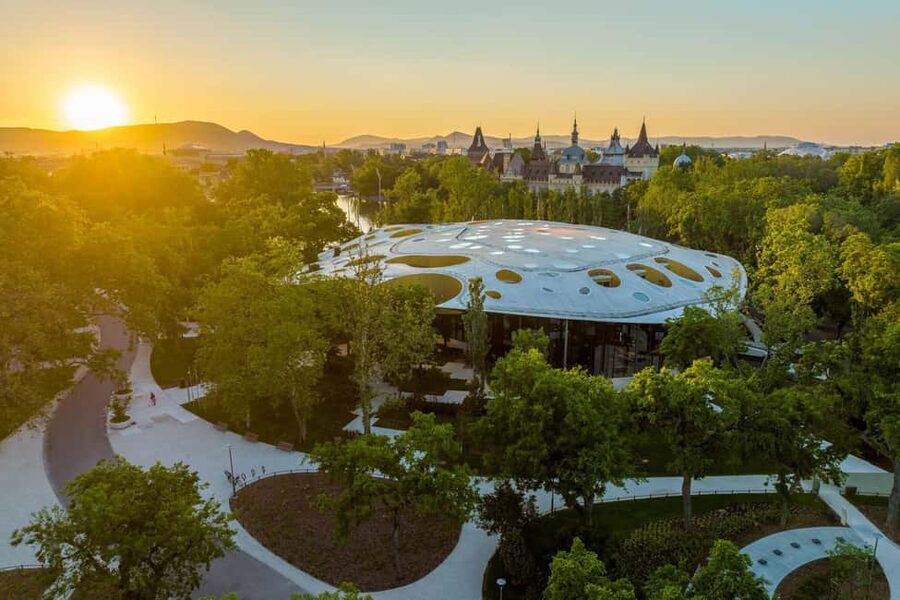
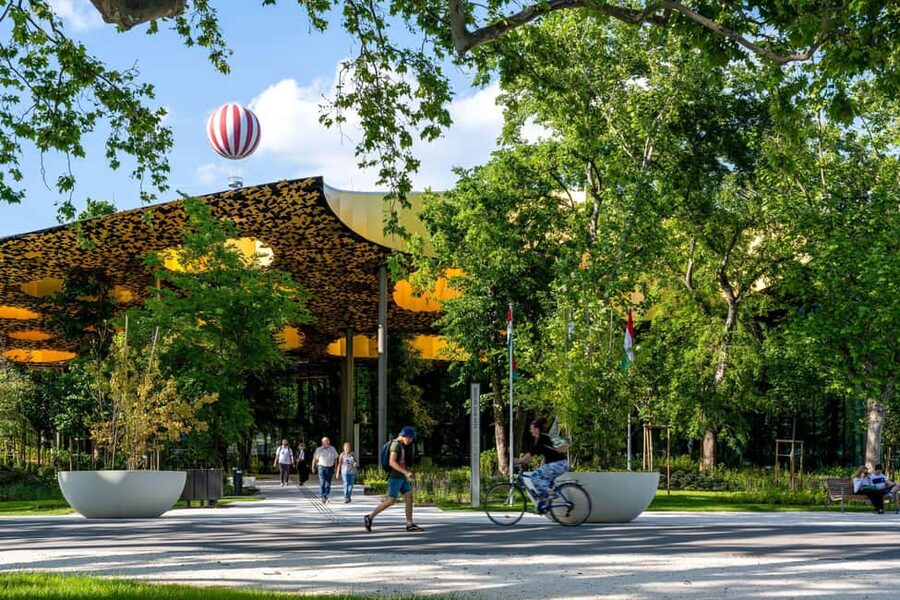
Outside, the roof is the star. Its undulating form seems to hover above the building, while thousands of leaf-like metal elements create a textured canopy. Circular openings break through the roof, bringing natural light into the spaces below and giving the structure an airy, almost tree-like character.
The tour gives you a chance to look beyond the roof’s dramatic outline and consider its purpose. It is part of the building’s approach to light and acoustics, not merely a sculptural flourish. That makes the guided explanation worthwhile: you can admire the shape on your own, but it takes more attention to understand how a roof also helps shape the experience inside.
The scale and details are easier to appreciate when you can move between the exterior and interior. From outside, notice the canopy’s shifting pattern; from within, look for the way light passes through the openings. If you enjoy contemporary architecture, this is likely to be the most memorable part of the visit.
The roof also sets the tone for Fujimoto’s organic design. Instead of relying on a conventional box, the building uses curves, openings and transparency to suggest a looser relationship with the park. You don’t need an architecture degree to enjoy it, but the guide’s commentary can help you see why the form is more than a bold photo backdrop.
Take in the glass, concrete and wood
Inside, the extensive glass keeps views of the park close at hand and allows daylight to fill the public spaces. The effect is open and light, while exposed concrete and carefully placed wooden elements bring contrast and warmth. The mix is worth noticing: the building feels modern, but its materials keep the interiors from seeming cold or anonymous.
As you move through the public areas, the guide points out the building’s structure and the way different levels connect. Those open spaces are designed for more than passing through. They support community engagement and music education, giving the building a civic role as well as a cultural one.
The route includes a look at the concert hall, library and archives, along with outdoor spaces and the gift shop. These areas help show how many kinds of activity the building is designed to hold. The tour is still about architecture, though, so don’t expect time inside every room for an in-depth visit or access to restricted exhibitions.
The spiral staircase deserves a pause. It is presented as a work of art in its own right, and its curved form offers a striking counterpoint to the broad, open spaces around it. If you’re taking photos, this is a natural place to look for a different angle on the building’s geometry.
Follow the building’s approach to sound
A music center has to do more than look distinctive. During the tour, your guide explains how the building’s shape, materials and roof structure were considered in relation to sound quality in performance spaces and public areas. That context gives the architecture a clear purpose: the design is meant to support music, not simply house it.
You won’t attend a performance as part of the hour, so the acoustics are discussed rather than experienced in a concert setting. That distinction matters. If you want to hear the building in use, you’ll need to look for a separate event or experience; this tour focuses on how the design is intended to work.
The building’s commitment to music is also reflected in its spaces for education and public life. Even without entering the exhibitions, you can see how the open layout and different levels make room for varied uses. The tour is most rewarding if you’re curious about how architecture can support cultural activity, rather than expecting a music lesson or interactive session.
More Budapest tours in Budapest:
- Budapest: City Highlights Cruise with Welcome Drink
★ 4.6 · 35,610 reviews - Budapest: Unlimited Prosecco, Beer and Aperol Spritz Cruise
★ 4.8 · 25,310 reviews - Budapest: Széchenyi Spa Day Ticket with Optional Upgrades
★ 4.3 · 23,911 reviews - Budapest: Nighttime or Daytime Sightseeing Cruise
★ 4.2 · 21,062 reviews
Notice the environmental choices
The House of Music’s design also includes sustainability features, including geothermal energy and rainwater harvesting. These details add another layer to the visit: the building is designed to relate to nature visually, while also incorporating systems intended to use resources more thoughtfully.
The tour does not turn into a technical seminar, based on the information available, but it puts those features alongside the broader architectural story. That is useful if you want to understand the building as a working public institution, not just a striking structure. The key takeaway is that its relationship with the park is expressed through both its appearance and its design choices.
Know what the one-hour tour includes
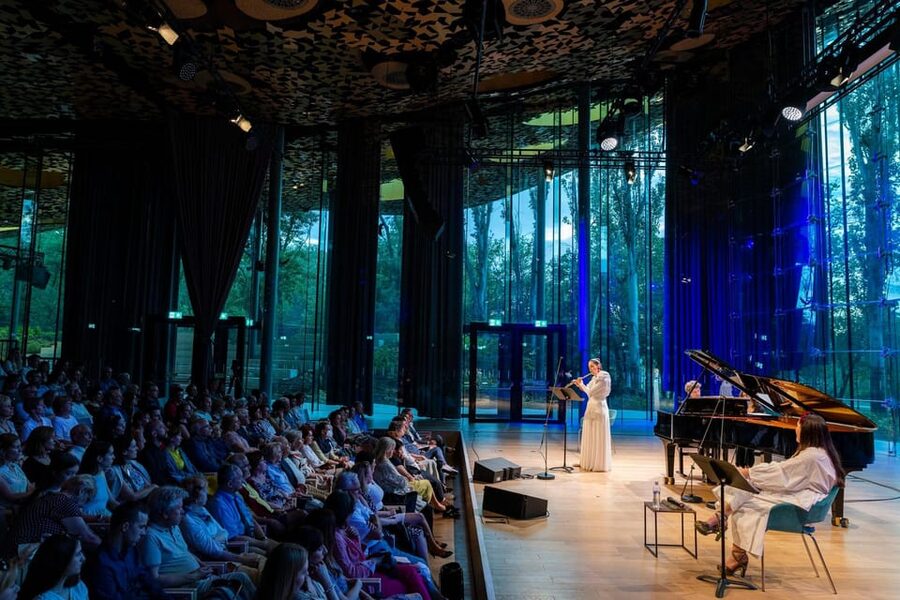
The guided visit lasts about one hour and is led in English. It starts and ends in the foyer, which keeps the logistics simple. The group focuses on architectural features and includes a look at the concert hall, library and archives, outdoor spaces and gift shop.
The main exclusions are just as important. The ticket does not include entry to the exhibitions, Sound Dome or Creative Sound Space. If those are the reason you’re considering a visit, check separately what access is available and plan accordingly. This guided tour is best understood as an introduction to the building, rather than an all-access ticket to everything inside.
The tour is wheelchair accessible. Pets are not allowed, with assistance dogs excepted, and the activity is not suitable for children under 15. Starting times depend on availability, so check the schedule when choosing a date.
Is $13 a fair price for the experience?
At $13 per person, the tour is a modestly priced way to learn how the House of Music works as a piece of architecture. You’re paying for a guide’s explanations and a structured look at spaces that might otherwise be easy to admire without understanding. The value is strongest for architecture fans, design-minded visitors and anyone who wants context for the building’s unusual roof, materials and park-facing layout.
It is less compelling if you mainly want access to music exhibits or interactive sound experiences. Those are not included, so the tour’s price should be judged against the hour of architectural interpretation, not against a full museum visit.
The tour can also help you make better use of the building if you plan to explore its public areas before or after. A guide can direct your attention to details you might otherwise walk past, such as the roof openings, the spiral staircase and the way glass keeps the park in view. That extra context is the real value here.
The guide can make the architecture easier to read
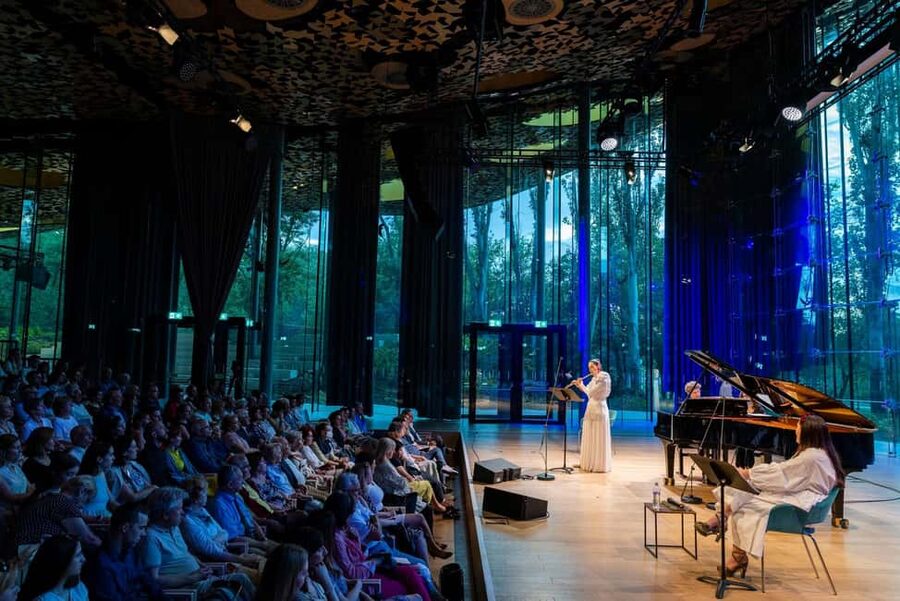
The guide is central to this experience. The structure is visually memorable, but the hour becomes more useful when someone explains how the roof relates to light and acoustics, why the building is arranged around open spaces, and how the design aims to connect the interior with City Park.
Dora is one guide named by visitors, and she was praised for her detailed explanations, friendly manner and energy. Another guide was recalled for being kind, professional and helpful. Names and guides may vary, of course, but these details point to the qualities that suit this visit: clear explanations, enthusiasm for the building and willingness to answer questions.
You don’t need specialist knowledge to follow the tour. It is designed to help you notice the choices behind the architecture, not test you on technical terms. If you’re curious, bring questions about the design, materials or acoustics; the tour is a better fit for an engaged hour than for a quick, silent look around.
Who should book the House of Music tour?
Book this if you enjoy contemporary architecture, want a guided introduction to Sou Fujimoto’s design, or are already spending time in City Park and would like to understand the building beyond its striking exterior. The hour is short enough to fit into a city itinerary, and the English-language guide keeps the experience accessible to visitors who don’t speak Hungarian.
It may not suit you if your priority is interactive music activities, exhibitions or a performance. Those are outside this ticket’s scope, and children under 15 are not considered suitable for the activity. If you’re choosing between this tour and a more hands-on music experience, decide first whether you want to study the building or engage directly with sound.
I’d book it for the architecture, especially if you enjoy looking closely at how a building is put together. Go in expecting a guided walk through its design and public spaces, not a full museum visit. That is a fair trade for an hour and $13 if the roof, the park connection and the thinking behind a music center are what interest you.
FAQ
How long is the House of Music tour?
The guided tour lasts one hour.
What is the price?
The listed price is $13 per person.
What language is the tour in?
The live guide speaks English.
Where does the tour start and finish?
It starts inside the foyer and ends back at the same meeting point.
What parts of the building are included?
The tour includes a look at the architectural features, concert hall, library and archives, outdoor spaces, and gift shop.
Are the exhibitions included?
No. Entry to the exhibitions is not included.
Can I visit the Sound Dome or Creative Sound Space with this ticket?
No. The Sound Dome and Creative Sound Space are not included.
Is the tour wheelchair accessible?
Yes, the activity is wheelchair accessible.
Are children and pets allowed?
The tour is not suitable for children under 15. Pets are not allowed, but assistance dogs are permitted.
Can I cancel for a refund?
Yes. You can cancel up to 24 hours in advance for a full refund.
Fresh additions in Budapest
- Budapest Bike Ride★ 5.0 · 11 reviews
- Budapest Private Tour with a Local, Custom Highlights & Gems★ 5.0 · 45 reviews
- Budapest: Book A Local Host★ 5.0 · 4 reviews
- Budapest All In – Full Day Tour with Lunch & Metro Pass★ 5.0 · 19 reviews
- Budapest Airport transfer from Liszt Ferenc International Airport to City Centre★ 5.0 · 5 reviews
- All About Budapest: Full Day Walking Tour with Lunch & Metro Pass★ 5.0 · 15 reviews
- Budapest Airport – Budapest City Transfer★ 4.5 · 22 reviews
- Budapest Airport Private Departure Transfer : City to Airport★ 5.0 · 54 reviews
Budapest Tours, compared.


Unlimited Prosecco, Beer and Aperol Spritz Cruise
Read our review →
Széchenyi Spa Day Ticket with Optional Upgrades
Read our review →


Budapest Danube Cruise and Dinner Options, Live Music and Dance
Read our review →