
Reviewed · BUDAPEST MUSEUMS
Budapest: Mika Tivadar Secret Museum Entry Ticket
Kazinczy Street’s past is packed into a small space: the Mika Tivadar Secret Museum links one building to cabaret, cinema, wartime Budapest, and the people who shaped the neighborhood. It’s less a grand museum than a compact set of stories tucked inside a hotel.
I like two things in particular: the eight-language audio makes the displays accessible without a guide, and the stories reach beyond Hungarian history to include the many communities that lived here. The onsite cocktail bar also gives the visit an unusually relaxed finish.
The trade-off is the format. You explore on your own, using your phone, so this is not the place for a live guide or a long, hands-on museum visit. At around 30 minutes, it works best as a focused stop between other plans.
- A former copper shop turned museum and bar: The building’s changing uses are part of the story.
- A street with surprising cultural connections: Exhibits link Kazinczy Street to the Blue Cat cabaret and Hungary’s first cinema.
- A self-guided visit in eight languages: Scan for audio on your own charged smartphone, with free Wi-Fi available.
- A compact 140-square-meter space: Expect a concentrated look at the late 19th century and the years between the world wars.
- A museum with a bar and restaurant onsite: You can pair the visit with a drink or meal.
- A short, low-cost stop: The listed price is $5 per person, and the stated duration is about 30 minutes.
A small museum with a neighborhood-sized story
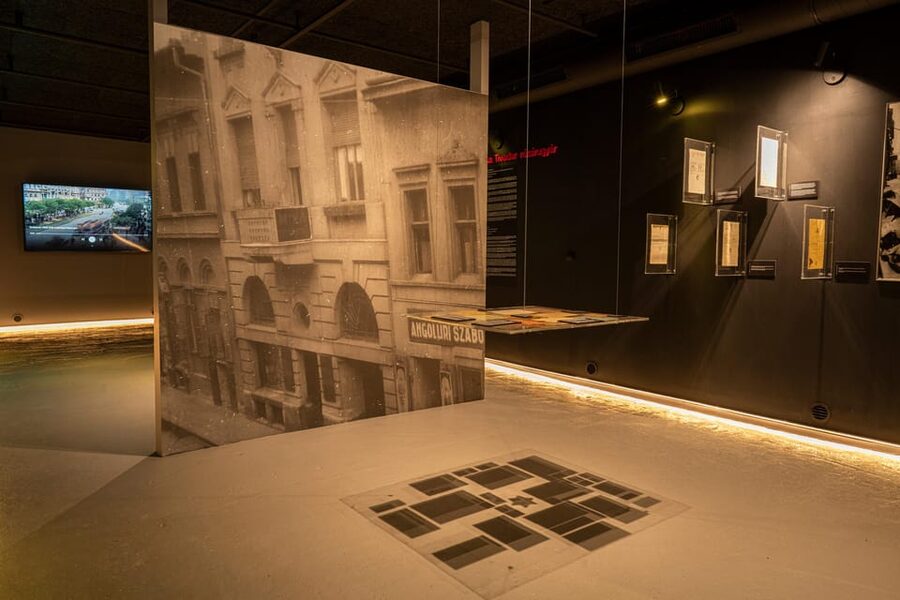
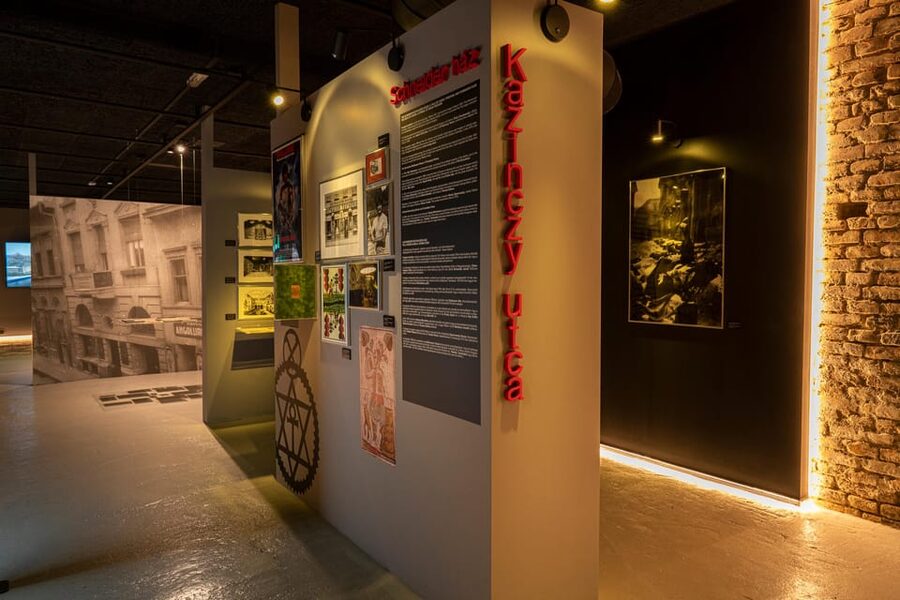
The Mika Tivadar Secret Museum tells the story of its own building, but it does not stop at the front door. Its displays use the surrounding buildings and Kazinczy Street as part of the narrative, tracing a district shaped by entertainment, commerce, political change, and the many communities that called Hungary home.
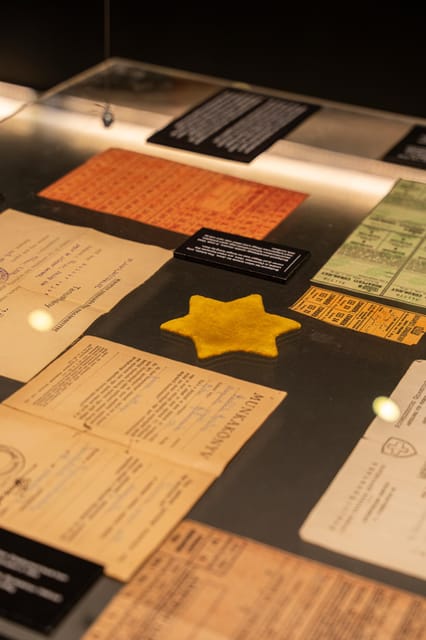
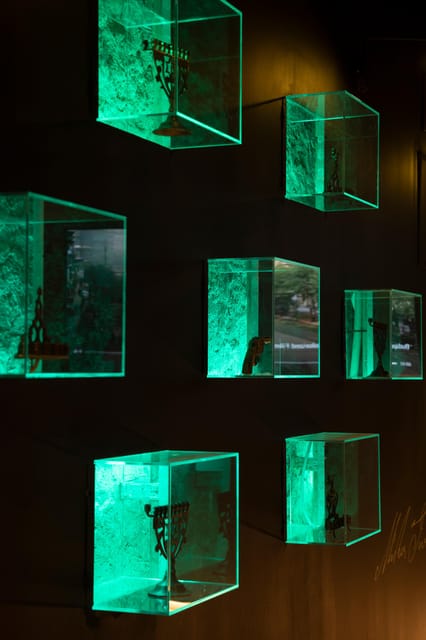
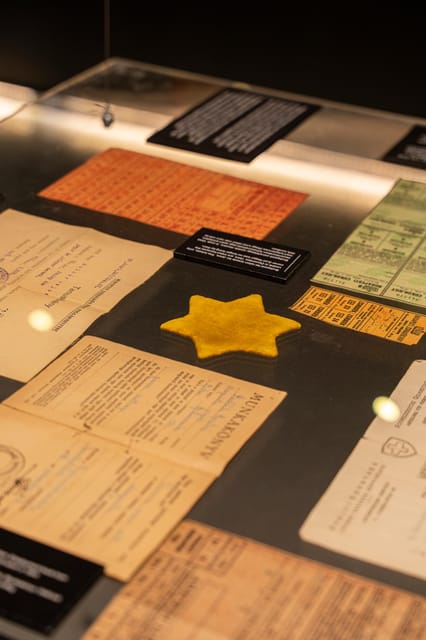
The period at the heart of the museum runs from the late 19th century through the years between the two world wars. Photographs, antique objects, written accounts, sound effects, and voiceovers set out the story in manageable chapters. This is not a large collection where you need a full afternoon. Its 140 square meters are better understood as a compact introduction to a complicated neighborhood.
I’d think of the visit as a useful way to add context to a walk through District 7. Instead of seeing Kazinczy Street as a row of old facades and present-day venues, you get stories about what once happened in and around these buildings. That local focus is the museum’s main strength.
The museum is described as Hungary’s first hotel museum and is part of a local heritage hotel. That setting gives it an unusual character: you arrive through the Hotel Mika Downtown reception, and the museum shares the property with a cocktail bar and restaurant. It feels more like a small, lived-in place than a formal institution built around hushed galleries.
From the Blue Cat to Hungary’s first cinema
One of the museum’s most intriguing threads is its connection to entertainment. Europe’s famous Blue Cat cabaret once operated here, and Hungary’s first cinema opened on the same spot. The museum also connects the site to Michael Curtiz, the Oscar-winning director of Casablanca, who began his film career in Hungary.
Those details make the building’s past feel less remote. A cabaret and an early cinema suggest a street where people came to be entertained, not simply to work or pass through. The exhibits put those stories alongside the broader history of the district, giving you a sense of how public amusements were part of urban life.
The museum also touches on legendary figures said to have walked these halls, including King Edward VII, German statesman Otto von Bismarck, and Milan I of Serbia. The appeal is not just a list of famous names. These connections place the site in the orbit of a Europe where political power and cultural life crossed borders.
Another unexpected thread links Sylvester Stallone and Arnold Schwarzenegger to a tiny house on Kazinczy Street. The information available does not explain the full connection, so I would treat it as a curious prompt to look for the details in the exhibits rather than expect a long account in advance. That little mystery is part of the museum’s appeal: its stories range well beyond what you might guess from the entrance.
More museum visits in Budapest:
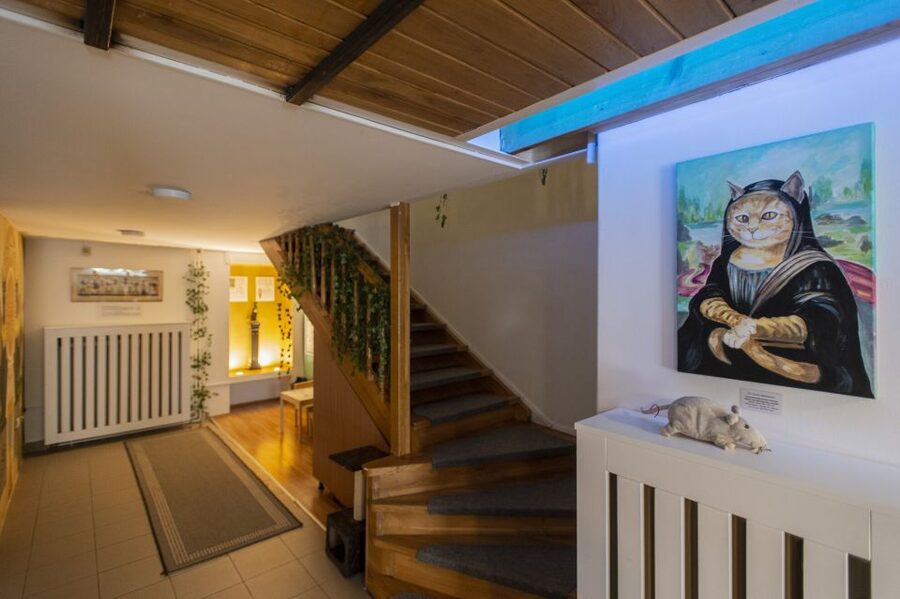
- Budapest: Cat Museum Budapest Entry Ticket
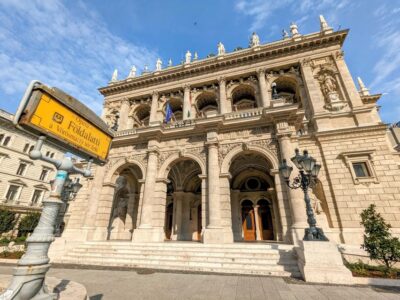
★ 4.4 · 2,210 reviews - Budapest: Opera House Guided Tour
★ 4.6 · 1,533 reviews - Budapest: Light Art Museum – Immersive New Media Experience
★ 3.9 · 1,269 reviews
History told across communities and eras
The museum makes a point of showing how Hungarian history intersected with the wider world. Its curatorial approach includes the many ethnic communities that lived in Hungary, giving international visitors several possible points of connection. That perspective matters in a city whose past cannot be reduced to one group or one national story.
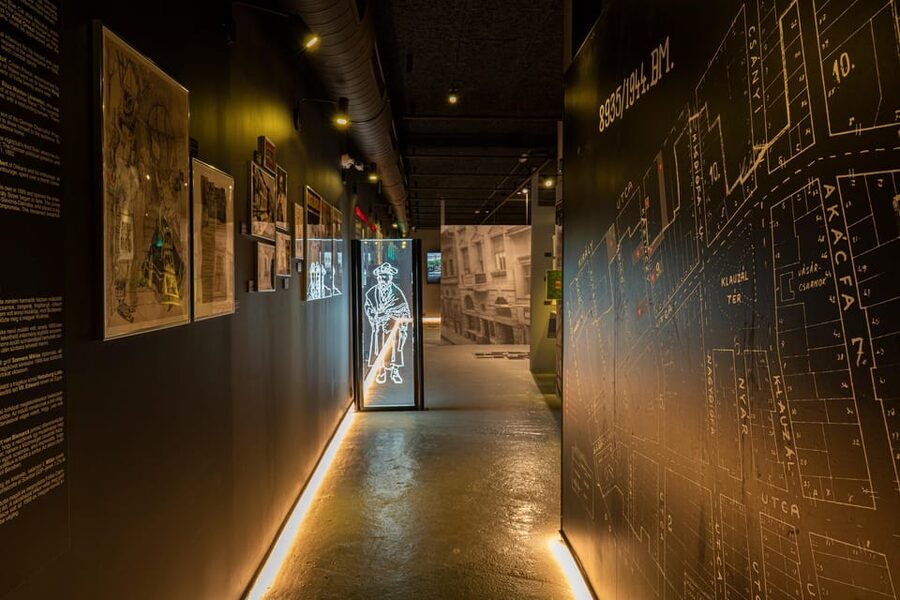
The exhibits also touch on the Budapest Ghetto and show how the property looked during World War II. These subjects give the visit a more serious edge than the cabaret and cinema stories alone might suggest. You move between entertainment, social history, and wartime experience in a small footprint, so the tone can shift quickly.
Another surprising connection concerns veterans of the 1848–49 Hungarian Revolution and their role in the Mexican Civil War. It is a reminder that political upheaval in Hungary did not end at the country’s borders. The museum’s best material often works this way: a local address opens onto a story with a much wider reach.
You’ll also find the former Hungarian steam bath that stood opposite the museum brought into the neighborhood’s story. The site has since become a hotel. Linking that building to the museum’s own past helps explain how much the street has changed, even when its older structures remain part of the setting.
Because the museum is small, it can introduce many subjects without giving each one the space of a full museum gallery. If you want extensive coverage of the Holocaust, Hungarian political history, or cinema, this will be a starting point rather than a substitute for a dedicated museum. But if you want a concise local overview, the range is a strength.
How the self-guided visit works
Start at the Hotel Mika Downtown reception, where staff greet you, provide a printed flyer, and briefly explain what you can discover. There is no museum guide or tour guide included. Instead, you use your own smartphone to access the chapter voiceovers, with free Wi-Fi available onsite.
Bring your phone charged. That is the practical detail most likely to shape your visit, since the audio is accessed on your device rather than through a supplied headset. The audio is available in eight languages, which makes the museum a straightforward option if you prefer to hear the stories instead of relying on written displays alone.
The voiceovers and sound effects help establish atmosphere as you read. A visitor described music playing in the background, which points to a visit designed to feel more like a sequence of stories than a silent display room. You can move at your own pace, pausing where a subject catches your attention.
The stated visit duration is 30 minutes. That is a sensible amount of time to set aside if you want to see the main material without rushing. One visitor noted that it was possible to stay longer, so you need not treat the half-hour estimate as a strict limit. Still, this is a compact museum, not an all-day attraction.
The ticket includes skip-the-line entry. Booking also offers free cancellation up to 24 hours ahead and a reserve-now, pay-later option. Those terms add flexibility, though the main reason to book is the low-cost, easy-to-fit nature of the visit.
The bar is part of the experience
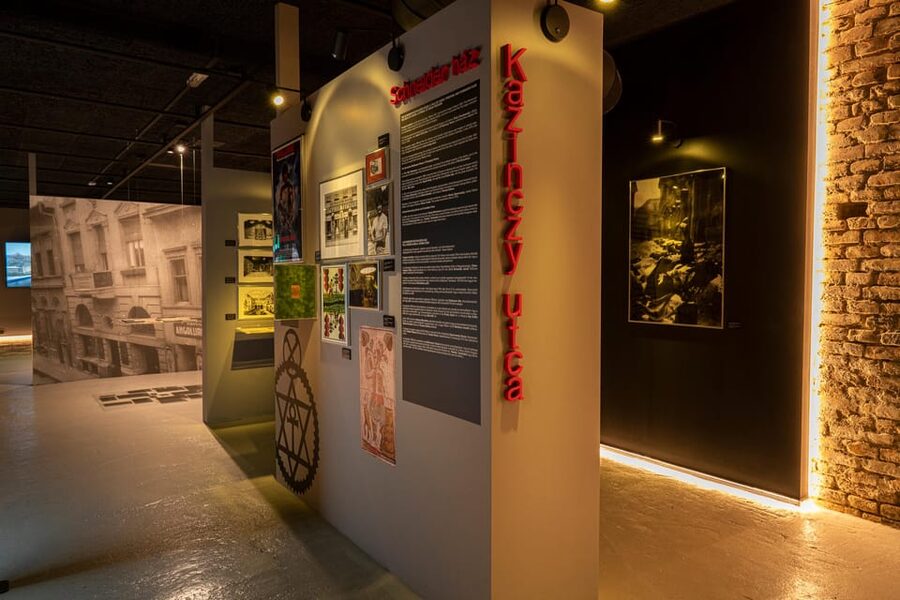
The onsite cocktail bar and restaurant are more than a practical add-on. They suit the museum’s unusual setting, where a historic building now serves as both a place to learn about the street and a place to eat or drink. Some visitors have enjoyed having a cocktail while exploring the museum area, and brunch is also available at the restaurant.
That combination is useful if you want to turn a short museum visit into a relaxed pause. You can see the displays, then stay for a drink or meal without needing to find another stop nearby. It also gives the building a present-day life that sits alongside its past.
Keep expectations in proportion. The bar does not replace a guided tour, and the ticket information does not say that a drink or meal is included. Think of it as an onsite option, not part of the museum admission. If you are on a tight schedule, you can keep the museum visit to its half-hour estimate and move on.
More tickets and passes in Budapest:
- Budapest: Széchenyi Spa Day Ticket with Optional Upgrades
★ 4.3 · 23,911 reviews - Budapest: Parliament Building Entry Ticket and Audio Guide
★ 4.5 · 3,844 reviews - Budapest: Full-Day Gellért Spa Ticket
★ 4.2 · 3,340 reviews - Budapest: Cinema Mystica Entry Ticket
★ 4.3 · 3,103 reviews
What the $5 ticket is worth
At the listed price of $5 per person, the museum is an inexpensive way to spend half an hour with a focused local story. The eight-language audio, printed flyer, and access to the 140-square-meter museum space are included. You are not paying for a live guide, a large collection, or a lengthy tour.
For me, the value comes from the unusual concentration of material. In a short visit, you can connect a single building to cabaret, early cinema, political history, wartime Budapest, and neighboring sites. The low ticket price makes that worthwhile even if you have only a passing interest in the district.
The trade-off is depth. A small museum has limited room to explain every subject in detail, and a self-guided format asks you to manage your own attention. If you enjoy reading, listening, and following links between stories, the format should suit you. If you prefer a guide to shape the visit or answer questions, this may feel too independent.
The current rating provided for the experience is 4.1 out of 5 from 71 ratings. That is a solid, not flawless, score. The strongest points for a visitor planning a stop are clear: a compact and content-heavy museum, audio in eight languages, and the option of a bar and restaurant onsite.
Who should make time for it
This museum is a good fit if you are already exploring District 7 and want more than a quick look at the street. It is especially useful if you like small specialist museums, local stories, and buildings whose former uses are still legible in the present. The broad mix of Hungarian and international connections also makes it easier to engage with the subject even if you do not know much about Budapest’s past.
It can work well as a short stop before or after a meal, since the onsite restaurant and cocktail bar make the visit easy to pair with a break. The self-guided format is also convenient if you prefer to move at your own speed and listen in one of the eight available languages.
I would not choose it as your main history museum in Budapest. It is compact, has no included guide, and covers many subjects in a limited area. Wheelchair users should note that the experience is not suitable for them.
Should you book the Mika Tivadar Secret Museum?
Book it if you want an affordable, short introduction to Kazinczy Street’s past, especially if cabaret, cinema, and neighborhood history appeal to you. The audio in eight languages and the option to stop at the onsite bar make it an easy addition to a District 7 day.
Skip it if you need step-free access, want a live guide, or are looking for an in-depth museum visit. For most others, the $5 ticket buys a distinctive half-hour of local context, with enough unexpected connections to make the building itself worth noticing.
FAQ
How long does the museum visit take?
The stated duration is 30 minutes. You may be able to stay longer if you want to spend more time with the displays.
How much does entry cost?
The listed price is $5 per person.
Is a museum guide included?
No. Staff greet you at reception, provide a printed flyer, and briefly explain what you can discover, but there is no museum guide or tour guide included.
How do I access the audio guide?
Use your own smartphone to access the chapter voiceovers. Free Wi-Fi is available, and you should bring a charged phone.
What languages are available for the audio?
Audio guides are available in eight languages.
Where is the meeting point?
Meet at the Hotel Mika Downtown reception.
Is there a restaurant or bar onsite?
Yes. The property has a cocktail bar and restaurant onsite. Food and drinks are not listed as included with museum entry.
Is the museum suitable for wheelchair users?
No. The experience is listed as not suitable for wheelchair users.
Can I cancel my booking?
Yes. You can cancel up to 24 hours in advance for a full refund. Booking also offers a reserve-now, pay-later option.
Fresh additions in Budapest
- Best of Budapest Tour★ 5.0 · 7 reviews
- Be a movie star! Film Tour, Escape room, in Budapest and Etyek★ 5.0 · 3 reviews
- Shooting package 70★ 5.0 · 14 reviews
- Best Historical Sights of Budapest Tour★ 5.0 · 7 reviews
- BUSÓJÁRÁS Unesco Heritage Folklore Carnival in Mohács★ 5.0 · 4 reviews
- Budapest 4 Hour Tour with a Local: Private & Custom, See the City Unscripted★ 4.0 · 7 reviews
- Capital Budapest – Half Day Private Tour (4hr)★ 5.0 · 7 reviews
- Analog Photo Trip★ 5.0 · 5 reviews
Budapest Museums, compared.
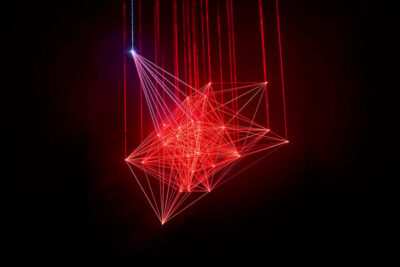
Light Art Museum – Immersive New Media Experience
Read our review →
Budapest Card: Free Public Transport, Spa & Museums with Delivery
Read our review →
Budapest Dohany Synagogue & Hungarian Jewish Museum & free extras
Read our review →Browse the lists this tour appears in