
Reviewed · BUDAPEST PHOTOSHOOTS
Analog Photo Trip
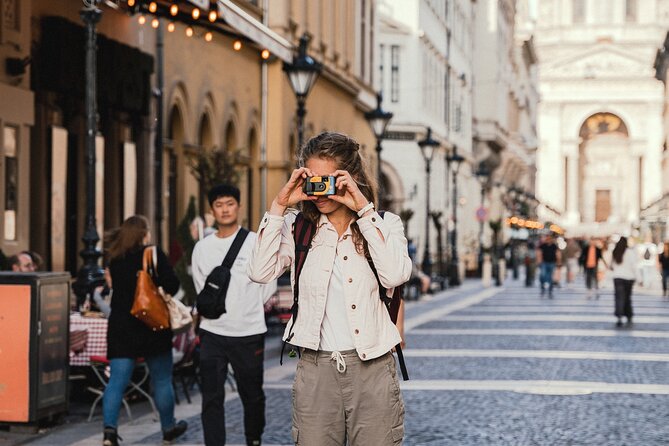
Budapest’s grand sights look different when you slow down to frame them on an analog camera. This small-group outing links the Danube, Parliament, and Castle District with short stops for photos and local history, then ends at Fisherman’s Bastion.
I like two things in particular: you get a simple introduction to analog photography, even if you have never used a film camera, and guide Emese Tárnok combines the photo stops with stories about the city. One consideration: Matthias Church gets only five minutes on the planned route, so this is a sampler of Budapest’s landmarks, not a deep visit to each one.
The best reasons to bring a camera
- Analog photography is part of the outing: You get a brief camera tutorial, then put the basics to use at Budapest sights.
- The route crosses both sides of the Danube: It begins near St. Stephen’s Basilica and finishes in the Castle District at Fisherman’s Bastion.
- Tram 2 adds a city ride: The group plans to board it after photographing the Chain Bridge, making transit part of the experience.
- The group is capped at 12: That keeps the outing relatively small, with more room to ask questions or take your time.
- You finish with a tangible souvenir: Physical photos are part of the appeal, rather than relying only on images stored on your phone.
- The late-afternoon start suits a half-day plan: The tour starts at 5:00 pm and lasts about three and a half hours, though the actual pace can vary.
A photo walk with a city story attached
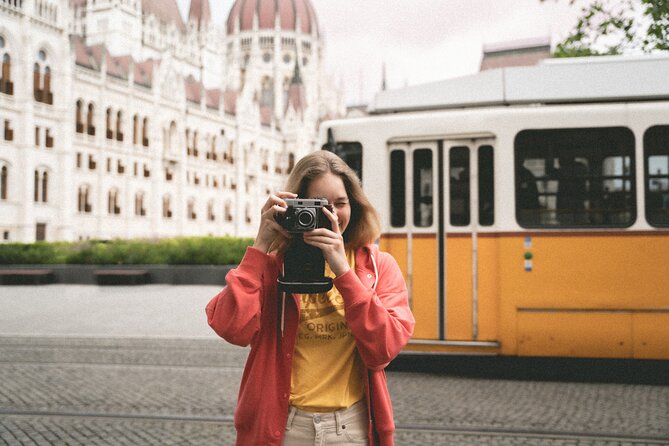
This is not simply a sightseeing walk with a camera added as a prop. The analog format asks you to pause, notice the view, and choose what belongs in the frame. That can make familiar city landmarks feel less like a checklist and more like places you have actually looked at.
The route also gives the outing a useful shape. You start around central Pest, take in views along the river, and finish across the Danube in Buda’s Castle District. Along the way, Emese shares historical context and helps you use the camera. People who have never tried analog photography can take part: the instruction is brief and designed to make the camera approachable.
The tour is offered in English, lasts about three and a half hours, and has a maximum group size of 12. Its listed price is $142.97 per person. That is a meaningful outlay for a short city tour, so its value depends on whether you want both guided sightseeing and the analog-photo activity. If you only want a guide to explain Budapest’s major sights, other options may suit you better. If you like the idea of learning a new skill and taking home physical images, the price covers a more distinctive outing than a standard walking tour.
More photoshoots in Budapest:
- Private photography photo session at Fisherman Bastion
★ 5.0 · 269 reviews - Budapest photoshoot&sightseeing
★ 5.0 · 107 reviews - Budapest: Walking Tour and Photoshoot with Digital Photos
★ 4.7 · 82 reviews
St. Stephen’s Basilica sets the scene
The meeting point is CBI CompareBudapest at Anker köz 2-4, a central starting place near St. Stephen’s Basilica. The group spends about 15 minutes looking around and hearing about the church, which is described as Hungary’s most important and finest church.
That first stop does two jobs. It gives you an early introduction to the country’s religious and national story, and it sets a calm pace before the route shifts toward the Danube. You can ask Emese questions while you get used to the camera and begin thinking about how you want to photograph the city.
Keep your expectations in check: 15 minutes is enough for a first look and a concise explanation, not a full interior visit or an extended study of the building. Admission is listed as free, but the tour description does not promise a separate visit inside. Treat this as an orientation stop rather than a basilica tour.
The Chain Bridge and a Tram 2 ride
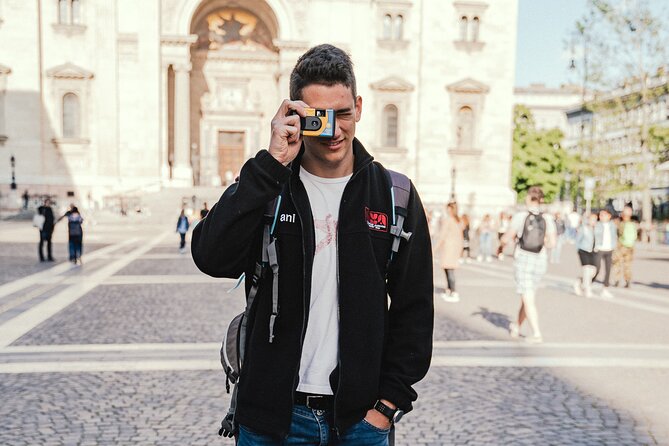
At the Chain Bridge, the group spends around 15 minutes photographing the bridge with Buda Castle in the background. This is one of the route’s clearest views of the Danube crossing and the two sides of the city. It gives you a classic Budapest composition, but the analog-camera format nudges you to take your time instead of firing off a burst of phone pictures.
After the photo stop, the plan is to board Tram 2. That makes the journey between sights part of the day rather than dead time, and it gives you a chance to see more of the riverfront as the group moves north. The tour information does not specify whether the tram fare is included, so check that detail before booking if it matters to your budget.
The Chain Bridge stop is brief, and the precise pace may depend on the group. If you are new to film cameras, use the earlier instruction to get comfortable before arriving here. You may have fewer chances to correct a shot than you would with a digital camera, which is part of the fun and part of the learning curve.
Parliament Square, then Margaret Bridge
The Parliament stop takes about 15 minutes around Kossuth Lajos Square. You’ll see the Hungarian Parliament Building and hear about the history of the place. The square and the building provide a change of scale from the bridge: here, the focus is on civic life and the grand architecture of the city.
A short stop is useful for orientation, but it is not enough time for an inside visit or a close examination of every detail. The route is designed to keep moving and to make room for several viewpoints in one outing. If Parliament is high on your list, consider a separate visit that gives you more time.
The group then reaches Margaret Bridge for another 15-minute stop. From here, the view connects the places you have already seen with the sights still ahead. That makes it a natural pause to look back at the river route and get your bearings before crossing toward Buda and the Castle District.
These river views are a strong reason to choose this tour over a camera lesson in one location. You are not photographing one landmark in isolation. You are seeing how bridges, riverbanks, and buildings fit together, while the guide supplies context along the way.
More Budapest tours in Budapest:
- Budapest: City Highlights Cruise with Welcome Drink
★ 4.6 · 35,610 reviews - Budapest: Unlimited Prosecco, Beer and Aperol Spritz Cruise
★ 4.8 · 25,310 reviews - Budapest: Széchenyi Spa Day Ticket with Optional Upgrades
★ 4.3 · 23,911 reviews - Budapest: Nighttime or Daytime Sightseeing Cruise
★ 4.2 · 21,062 reviews
Matthias Church gets a quick look
In the Castle District, the route includes a brief stop at Matthias Church, where you’ll photograph its Gothic architecture. The planned visit is only about five minutes, the shortest stop of the day.
That is enough for a quick look and a few deliberate frames, but not enough for a leisurely visit. If you want to explore the church in depth, plan to return separately. For the photo walk, the brief pause keeps the focus on the wider route and leads into the longer stop at Fisherman’s Bastion.
This is also where the camera exercise becomes especially practical. You have already tried it at several different kinds of places: a church, a bridge, a public square, and a river view. By now, you may be more comfortable making choices about what to photograph, even if you are still learning.
Fisherman’s Bastion is the finish line
The final stop is Fisherman’s Bastion, where the group spends about 15 minutes looking around the structure. Its design was inspired by early medieval architectural styles, and its elevated position makes it a fitting place to end a route built around views and photographs.
The tour ends here in Budapest’s Castle District, rather than returning to the starting point. That is useful if you want to keep exploring the area afterward, but remember that you will need to plan your own onward route. The experience’s stated end point is Fisherman’s Bastion.
Fifteen minutes gives you time to take in the setting and make a few final photographs, but not to linger for an hour. The itinerary is a sampler, and the Castle District has enough to merit a separate visit if you want to explore at your own pace.
What the analog camera adds
The camera is not just a novelty for the first few minutes. Analog photography changes the rhythm of the walk: you pay attention to the scene, make choices before pressing the shutter, and accept that you cannot instantly review every image. That can be a welcome break from taking dozens of digital photos and sorting them later.
You do not need prior experience. The tour includes a short introduction, and Emese can make the camera easy to use for beginners. One participant described it as a completely new skill, while another particularly valued getting physical photos as a souvenir. Those details point to the experience’s strongest personal payoff: learning something hands-on and having an object to remember the afternoon by.
The practical details of the photos are not specified. The tour information does not say how many pictures you can take, what camera model is used, or when and how the finished photos are delivered. If those points affect your decision, ask before booking rather than assuming the process.
How the price and pace compare
At $142.97 per person, this is not a budget sightseeing walk. You are paying for a small-group experience that combines a guide, city history, several landmark stops, camera instruction, and physical photographs. For someone keen on photography, that combination may justify the price. If you are mainly looking for a low-cost way to see the major sights, the analog element may not be enough to make the premium worthwhile.
The listed duration is about three and a half hours, while the actual outing can take around three hours or run longer if the group moves slowly. That difference is worth remembering if you have dinner plans or another timed activity afterward. The listed stop times add up to about 80 minutes, leaving the rest of the tour for getting between locations, instruction, and time with the guide.
The maximum group size of 12 is another value factor. A smaller group can make it easier to hear the guide and get help with the camera than a large coach tour. It does not mean you will have every photo location to yourself, but it does keep the experience more personal than a big-group city circuit.
Who will enjoy this Budapest outing
I’d recommend this tour if you like taking photographs, want a guided introduction to analog cameras, or are looking for a social way to spend part of an afternoon with a partner or friends. It works for beginners, and the mix of central Pest, the river, and Buda’s Castle District gives you a broad first impression of the city.
It is also a good fit if you value the process as much as the finished pictures. You get to learn, make images along the way, and leave with physical photos rather than only a phone gallery. The guide’s city commentary adds substance to what could otherwise be a sequence of photo stops.
You may want a different plan if you prefer long visits inside major buildings, need a slow-paced tour with plenty of time at every sight, or want a comprehensive history tour. Several stops are short, and the itinerary moves across a lot of ground. The group is described as suitable for most people, but the details do not give a specific walking distance or step-free access information, so ask the provider if mobility needs are a concern.
Should you book it?
Book this if you want Budapest’s landmark views paired with a friendly introduction to analog photography, and you like the idea of physical photos as a keepsake. Emese Tárnok’s communication and patient approach are especially useful if you are new to the camera or prefer a guide who can adjust to a slower pace.
Skip it if the camera is not part of the appeal or if you want to spend substantial time inside each attraction. The best reason to choose this experience is not simply that it visits famous places. It is that you see those places through a different lens, with a guide helping you connect the images to the city.
FAQ
Where does the tour start?
It starts at CBI CompareBudapest, Anker köz 2-4, 1061 Hungary.
Where does the tour end?
It ends at Fisherman’s Bastion in Budapest’s Castle District.
What time does the tour start?
The stated start time is 5:00 pm.
How long does the experience last?
It lasts approximately three and a half hours. The actual pace may vary.
What language is the tour offered in?
The tour is offered in English.
How large is the group?
The maximum group size is 12 people.
Do I need experience with analog cameras?
No prior experience is specified as necessary. The tour includes a brief introduction to using the analog cameras.
Which places does the route visit?
The route includes St. Stephen’s Basilica, the Chain Bridge, the Hungarian Parliament and Kossuth Lajos Square, Margaret Bridge, Matthias Church, and Fisherman’s Bastion.
Are physical photos part of the experience?
Yes. Physical photos are described as a souvenir from the tour. Details about the number of photos and when they are provided are not specified.
What happens if bad weather cancels the tour?
If poor weather causes the experience to be canceled, you’ll be offered a different date or a full refund.
Fresh additions in Budapest
- Best of Budapest Tour★ 5.0 · 7 reviews
- Best Historical Sights of Budapest Tour★ 5.0 · 7 reviews
- Be a movie star! Film Tour, Escape room, in Budapest and Etyek★ 5.0 · 3 reviews
- Shooting package 70★ 5.0 · 14 reviews
- Capital Budapest – Half Day Private Tour (4hr)★ 5.0 · 7 reviews
- BUSÓJÁRÁS Unesco Heritage Folklore Carnival in Mohács★ 5.0 · 4 reviews
- Budapest 4 Hour Tour with a Local: Private & Custom, See the City Unscripted★ 4.0 · 7 reviews
- Art Nouveau Treasures of Budapest – Exclusive Private Tour★ 5.0 · 18 reviews
Budapest Photoshoots, compared.
Private photography photo session at Fisherman Bastion
Read our review →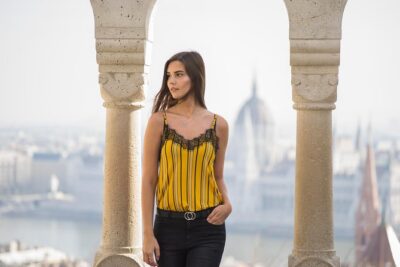
Vacation Photographer to collect great memories
Read our review →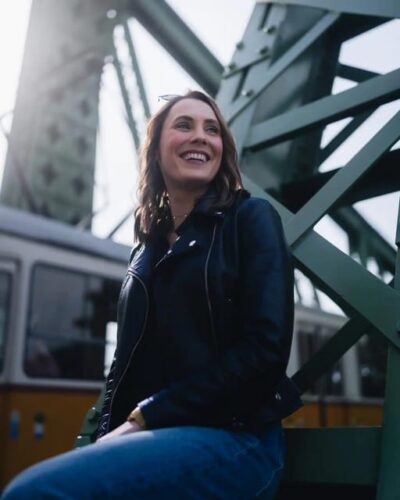
Street photos through the most beautiful streets of Budapest
Read our review →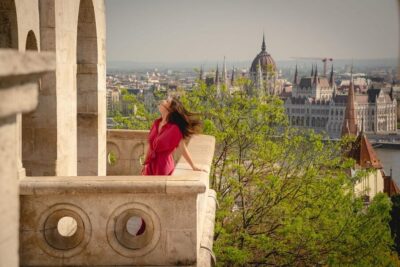
Browse the lists this tour appears in