
Reviewed · BUDAPEST COMMUNIST HISTORY TOURS
Budapest: 3-Hour Walking Tour About Communism (Small Group)
Budapest’s Communist past is not sealed away in a museum. On this three-hour walk, bullet holes, monuments, everyday street details, and a café that has changed little since 1961 help bring that history into the present. The small group format gives you room to ask questions and talk through what you see.
I like two things in particular: the guides connect national events to personal family stories, and the route includes a ride on Budapest’s red M2 subway, not just a string of outdoor stops. The final drink in a retro café offers time to keep talking rather than ending the tour at the last monument.
One consideration: this is a history-and-politics walk, not a sightseeing tour built around famous interiors or a long list of named landmarks. If you want a tightly chronological account, say so and ask questions as you go; the guide’s storytelling style can shape how the history unfolds.
What makes this walk worthwhile

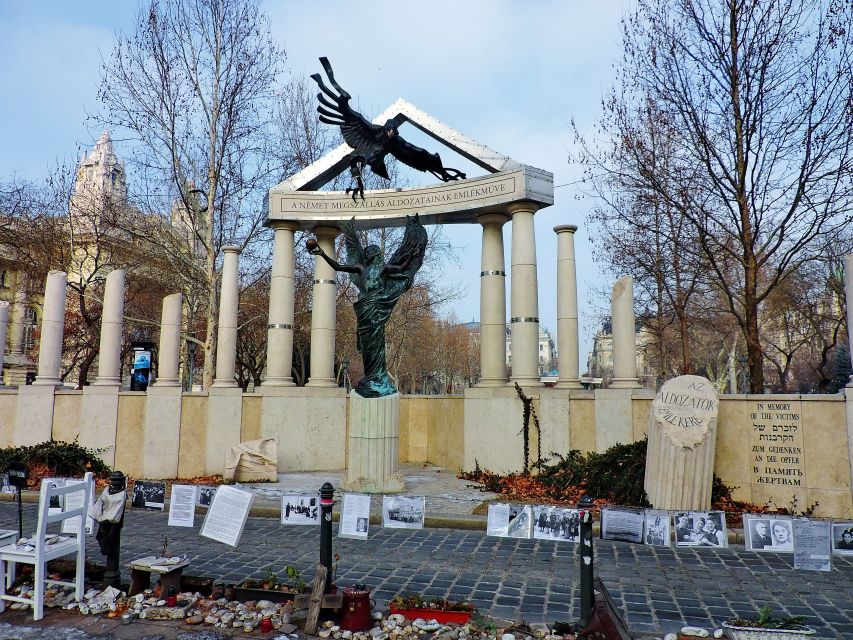
- Look for traces of the past in central Pest: Bullet holes and other reminders become clues to the city’s experience of war, revolution, and Communist rule.
- Put the 1956 revolution in context: The story reaches from World War II through the revolution and into the late 1980s and early 1990s.
- Hear family history alongside political history: Guides share personal and family accounts of hardship, daily life, and the system’s comic contradictions.
- Ride the red M2 subway: The included ticket makes this a walking tour with a short public-transport leg.
- Pause at a café dating to 1961: A drink and conversation in a place little changed since the 1970s add a lived-in note to the history.
- Keep the group small: With no more than 10 participants, it is easier to ask questions and discuss what you have seen.
Starting at Erzsébet tér
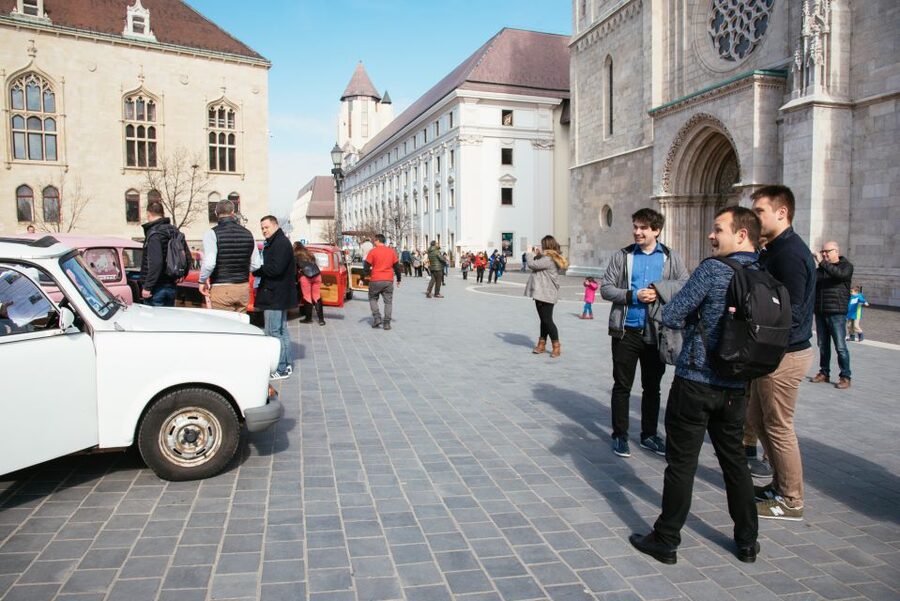
Meet in front of the Kempinski Hotel Corvinus Budapest, at Erzsébet tér 7, facing the Ferris wheel. The meeting point is central and easy to reach: Deák Ferenc tér serves the M1, M2, and M3 subway lines, with buses and trams nearby.
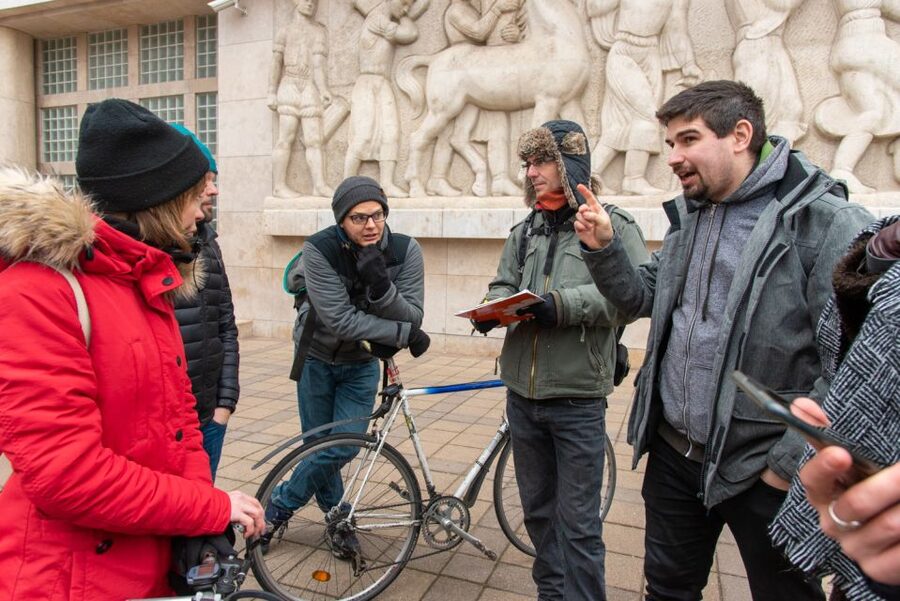
The tour begins in Pest, in an area described as one of the city’s pleasant central neighborhoods. That contrast matters. You are not walking through a preserved Communist-era set; you are looking at a living part of Budapest where older marks and newer city life share the same streets.
Your guide sets out to explain how Communist ideology arrived, how it operated in Hungary, and what it left behind. Rather than treating the period as a single block of time, the walk links it to earlier events and later changes. That wider frame is useful if your knowledge of Hungary begins and ends with the Soviet era.
More communist history tours in Budapest:
- Budapest: Communist History Tour with House of Terror Option
★ 4.8 · 182 reviews - Communism in Hungary with a Historian
★ 5.0 · 70 reviews - Budapest Hammer & Sickle Communist Times Tour
★ 4.5 · 68 reviews
Reading the street as a historical record
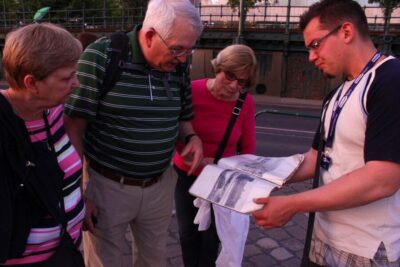
The early part of the walk uses visible details to open up the story. Bullet holes are among the traces mentioned, but the guide’s task is not simply to point them out. You’ll hear how events from World War II and the 1956 revolution shaped the city and the lives of people who lived through them.
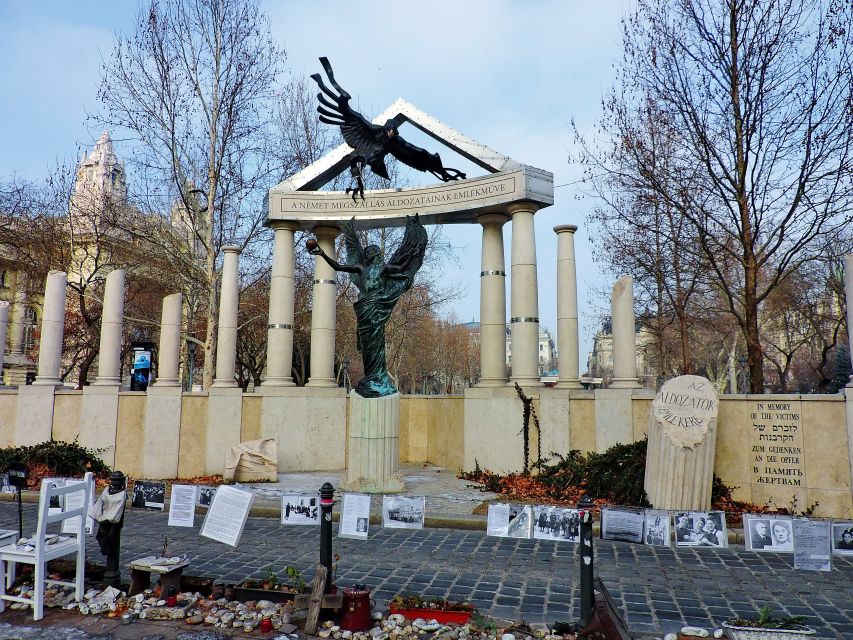
This is one of the tour’s strongest ideas: history is easier to grasp when it has a place. A mark on a building or a monument in a square can prompt questions about who put it there, what it commemorates, and how its meaning may have changed. The guide also draws attention to small details such as street art and pop-culture references, helping connect the past to Budapest as it looks today.
The exact stops may depend on the route and the guide. The information available does not name a fixed roster of monuments or buildings, so don’t book expecting a precise checklist of sites. Instead, expect a guided walk through central Pest where the places you pass support a larger account of Hungary’s modern history.
Making sense of Hungary’s Communist years
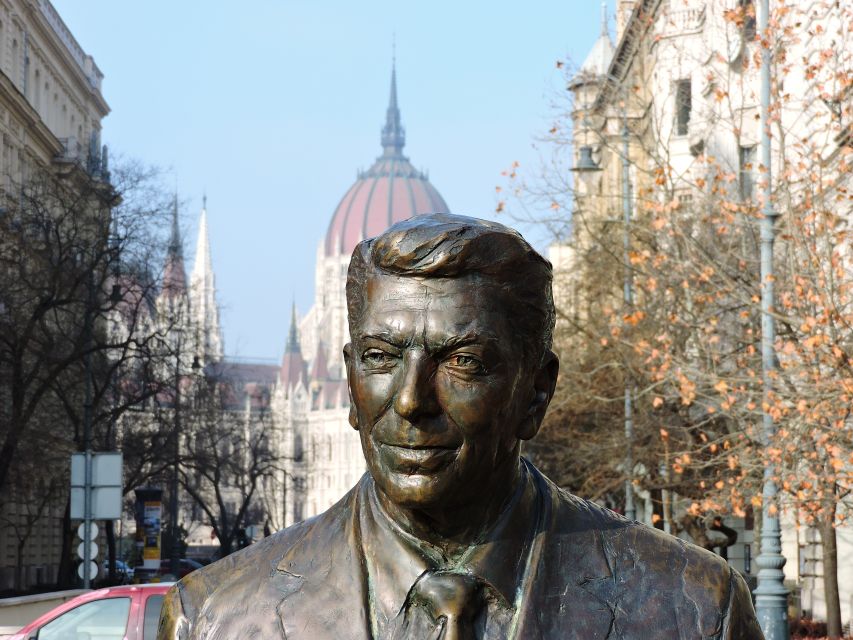
The tour’s main subject is the Communist era, but it also looks at what led into it and what followed. The guide covers the period from World War II through the 1956 revolution, then carries the story toward the political changes of 1989 and the early 1990s.
That span helps you understand why one political label cannot explain every decade of life under the system. The tour aims to cover its arrival, rule, and legacy, including how the system changed over time. Past participants have particularly valued discussion of post-1956 Hungary, the move toward a softer form of socialism, and the opening of the Hungary-Austria border.
You can also expect questions about the relationship between politics and ordinary life. Accounts from guides who grew up in Budapest have included reflections on church, media, and daily routines during and after socialism. That kind of personal context can make a broad political subject less abstract, especially if you have mostly encountered it through dates, leaders, and museum displays.
The tour encourages questions, and the small group size helps make that practical. If you are interested in a particular period or political issue, bring it up. One useful tip is to ask for a chronological outline if that is how you prefer to learn. The walk covers a broad stretch of history, and one participant felt the account could be more structured by date. That is a fair point to keep in mind: the personal storytelling and open discussion are a strength, but they may not follow the same tidy sequence as a lecture.
Personal stories that give the past a human scale
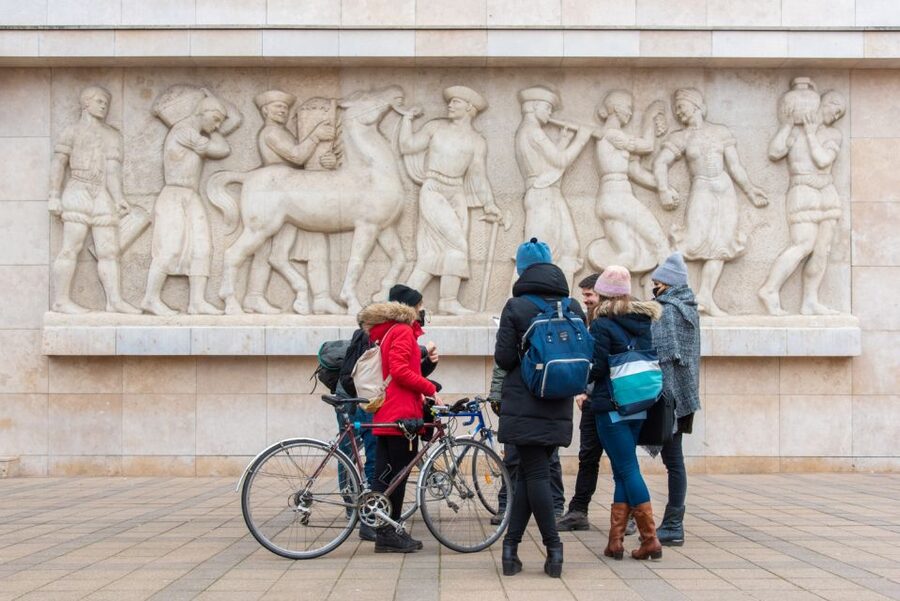
A historian’s explanation can tell you what happened. A family story can help you picture how people lived with it. Here, guides bring personal and family memories into the account, including experiences of hardship and the humor people found in a difficult system.
Several guides have led this walk, including Judit or Judith, Zsuzsanna, Monica, Greg or Gergely, Virág, Dániel, and Gábor. The guide assigned to your date is not specified, so you should not assume you will meet a particular person. What the tour description promises is an expert-led account, with the guide’s own or family experiences adding a local point of view.
That distinction is important. Personal stories are not a substitute for historical context, and a single family’s memories cannot represent everyone’s experience. The best use of them is alongside the wider account: they make political change feel close, while the historical explanation helps you see how one person’s experience fits into a national story.
The guides’ approach also seems to invite discussion rather than deliver a one-way speech. You can ask about contradictions and compare Hungary’s experience with events in your own country. If you enjoy that kind of exchange, the group’s limit of 10 is a real advantage. If you prefer a silent, tightly scripted tour, the conversational style may feel less predictable.
More walking tours in Budapest:
- Budapest: Buda Castle Walk with Saint Stephen’s Hall
★ 4.5 · 3,012 reviews - Big Bus Budapest Hop-On Hop-Off Bus and Walking Tour
★ 3.5 · 2,206 reviews - Budapest: Buda Castle District Walking Tour
★ 4.6 · 2,108 reviews - Budapest City Landmarks Walking Tour in 2 Hours
★ 5.0 · 2,048 reviews
The M2 ride and the café stop
A ticket for the red M2 subway is included, and the route uses it as part of the tour. That short ride breaks up the walking and gives the city’s public transport a place in the experience. It is a modest practical bonus, though the main value is the continuity of the guide’s commentary rather than the ride itself.
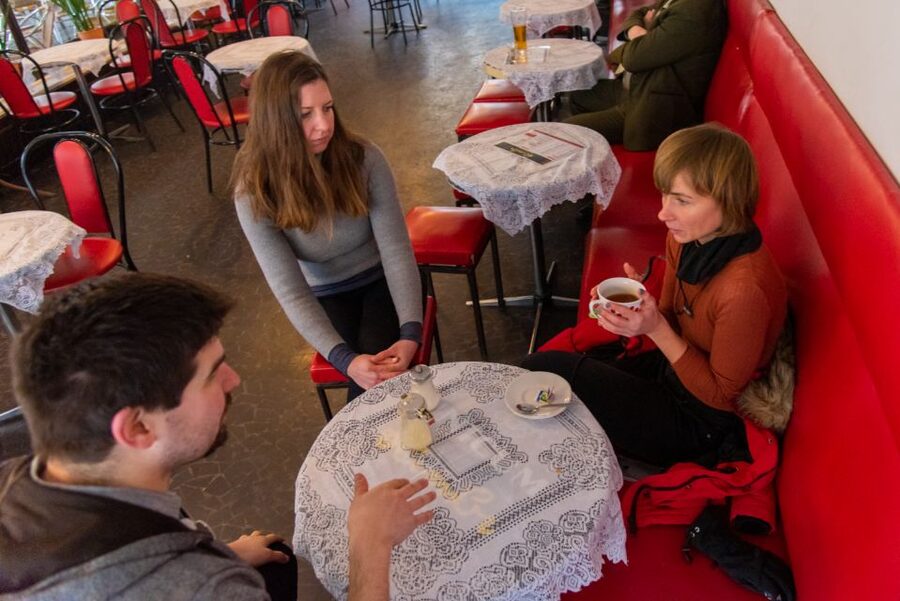
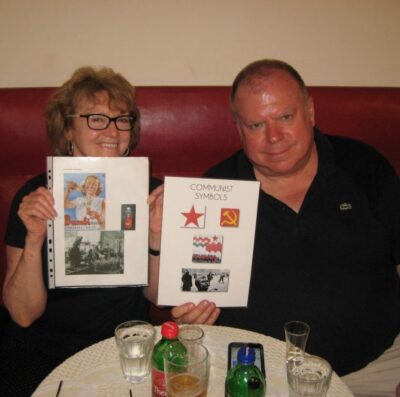
The tour ends with a drink in a retro café that opened in 1961 and has changed little since then. The stop is meant for a chat, not simply a quick photo. It offers a chance to ask the questions that come to mind after seeing the streets and hearing the stories.
The drink is included, but the specific beverage is not stated. One past participant mentioned beer, while others referred to a coffee break, so don’t count on a particular drink. The café’s atmosphere and the chance to talk with the guide are the more dependable reasons to look forward to the stop.
Is three hours and $57 a fair trade?
At $57 per person, this tour costs more than a basic group walk. The value depends on what you want from the time. You are paying for a small group, an English-speaking historian guide, a subway ticket, a drink, and a focused account of Hungarian history that connects public events with personal memories.
If your goal is to see as many landmarks as possible, you may find a general city walk better value. If you want to understand the history behind what you are seeing, this tour offers more than a route between photo stops. The strongest return is the guide’s interpretation: how Hungary’s political shifts affected daily life, and how those memories still inform the way the city is understood.
Three hours is long enough to cover a broad period, but it also calls for some attention. You’ll be walking and stopping to listen, then riding the subway and talking over a drink. Wear shoes you are comfortable walking in, and allow yourself to ask for clarification if the timeline feels dense. The tour is in English and the group is capped at 10.
You can reserve without paying immediately and cancel up to 24 hours in advance for a full refund. Starting times vary, so check availability for your date. Those terms offer flexibility, but the key decision is whether you want a focused history walk rather than a general introduction to Budapest.
Who will get the most from it?
I’d recommend this tour to anyone curious about Communism, modern Hungarian politics, or the way national history reaches into family life. It also suits visitors who have already seen the city’s main sights and now want to understand the stories attached to its streets.
It can work well as an early trip activity, too. A guide’s explanations may help you read monuments and public spaces during the rest of your stay. If you are already planning to visit a history museum, the walk can provide context for what you encounter there, though it is not a replacement for a museum visit.
It is less suited to someone who wants a casual stroll with only a little historical commentary. The subject is serious, the time span is broad, and discussion is part of the appeal. Families with older children who enjoy history may find the personal accounts engaging, but no age guidance is provided, so consider your group’s interest and attention span before booking.
Should you book this Budapest history walk?
Book it if you want more than dates and monuments: the small group, personal family accounts, M2 ride, and 1961 café stop give the tour several different ways into Hungary’s Communist past. The most useful preparation is to arrive with one or two questions, especially if you care about a particular period such as the 1956 revolution or the changes after 1989.
Skip it if you mainly want a fast overview of Budapest’s top sights or need a guaranteed, strictly chronological lecture. For history-minded visitors who value local perspective and open conversation, the $57 price is reasonable for three hours with transport and a drink included.
FAQ
Where does the tour meet?
Meet outside the Kempinski Hotel Corvinus Budapest at Erzsébet tér 7, facing the Ferris wheel.
How long is the tour?
The walk lasts three hours.
What language is the tour in?
The live guide speaks English.
How large is the group?
The small group is limited to 10 participants.
What parts of Hungarian history does the tour cover?
It explores the arrival, rule, and legacy of Communism, with context from World War II through the 1956 revolution and into 1989 and the early 1990s.
Is public transportation included?
Yes. A subway ticket is included, and the tour takes a ride on the red M2 line.
Is a drink included?
Yes. The tour includes a drink at a retro café that opened in 1961. The specific drink is not stated.
Can I cancel or wait to pay?
You can cancel up to 24 hours before the activity for a full refund. Reserve-now, pay-later booking is also available.
More 3-Hour Experiences in Budapest
- 3-Hour Orientation Walking Tour of Buda and Pest
★ 4.8 · 1,834 reviews - Budapest: 3-Hour Grand City Tour and Castle Walk
★ 4.3 · 1,437 reviews - Budapest: 3-Hour Live Guided Sightseeing Tour
★ 4.4 · 1,041 reviews - 3 Hours Budapest Segway Grand City Tour Buda, Margaret and Pest
★ 5.0 · 255 reviews
Fresh additions in Budapest
- Best of Budapest Tour★ 5.0 · 7 reviews
- Be a movie star! Film Tour, Escape room, in Budapest and Etyek★ 5.0 · 3 reviews
- Shooting package 70★ 5.0 · 14 reviews
- Best Historical Sights of Budapest Tour★ 5.0 · 7 reviews
- Capital Budapest – Half Day Private Tour (4hr)★ 5.0 · 7 reviews
- BUSÓJÁRÁS Unesco Heritage Folklore Carnival in Mohács★ 5.0 · 4 reviews
- Budapest 4 Hour Tour with a Local: Private & Custom, See the City Unscripted★ 4.0 · 7 reviews
- Analog Photo Trip★ 5.0 · 5 reviews
Budapest Communist History Tours, compared.
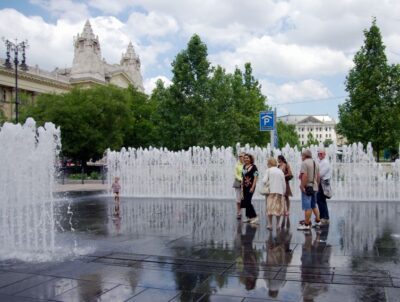
Communist History Tour with House of Terror Option
Read our review →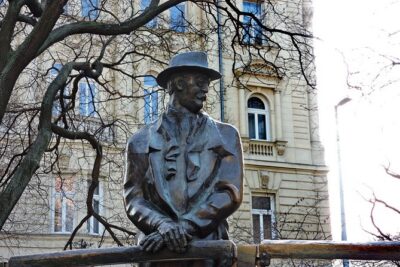
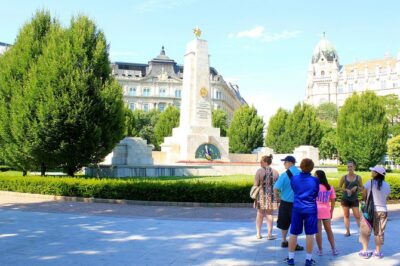
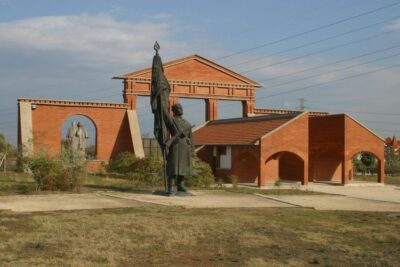
Memento Park: Official Guided Tour with Entry Ticket
Read our review →
Browse the lists this tour appears in