
Reviewed · BUDAPEST STREET ART TOURS
Budapest Art Nouveau Walking Tour
Budapest’s Art Nouveau is more than pretty façades: it is a local design movement with its own ideas about Hungarian identity, Asian influences and the use of colorful Zsolnay ceramics. On this three-hour walk, an art and architecture historian helps you read those ideas in buildings you might otherwise pass without a second look.
I like that the route pairs major landmarks such as Gresham Palace with smaller, more intimate stops, including a flower shop with its original interior and an Art Nouveau museum and coffee house. I also like the focus on Ödön Lechner, whose Hungarian Secession style gives the walk a clear story rather than a string of decorative buildings.
The main consideration is access: some interiors are closed on particular days, and the route may change to suit the schedule. At $123 per person, the price makes most sense if you want expert interpretation and a small-group or private experience, not simply a guided stroll past façades.
What to know before you book
- Lechner’s Hungarian Secession gives the tour a local focus, with porcelain details and motifs drawn from Asian design.
- Gresham Palace and the former Royal Post building are key architectural stops, with entrance halls open to visitors when access permits.
- Zsolnay ceramics are a recurring theme, and you may see them on buildings as well as in examples from the factory in Pécs.
- The route can shift by day. The National Bank is not open to visitors on weekends, and the Kazinczy Street Orthodox Synagogue is closed on Saturdays.
- Some admissions cost extra. The House of Hungarian Art Nouveau and the synagogue may charge separate entry fees when open.
- Three hours on foot is enough to sample several styles and interiors, but it only scratches the surface of Budapest’s Art Nouveau.
Hungarian Secession, not just decorative trim
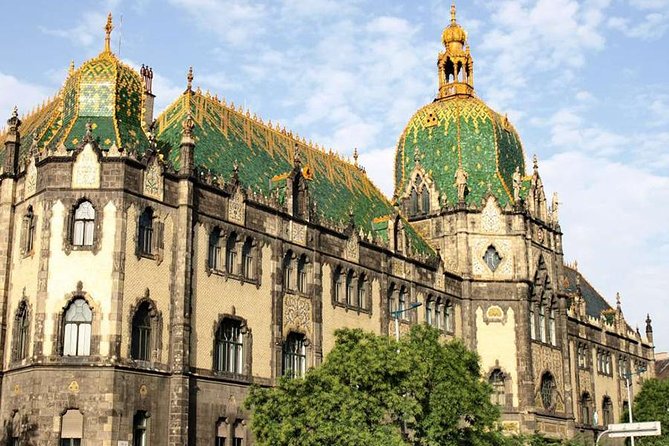
Art Nouveau swept through Europe around the turn of the 20th century, shaping buildings, applied arts and fine art. Budapest developed a distinct local version, known as Hungarian Secession. Its best-known figure was Ödön Lechner, sometimes called Hungary’s Gaudí, whose work used ceramics and motifs linked to the supposed eastern origins of the Hungarian people.
That context helps make this tour more than a hunt for pretty tilework. You learn to notice how designers used materials, patterns and references to build a style that felt both modern and specifically Hungarian. The tour also sets those choices against the broader European fashion for Orientalism, so Asian-inspired details are explained as part of a larger period trend, not just as decoration.
I would take this walk early in a Budapest visit if architecture is high on your list. Once you understand what to look for, you can spot related details elsewhere in the city. If you have already seen the major Art Nouveau landmarks, the historian’s explanations may still add value, but the tour’s strongest appeal is its ability to make unfamiliar buildings legible.
More street art and art nouveau tours in Budapest:
- Budapest: Street Art and Underground Movements Walking Tour
★ 5.0 · 238 reviews - Alternative Street Art Free Walking Tour of Budapest
★ 4.5 · 53 reviews - Street Art and Alternative Tour in Budapest
★ 5.0 · 52 reviews
Bedő House and Lechner’s design language
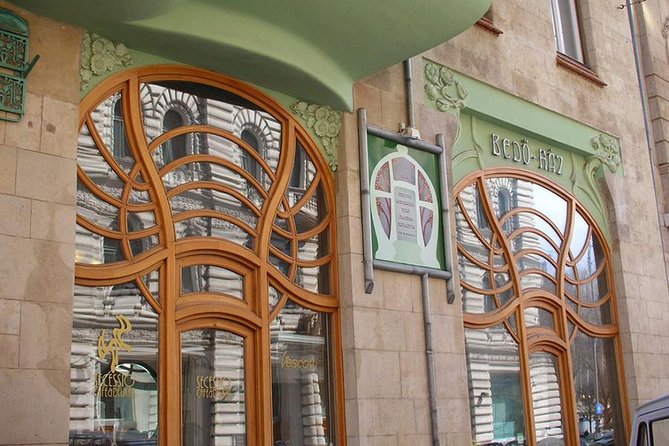
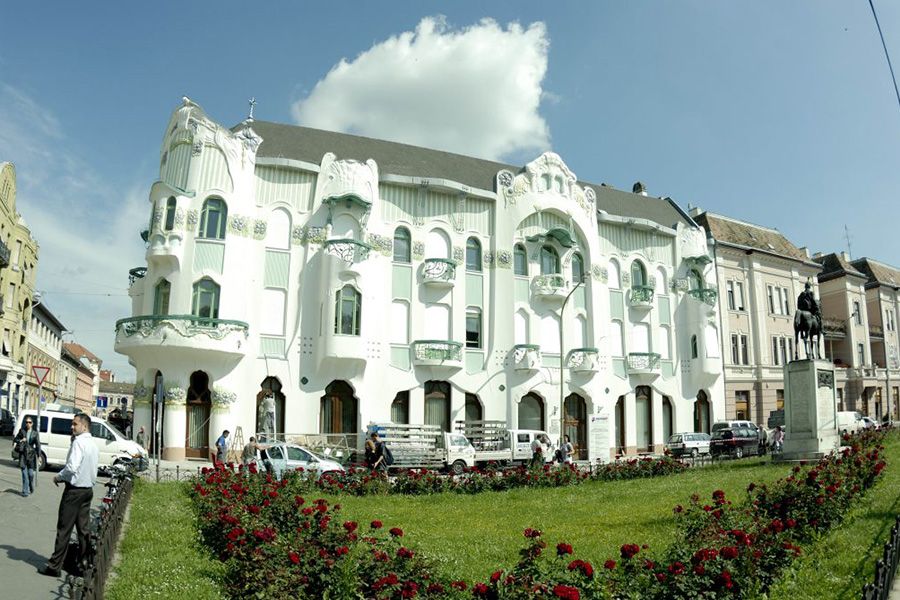
The listed route includes Bedő House, a useful place to begin looking closely at the movement’s decorative language. Rather than treating an Art Nouveau building as a single pretty object, pay attention to how its façade combines form and ornament. The guide’s role is to connect what you see to the period’s ideas and to Hungary’s own Secession style.
The walk’s broader focus is Lechner and the architectural confidence of early 20th-century Budapest. His buildings are associated with colorful porcelain, particularly Zsolnay tiles, and with patterns inspired by Asian art. Those elements can make a façade feel playful and unusual, but the historical explanation keeps the tour from becoming a simple checklist of flowers, curves and bright surfaces.
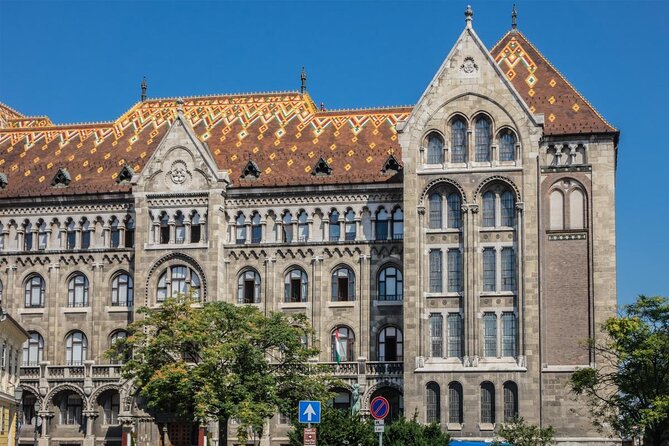
The tour highlights the Palace of the Royal Post, also known as the Postal Bank, as one of its major examples. Its flamboyant design makes it a natural place to consider Lechner’s approach. The building’s entrance hall is among the interiors visitors may be able to see, giving you a chance to compare exterior ornament with the details inside.
The Hungarian State Treasury and Zsolnay ceramics
The Hungarian State Treasury is another stop on the route, and the tour places it in the context of the movement’s distinctive use of ceramic decoration. Zsolnay porcelain, produced in the southern Hungarian town of Pécs, is one of the most useful clues for understanding Hungarian Art Nouveau. It offered designers a way to bring color and texture onto building façades, not only into indoor objects.
That material focus is a practical reason to go with a guide. From street level, a ceramic detail may register as a patch of color; with context, you can start to see why the material mattered to the building’s character and to the local style. The tour also points to Zsolnay examples at Thonet House and to ceramics associated with the National Bank, when access allows.
Weekend timing matters here. The Hungarian National Bank cannot be entered on weekends, so you should not book expecting to see its interior on a Saturday or Sunday. The route can be adjusted, and other Art Nouveau sites may be added instead. The tour’s value depends less on ticking off every named building than on understanding the design choices you do get to see.
Gresham Palace, from façade to entrance hall
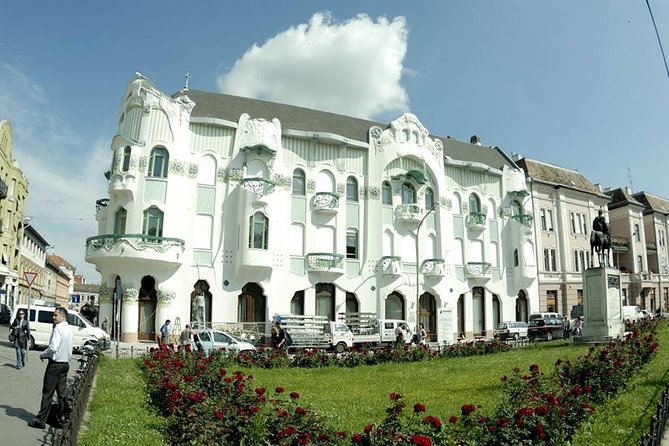
Gresham Palace is one of the tour’s central landmarks. Its exterior offers plenty to examine, and the palace is also among the buildings where visitors may be allowed into the entrance hall. That interior glimpse matters: Art Nouveau is not only a street-facing style, and seeing how the design carries indoors helps you grasp the full effect.
I would treat this stop as a chance to slow down. Look at the transition from the façade to the entrance, and let the guide point out details you might miss while trying to take in the whole building. The tour is not a substitute for an independent visit to every grand building in Budapest, but guided access to an interior can make a short walk feel more substantial.
Access can depend on circumstances, so keep some flexibility in your expectations. The tour description identifies the entrance hall as accessible to visitors, but it does not promise that every room or interior space will be open. This is a focused architectural visit, not a full palace tour.
More walking tours in Budapest:
- Budapest: Buda Castle Walk with Saint Stephen’s Hall
★ 4.5 · 3,012 reviews - Big Bus Budapest Hop-On Hop-Off Bus and Walking Tour
★ 3.5 · 2,206 reviews - Budapest: Buda Castle District Walking Tour
★ 4.6 · 2,108 reviews - Budapest City Landmarks Walking Tour in 2 Hours
★ 5.0 · 2,048 reviews
Rózsavölgyi Street, shops and smaller interiors
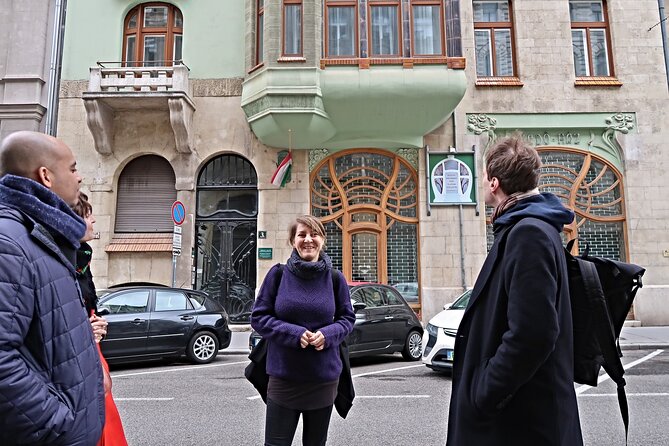
Rózsavölgyi Street appears on the route alongside a mix of smaller stops: a flower shop with its original interior, a department store and several bank offices. These places broaden the picture beyond landmark architecture. They show how the style reached commercial spaces and everyday city life, not just monumental buildings.
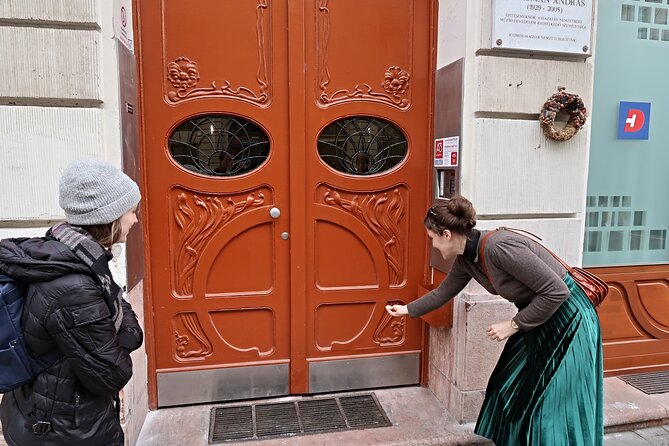
The original flower-shop interior is especially appealing if you enjoy details at human scale. A grand palace can impress from across a square; a preserved shop interior lets you see how the design language worked in a setting people used more intimately. The tour also includes a small Art Nouveau museum and coffee house, where examples of ceramics from the Zsolnay factory help tie the material story together.
Some stops are more dependent on opening hours and the day’s route than others. If a particular interior is important to you, ask about the schedule before booking. The experience is designed to adapt to conditions, so it is wise to think of these places as part of a flexible architectural walk rather than a guaranteed sequence of doorways.
Paris Passage and the final stretch
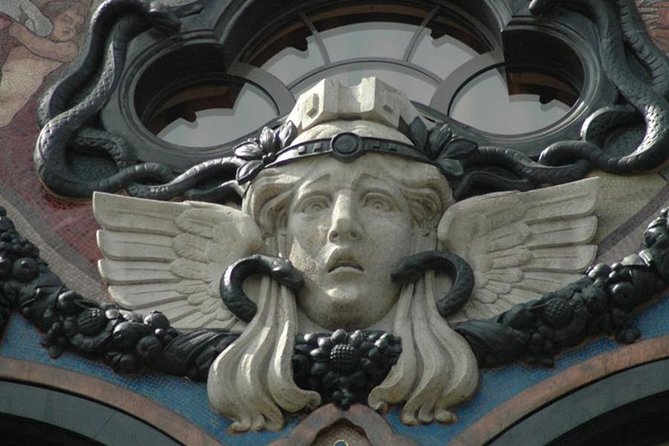
Paris Passage is included as a guided stop, adding another chance to look at Budapest’s turn-of-the-century design. The exact sequence may vary, especially when weekend closures affect access. The tour’s overview also describes a finish at the Kazinczy Street Orthodox Synagogue, whose Art Nouveau interior is one of the most unusual potential stops.
That synagogue is a strong reason to check the day carefully. It is closed on Saturdays, and an additional fee of 2,000 HUF, about $7, may apply when it is open. If it cannot be visited, the guide may adapt the tour to your interests or include other Art Nouveau sites, such as the Gellért Bath Hotel, the Museum of Applied Arts or the Geology Museum.
Those alternatives can change the character of the outing, but they keep the focus on Budapest’s architecture. The main point is to confirm what is planned for your date, especially if the synagogue interior is a priority. On a Saturday, you should expect a different version of the tour.
Three hours and a $123 price tag
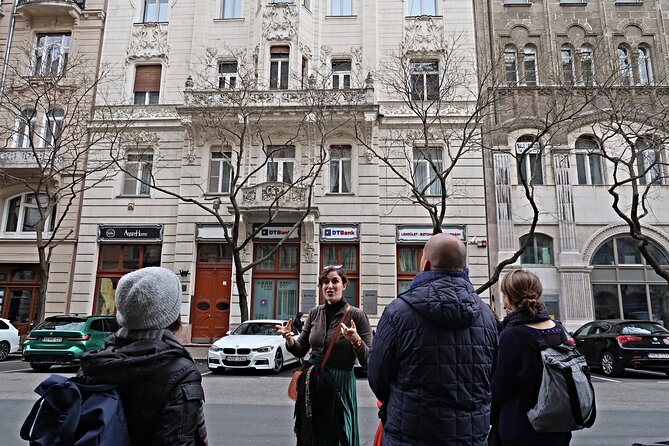
The tour lasts three hours and costs $123 per person. That is a substantial price for a walking tour, so the value depends on what you want from it. You are paying for a historian guide, a carefully focused subject and the chance to understand details across several buildings, with private or small-group options available.
If you are content to photograph façades and read about them later, a self-guided walk may be enough. If you want to connect Zsolnay ceramics, Lechner’s designs, Asian motifs and the city’s Belle Époque confidence into one clear story, expert commentary can justify the expense. The ability to tailor the route is also useful when some sites are closed.
The price does not include tram or metro tickets. The experience is a walking tour, but you may want to use public transport around Budapest before or after it, so budget separately for those fares. Optional hotel or holiday-flat pickup is available; if you prefer to meet centrally, the meeting point is Madal Café at Alkotmány u. 4.
You can book with payment deferred and cancel up to 24 hours in advance for a full refund. Those terms offer some flexibility, but the practical choice is still to check the starting time and access plan for your day before committing.
The guide and the group experience
The tour is offered in English and led by an art and architecture historian. One guide, Anna, was praised for her friendly manner and strong knowledge of Budapest’s art and history. That is the kind of expertise this subject needs: not a lecture loaded with names, but someone who can explain why the building in front of you matters.
Private and small-group options are available, though the exact group size is not specified. A smaller format can be helpful when you want to ask questions or spend more time on a detail, but you should confirm the format when choosing your option. The tour is not described as a general overview of Budapest, so it suits you best if architecture and design are genuine interests.
The walking format also means you should be comfortable spending three hours on foot. No special equipment or physical demands are specified, so do not assume more than that. If you need details about walking distance or accessibility, ask the provider before booking.
Should you book this Budapest Art Nouveau walk?
Book it if you want to understand Budapest’s Art Nouveau as a local movement, not just admire ornate buildings from the pavement. The strongest reasons are the focus on Lechner and Hungarian Secession, the attention to Zsolnay ceramics, and the possibility of seeing interiors such as Gresham Palace’s entrance hall or the Kazinczy Street Synagogue.
Think twice if your main goal is a low-cost city orientation walk or if you need guaranteed access to a specific interior. The price is easiest to justify for an architecture-minded visitor who values a historian’s explanations and is comfortable with a route that changes around opening days.
Before booking, check whether your date is a Saturday or weekend, ask which interiors are expected to be open, and confirm any additional admission charges. If those details suit you, this is a focused, rewarding way to see how Budapest’s Belle Époque designers gave the city a style of its own.
FAQ
How long is the Budapest Art Nouveau Walking Tour?
The tour lasts three hours.
What language is the tour conducted in?
The live tour guide speaks English.
Is the tour private or shared?
Private or small-group options are available. The exact group size is not specified.
Where does the tour start?
The starting location depends on the option selected. If you choose a central meeting point instead of pickup, the meeting place is Madal Café, Budapest, Alkotmány u. 4.
Are tram and metro tickets included?
No. Tram and metro tickets are not included.
Can I visit the Kazinczy Street Orthodox Synagogue?
The tour may include the synagogue when it is open, but it is closed on Saturdays. An additional fee of 2,000 HUF, about $7, may apply.
Are there extra admission costs?
There may be extra costs if the sites are open during your tour: 1,000 HUF, about $3.50, for the House of Hungarian Art Nouveau, and 2,000 HUF, about $7, for the Kazinczy Street Orthodox Synagogue.
Fresh additions in Budapest
- Best of Budapest Tour★ 5.0 · 7 reviews
- Be a movie star! Film Tour, Escape room, in Budapest and Etyek★ 5.0 · 3 reviews
- Shooting package 70★ 5.0 · 14 reviews
- Best Historical Sights of Budapest Tour★ 5.0 · 7 reviews
- Capital Budapest – Half Day Private Tour (4hr)★ 5.0 · 7 reviews
- BUSÓJÁRÁS Unesco Heritage Folklore Carnival in Mohács★ 5.0 · 4 reviews
- Budapest 4 Hour Tour with a Local: Private & Custom, See the City Unscripted★ 4.0 · 7 reviews
- Analog Photo Trip★ 5.0 · 5 reviews
Budapest Street Art Tours, compared.
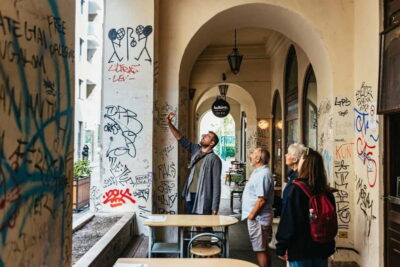
Street Art and Underground Movements Walking Tour
Read our review →
Alternative Street Art Free Walking Tour of Budapest
Read our review →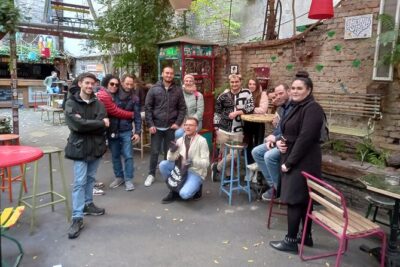
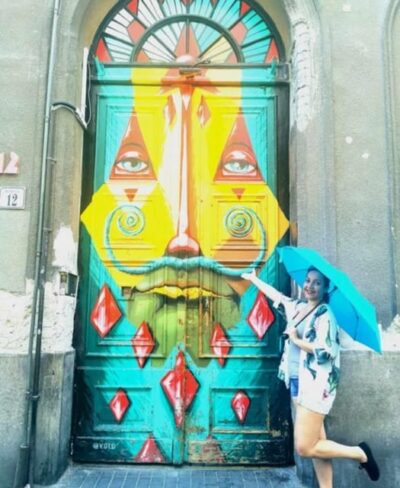
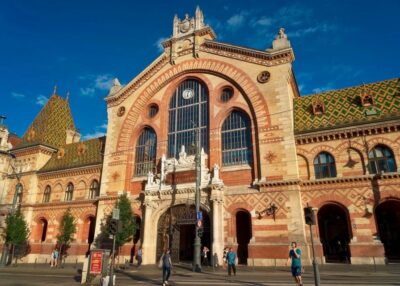
Art Nouveau Tour in Budapest: 3-Hour Private Tour
Read our review →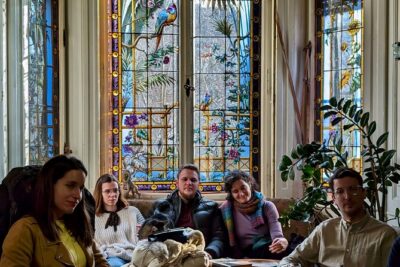
Art Nouveau Treasures of Budapest – Exclusive Private Tour
Read our review →
Browse the lists this tour appears in