
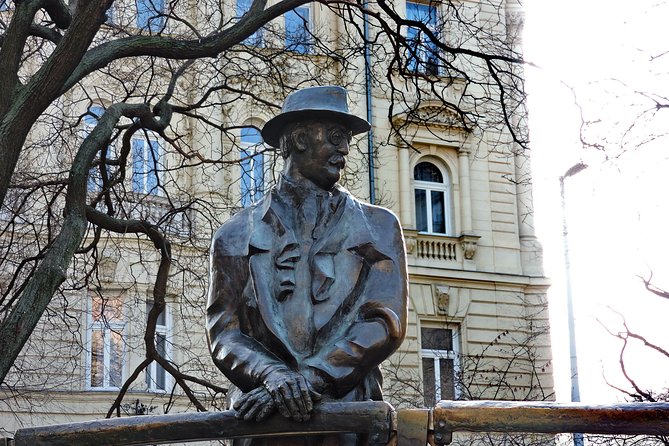
Reviewed · BUDAPEST COMMUNIST HISTORY TOURS
Communism in Hungary with a Historian
Budapest’s communist past is written into its squares, statues, embassies, and family memories. On this three-hour walk, a historian helps you read those clues, from the former Stalin Square to the site of a deadly moment in the 1956 revolution. The aim is not just to name dates, but to connect political change with ordinary Hungarian life.
I like two things in particular: the small group, capped at 10, leaves room for questions, and guides bring history close with personal and family stories. I also like that the tour includes metro tickets and finishes, usually, at Bambi Café, a place that has operated since 1961.
One consideration: this is an outdoor walking tour, and some stops are brief or viewed from outside. You will not tour the interior of St. Stephen’s Basilica or the Parliament, so book for context and conversation rather than indoor access.
Key points
- The route links Buda and Pest: You start at Elizabeth Square and usually finish across the river at Bambi Café.
- A historian leads the walk: Guides have included Judit, Raymond, Gábor, Greg, András, Virág, and others.
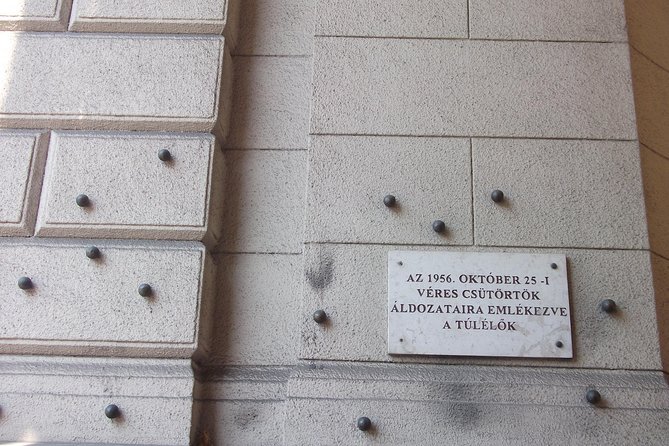
- The 1956 revolution gets specific attention: At Kossuth Square, the guide explains Bloody Thursday, a pivotal event in the uprising.
- Personal accounts add human scale: Stories have covered nationalized family businesses, assigned housing, church life, and the fear of being reported to the party.
- Metro tickets and coffee are included: These practical touches are part of the $59.13 price.
- Expect an exterior-focused route: The basilica and Parliament are seen from outside, while memorials and public spaces carry much of the storytelling.
Read Budapest’s squares as evidence
This tour is a good choice if you want to understand what communism meant in Hungary beyond a textbook summary. Budapest’s streets provide the setting, but the guide’s job is to connect visible landmarks with questions of power, religion, property, work, and daily life.
That distinction matters. A monument can be easy to photograph and hard to interpret. With a historian beside you, you can ask why a memorial stands where it does, how public memory has shifted, and what life looked like for families who lived through the system.
The guides have different backgrounds and styles, but the best parts of the experience are consistent: clear explanations, open discussion, and stories that make broad political changes feel personal. Some have shared family experiences of nationalization and housing changes. One account described a family business taken over by the state, with its former owner reduced to poorly paid work in the same factory under a party loyalist. Another described families being made to give up apartments and move into poorer quarters.
These details give you a sense of how control reached into private life. You are not only hearing about leaders and policy. You are considering what happened to someone’s work, home, faith, and sense of safety.
More communist history tours in Budapest:
- Budapest: Communist History Tour with House of Terror Option
★ 4.8 · 182 reviews - Budapest: 3-Hour Walking Tour About Communism (Small Group)
★ 4.7 · 70 reviews - Budapest Hammer & Sickle Communist Times Tour
★ 4.5 · 68 reviews
Begin at Elizabeth Square, once Stalin Square
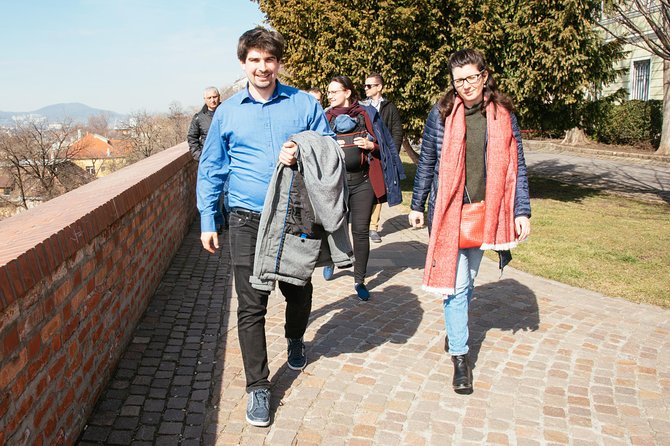
The meeting point is outside the Kempinski Hotel Corvinus Budapest at 7-8 Erzsébet tér. The tour begins at 2 pm, and the square itself is the first stop. It was once known as Stalin Square, a name that makes the political changes of the last century feel close at hand.
You have about 15 minutes here. That is enough time to orient yourself and hear stories about the square’s past and its monuments, but not enough for a long history lecture. Think of this as the opening chapter: a public place whose name and meaning have changed along with Hungary’s politics.
The group is limited to 10, which helps at a busy central meeting point and makes it easier to hear the guide. Small size also suits a tour where questions are part of the experience. If a detail about a statue, family life, or a political term catches your attention, you have a better chance of following it up than you would in a large walking group.
Pass St. Stephen’s Basilica and discuss faith under communism
The walk continues past St. Stephen’s Basilica. You see the church from outside, with around 15 minutes devoted to its place in religious life during the communist period. This is a short stop, but it opens up a useful subject: how religious institutions and ordinary believers managed under a government that sought to control public life.
The guide may draw on family stories to make the subject less abstract. Stories shared on this tour have covered the pressure placed on churches, including claims that churches had to make payments to the party to keep operating. The value here lies in hearing how people navigated the rules and compromises of the time, not in entering the basilica.
Be clear about the format before booking. Admission to the basilica is not included, and the tour describes an exterior visit. If you want to explore the interior, plan a separate visit.
Spend more time among the memorials at Szabadság tér
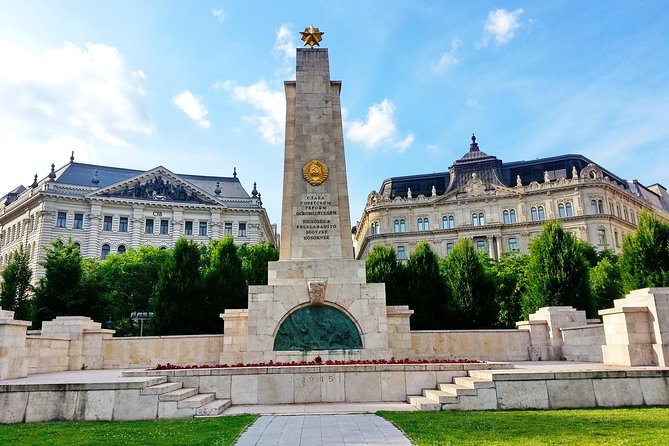
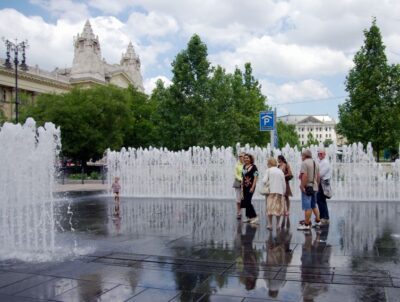
Szabadság tér, or Liberty Square, is the longest listed stop, at about 45 minutes. That extra time makes sense: the square brings together memorials, statues, embassies, and layers of public memory. The guide uses these surroundings to explain how Hungary’s communist period is recalled and contested.
You may also see part of a bunker from the outside. The route is not an underground bunker visit, so keep expectations modest, but even an exterior glimpse can help anchor discussion of the Cold War and the security structures of the era. Some versions of the walk have also included an old train station among the sites and stories. Exact emphasis can vary with the guide and the day.
This is the section where questions can do the most work. Ask how a memorial’s meaning has changed, what a particular statue represents, or how Hungary’s experience differed from the broader story of Soviet-era Europe. The guides have been praised for discussing not just communism but also the years between the world wars, World War II, and the country’s more recent politics. That wider frame helps explain how one period led into another.
The square is also a reminder that public history is not always tidy. Different monuments can tell competing stories, and a historian can help you see why the same place may carry more than one meaning. You will be outdoors throughout, so in cold or wet weather, bring a warm layer and rain protection.
More Budapest tours in Budapest:
- Budapest: City Highlights Cruise with Welcome Drink
★ 4.6 · 35,610 reviews - Budapest: Unlimited Prosecco, Beer and Aperol Spritz Cruise
★ 4.8 · 25,310 reviews - Budapest: Széchenyi Spa Day Ticket with Optional Upgrades
★ 4.3 · 23,911 reviews - Budapest: Nighttime or Daytime Sightseeing Cruise
★ 4.2 · 21,062 reviews
Hear about Bloody Thursday at Kossuth Square
At the Hungarian Parliament Building, the guide discusses Bloody Thursday, one of the most important events of the 1956 revolution. The listed stop is about 15 minutes, and the Parliament is viewed from outside. You are there to understand the event and its setting, not to tour the building.
This concise stop gives the walk a clear historical focus. Instead of treating the 1956 uprising as a single date or a broad political label, the guide places a particular episode in a specific public space. That helps you connect the revolution to the city around you.
The Parliament is a striking backdrop, but the real value is the explanation. If you are particularly interested in the 1956 revolution, ask how the events at Kossuth Square fit into the wider uprising and its aftermath. The tour’s short schedule means you will get context rather than a full academic treatment.
Take the metro, then settle into Bambi Café
Metro tickets are included, and the route uses public transport to connect the areas covered on foot. That is a practical benefit in a city where the tour crosses between Pest and Buda. You do not need to sort out a separate ticket for this part of the experience.
The usual finish is Bambi Café at Frankel Leó út 2-4, on the Buda side near the center and Margaret Bridge. The café opened in 1961 and, according to the people who run the tour, has changed little since then. That gives the ending an appealing sense of continuity: after hearing about political life under communism, you can sit in a place that dates from the period itself.
Coffee is included. Some participants have described staying for a drink and talking through the day’s themes, but do not assume that other drinks are included in the tour price. On colder or wet days, the guide may end on the Pest side near the starting area instead. That change is practical, so the Bambi ending is best treated as the usual plan rather than a guarantee.
What the guide adds to the experience
This is not a scripted parade of dates. The quality of the afternoon depends on the guide’s ability to explain complex history in plain language and make room for discussion. The strongest accounts have come from guides such as Judit, Raymond, Gabriel or Gábor, Greg, András, and Virág. You may not have a particular guide on your date, but the tour is designed around a historian’s perspective.
The personal details are especially useful. A family story about a seized business or reassigned apartment can show what a policy meant in practice. Stories about religious life and the fear that someone might report you to the party bring out the atmosphere of mistrust and compromise. These anecdotes do not replace historical context, but they make it easier to remember.
The guides have also been described as patient with questions and willing to discuss Hungary’s past and present. That can be a real advantage if you want to ask about connections between the communist period and current events. Keep in mind that conversation may range beyond the exact sites, so bring questions that interest you.
Is $59.13 fair value for three hours?
At $59.13 per person, this costs more than simply walking through the squares on your own. The difference is the historian’s interpretation, the small group, the included metro tickets, and coffee at the end. If you want the monuments explained and the complicated parts of Hungarian history put into everyday terms, that combination can justify the price.
The cap of 10 is meaningful. It supports a more conversational pace and makes it easier to hear the guide, particularly in public spaces. The tour lasts about three hours, long enough to cover several themes without turning into a full-day commitment.
The value is less compelling if you mainly want access to interiors or a broad sightseeing loop. The basilica and Parliament are exterior stops, and the route focuses on communism rather than Budapest’s full range of attractions. For a first visit, you may want to pair it with a general city tour or time at the sites themselves.
The experience is priced in dollars at $59.13 per person, and it is typically booked about 23 days in advance. Confirmation is provided at booking, and you can cancel up to 24 hours before the start for a full refund. The activity is offered in English, service animals are allowed, and most people can participate.
Who should book this walk?
I would choose this tour if you are interested in modern European history, the 1956 revolution, or the effect of government policy on ordinary life. It is also a strong fit if you have already seen Budapest’s famous buildings and want to understand the stories behind the streets.
It is less suited to anyone looking for a fast list of photo stops, extensive indoor visits, or a tour focused only on architecture. The route is mainly about context and conversation. You should also be comfortable spending several hours outdoors and using the metro as part of the walk.
The tour has a 4.9 rating from 70 reviews, and 99 percent of participants recommend it. Those figures match the experience’s strongest selling point: guides who make a difficult subject clear, personal, and open to questions. If that is what you want from an afternoon in Budapest, this is a worthwhile way to spend it.
FAQ
How long is the tour?
It lasts about three hours.
What time does the tour start?
The tour starts at 2 pm.
Where does the tour begin?
It begins at the Kempinski Hotel Corvinus Budapest, at 7-8 Erzsébet tér in Budapest.
Where does the tour end?
It usually ends at Bambi Café on the Buda side, near the center and Margaret Bridge. In cold or wet weather, it may end on the Pest side near the starting area.
Are metro tickets included?
Yes. Metro tickets for the tour are included.
Is coffee included?
Yes. Coffee is included at the usual end point, Bambi Café.
What language is the tour offered in?
The tour is offered in English.
Fresh additions in Budapest
- Best of Budapest Tour★ 5.0 · 7 reviews
- Be a movie star! Film Tour, Escape room, in Budapest and Etyek★ 5.0 · 3 reviews
- Shooting package 70★ 5.0 · 14 reviews
- Best Historical Sights of Budapest Tour★ 5.0 · 7 reviews
- Capital Budapest – Half Day Private Tour (4hr)★ 5.0 · 7 reviews
- BUSÓJÁRÁS Unesco Heritage Folklore Carnival in Mohács★ 5.0 · 4 reviews
- Budapest 4 Hour Tour with a Local: Private & Custom, See the City Unscripted★ 4.0 · 7 reviews
- Art Nouveau Treasures of Budapest – Exclusive Private Tour★ 5.0 · 18 reviews
Budapest Communist History Tours, compared.
Communist History Tour with House of Terror Option
Read our review →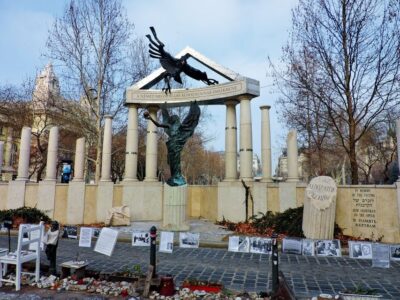
3-Hour Walking Tour About Communism (Small Group)
Read our review →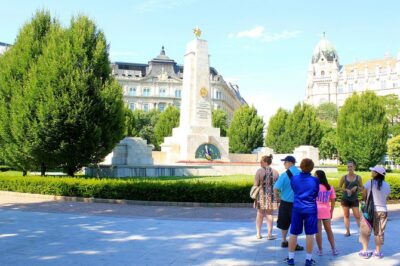
Memento Park: Official Guided Tour with Entry Ticket
Read our review →
Browse the lists this tour appears in