
Reviewed · BUDAPEST COMMUNIST HISTORY TOURS
Budapest Hammer & Sickle Communist Times Tour
Budapest’s communist years come into focus when you connect the grand public squares to the private details of daily life: travel permits, scarce bananas, and the quiet rules families learned to live by. This 2.5-hour walk links sites of the 1956 Revolution with an interactive exhibit that makes the era feel less like a chapter in a book and more like a home someone actually lived in.
I like two things in particular: the tour pairs major political events with everyday stories, and the group is capped at 10, giving you room to ask questions. You also get useful context on the world wars and the Iron Curtain, rather than being dropped into 1956 without a map of how Hungary got there.
One consideration: at $79.65, this is a paid history walk, not a bargain-basement city stroll. Its value depends on wanting a guide to explain the sites and the exhibit. There are no headphones, so stay close enough to hear, and dress for the weather.
What to know before you go
- Follow the 1956 story on foot: Visit sites connected to speeches, protests, the Soviet response, and the revolution’s aftermath.
- See history at home scale: The interactive exhibit explores family life, childhood, travel restrictions, black markets, and banana queues.
- Get more than a communist-era timeline: The guide sets the scene with Hungary’s experience of World War I and World War II.
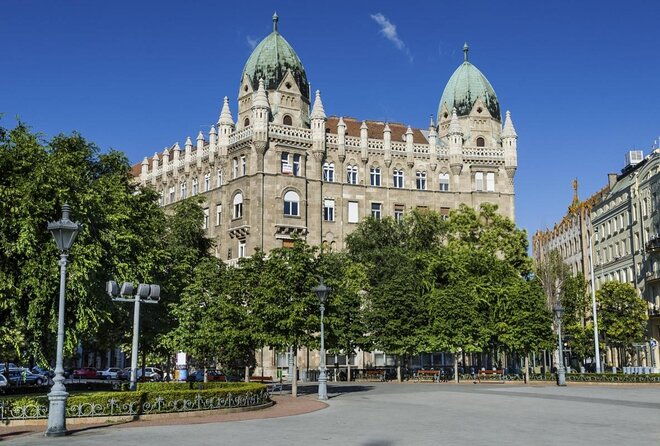
- Finish near Liberty Square: The walk starts by the Lutheran Church at Deák Ferenc Square and ends at Szabadság tér 1.
- Expect a small group and an afternoon start: Tours are limited to 10 people and begin at 3 p.m.
- Plan for a little flexibility: The advertised duration is about 2 hours 30 minutes, though some tours have run longer.
Why this walk makes Budapest’s recent past easier to read
The tour tackles a complicated stretch of Hungarian history, from the world wars through Soviet occupation and the 1956 uprising, then toward the fall of the Iron Curtain. That breadth matters. The 1956 Revolution did not appear out of nowhere, and a short introduction to the earlier political shifts helps you understand why people were ready to protest, what they were demanding, and why the Soviet response carried such force.
The guide begins with Hungary’s place in World War I and World War II, then connects those events to the rise of communist rule. You’ll hear how the Communist Party took power and how the Soviet presence shaped political life. The emphasis is not only on leaders and dates, but also on the people who had to make ordinary decisions under a system that restricted travel and watched public life closely.
That blend is the tour’s real strength. At one stop, you may be looking at a monument or a government building; at the exhibit, you can think about what that political system meant inside a family’s home. The scale shifts from state power to daily routines, helping the story stick.
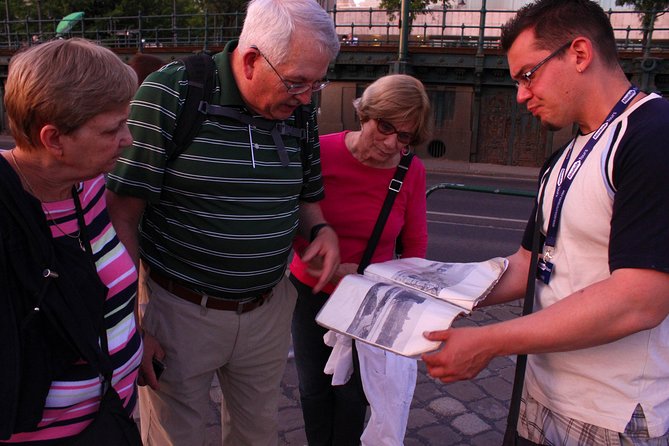
The guides make a big difference to that balance. Past tours have been led by people including Anna, Celeste, Greg, Andrea, Balint Alkonri, Rebeca, Tomas, Bogata, Laszlo, and George. Names and assignments can change, of course, but the strongest guide experiences have been described as clear, lively, and open to questions. Some guides also draw on personal or family memories of life under communism, which can add a human dimension you will not get from a monument plaque.
More communist history tours in Budapest:
- Budapest: Communist History Tour with House of Terror Option
★ 4.8 · 182 reviews - Communism in Hungary with a Historian
★ 5.0 · 70 reviews - Budapest: 3-Hour Walking Tour About Communism (Small Group)
★ 4.7 · 70 reviews
From Deák Square to a church shaped by state policy
Meet at the Lutheran Church of Ferenc Deák Square, at Deák Ferenc tér 4. The first stop is St. Stephen’s Basilica, where the guide explains how communism affected religious life and the operation of churches. It is a useful place to start because it brings the political story into a part of life that is often treated as private.
This is a short stop, about 15 minutes, and admission to the basilica is not included. The focus here is the history of religion under communist rule, rather than an extended visit inside the church. If you want to explore the basilica itself, allow separate time for that.
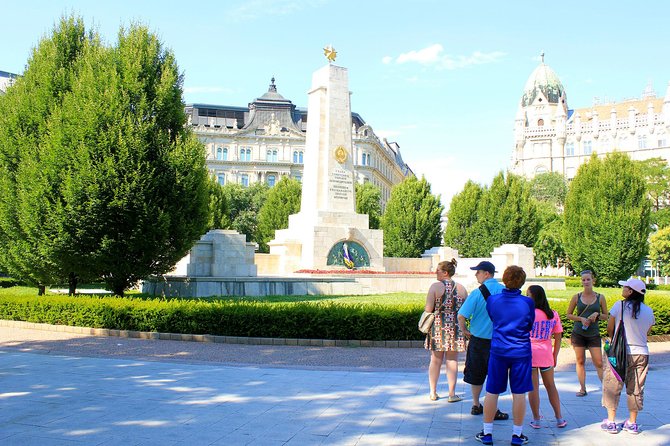
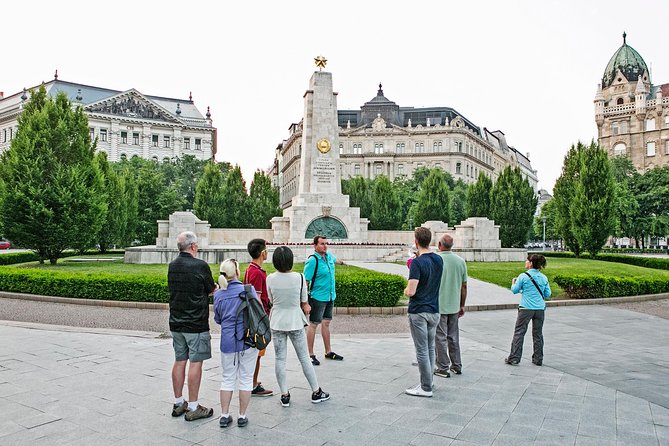
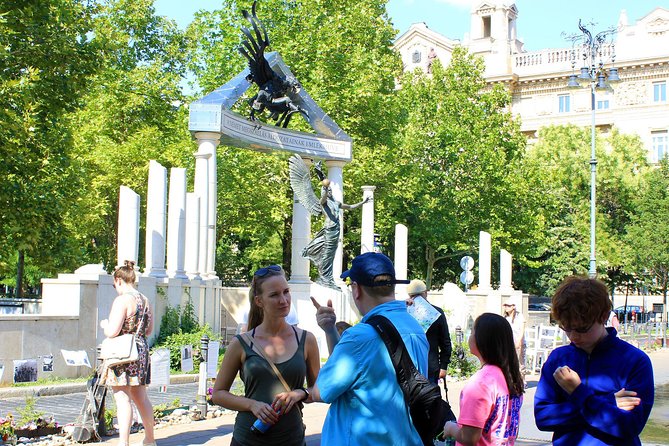
From there, the tour moves toward Liberty Square. At the Soviet Memorial, the guide discusses the end of World War II, the beginning of occupation, and the Communist Party’s rise to power. The square gives you a visible point of reference for a major shift in Hungary’s modern story: the end of one devastating war followed by a new period of political control.
The stop is about 15 minutes, and there is no admission charge. Liberty Square is also one of the tour’s more useful places for connecting the city’s public monuments to changing political messages. The Soviet memorial remains a reminder of the complicated legacy of liberation and occupation. The guide’s context helps you avoid treating it as a simple symbol with only one meaning.
At Parliament, the Revolution becomes a street-level story
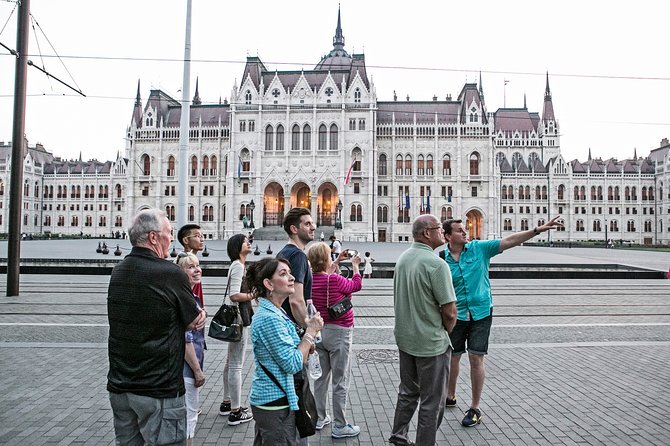
The Hungarian Parliament Building is one of Budapest’s most recognizable sights, but this tour focuses on the square and its role in the first days of the 1956 Revolution. You’ll hear what led to the uprising and how the party leadership responded. The stop lasts about 20 minutes; admission to the building is not included.
The story here is direct and unsettling. The first shots of the revolution were fired at Parliament, and the square became a stage for public protest and state force. A guide can help you read the site as more than a grand architectural backdrop: it was a place where people gathered, spoke, marched, and faced the consequences of challenging authority.
The tour also introduces Imre Nagy, the communist leader who defied Soviet leaders in Moscow and was later executed for treason. His story captures the conflicts inside the political system as well as the conflict between Hungary and the Soviet Union. His reburial later became an important moment in the change of regime, adding another chapter to the meaning of public memory in Budapest.
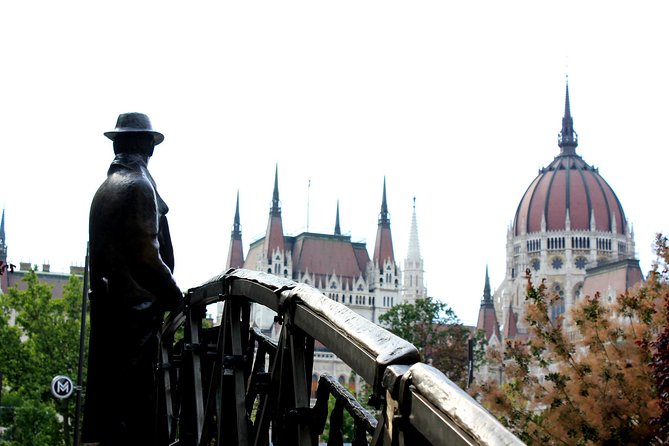
A later stop at the Monument to Imre Nagy gives the guide room to explain how his place in Hungarian history changed over time. The stop is about 15 minutes and is free to visit. This is a good point to ask questions: the shift from communist official to symbol of resistance is central to understanding how Hungary remembers 1956.
Remembering the October 25 shootings
The memorial and exhibition for October 25, 1956, focuses on the second day of the revolution, when military authorities and Soviet tanks fired into a gathering crowd. The exhibition uses archive footage and recollections to present the events. It is a compact stop, about 15 minutes, but the material gives the street history a human cost.
This is among the tour’s most sobering sections. The revolution can sound abstract when reduced to dates, parties, and policies. Here, the focus narrows to a crowd, a specific day, and the violence that followed. Give the guide your attention, and take time to look at the material rather than treating this as a quick photo stop.
The tour also covers places connected to speeches, protests, and marches, and includes the Shoes on the Danube Bank Holocaust memorial in its broader WWII overview. That memorial belongs to an earlier chapter of persecution and wartime violence, but it helps place the communist period within the wider upheavals Hungary endured. The listed itinerary’s timed stops do not assign a separate duration to the Shoes memorial, so the exact time spent there may depend on the route and guide.
More Budapest tours in Budapest:
- Budapest: City Highlights Cruise with Welcome Drink
★ 4.6 · 35,610 reviews - Budapest: Unlimited Prosecco, Beer and Aperol Spritz Cruise
★ 4.8 · 25,310 reviews - Budapest: Széchenyi Spa Day Ticket with Optional Upgrades
★ 4.3 · 23,911 reviews - Budapest: Nighttime or Daytime Sightseeing Cruise
★ 4.2 · 21,062 reviews
The exhibit: passports, banana lines, and home life
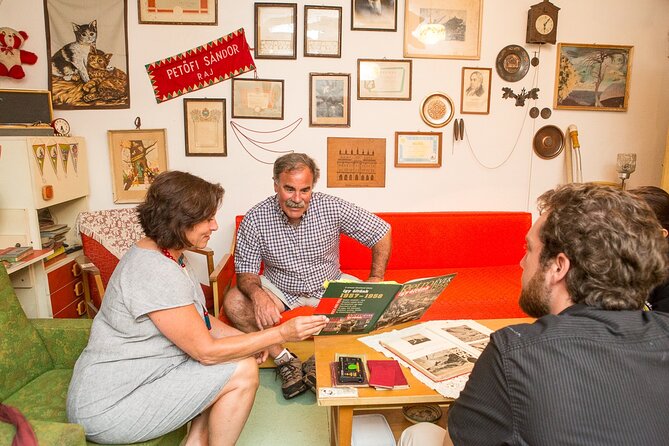
The interactive Budapest Retro Museum is the part that takes the tour beyond monuments. Its subject is life behind the Iron Curtain: how children were raised, how families lived, and where people could travel. You’ll also hear about the time and difficulty involved in getting a passport, along with black markets and queues for goods such as bananas.
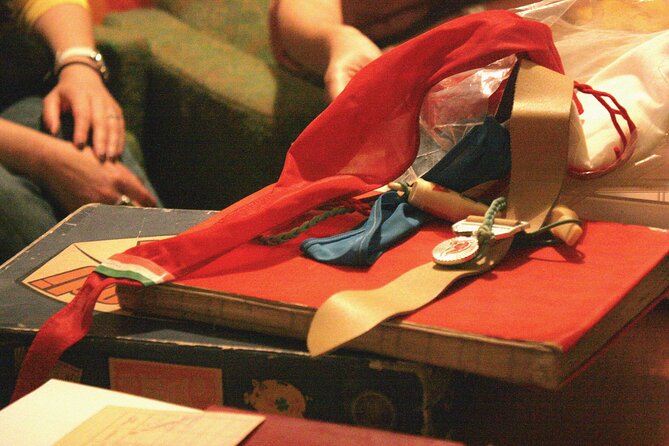
The exhibit is described as a guided visit, with the guide explaining the stories behind the objects. Past tours have included a mock-up of a communist-era living room, with books, games, photographs, and other everyday items. That approach gives you something concrete to picture. A board game or family scrapbook can say as much about ordinary life as a list of restrictions.
The location and order of the indoor portion may vary in practice. Some tours have started in a basement space with artifacts and a recreated living room before heading out to the city; the tour description also promises entry to the interactive museum. Either way, the indoor material is a key part of the experience, not an optional extra you should expect to arrange separately.
A coffee, tea, or soft drink is included. Some past tour accounts describe snacks or a late meal, but the stated inclusion is a beverage, so I would not book expecting lunch. If a refreshment stop is important to you, ask the operator what is planned for your date.
The pace, group size, and what to bring
The advertised duration is about 2 hours 30 minutes, starting at 3 p.m. and ending near Liberty Square in downtown Pest. The five timed stops add up to about 80 minutes, leaving time for walking, explanations, and the indoor exhibit. Some tours have lasted closer to three hours, so avoid scheduling a tight dinner reservation right afterward.
The maximum group size is 10. That is a practical advantage for a history-heavy tour: you can hear more easily than in a large crowd and have a better chance to ask the guide follow-up questions. In some cases, the group has been as small as two people, though you should not count on having a private tour.
There is no audio equipment or headphone system. That keeps the walk simple, but it means you should stay near the guide, especially in a noisy square or on a busy day. One tour was affected by aircraft noise during a city event, a reminder that street tours cannot control every sound around them.
The walk runs in all weather, so bring clothing suited to the forecast. The tour is not recommended for children under 14. Pickup and drop-off are not included: make your way to the Lutheran Church at Deák Ferenc Square, and expect to finish near Liberty Square. The start and end points are both in central Budapest, but they are not the same place.
Is $79.65 fair value?
At $79.65 per person, this costs more than a simple free walking tour. What you are paying for is an English-speaking guide, a small group, entry to an interactive exhibit, and a guided route connecting important sites. The included coffee, tea, or soft drink is a modest extra, not the main reason to book.
I see the price as fair if you want a structured introduction to Hungary’s recent past and value having someone interpret the places you pass. The exhibit and the stories about ordinary life give the tour a different purpose from a general city walk. It can also be a useful early-stay activity: you’ll leave with context that helps you notice the political history in Budapest’s streets for the rest of your visit.
It is less compelling if you only want to see the exterior of Parliament, or if you already know the history well and prefer to explore at your own pace. A free communism-themed walk may be enough for a budget-conscious visitor, though it may not include this exhibit or the same small-group format. The best value here comes from the guide’s explanations, not from the number of monuments you check off.
Who should book this tour?
Book it if you enjoy modern history, want to understand the 1956 Revolution, or are curious about the small details of life under communist rule. It suits adults and older teenagers who will stay engaged with political history and can manage a couple of hours on foot. The personal stories, when your guide has them to share, can make the subject feel immediate without turning the walk into a political lecture.
If you are choosing a date, think about where this tour fits in your Budapest plans. Taking it early can give you a useful frame for later sightseeing. Leave some time afterward to reflect, especially if you also plan to visit the Shoes on the Danube Bank memorial or other sites tied to wartime history.
The tour is recommended by 94 percent of participants and has a 4.7 rating from 68 ratings. That is a strong sign, but the experience still depends on your guide and interests. Guides such as Tomas, George, and Anna have drawn praise for clear explanations, personal stories, and willingness to answer questions; you cannot request that any one guide will lead your date.
I would book this tour if the mix of political turning points and everyday life appeals to you, and if $79.65 fits your budget for a guided afternoon. Skip it if you want a fast, low-cost walk with little commentary. For a thoughtful introduction to Hungary’s twentieth-century upheavals, this route offers more than a sequence of statues.
FAQ
How long is the tour?
The tour lasts about 2 hours 30 minutes. Some tours have run closer to three hours, so leave a little extra time in your schedule.
What time does the tour start?
It starts at 3 p.m.
Where does the tour begin and end?
Meet at the Lutheran Church of Ferenc Deák Square, Deák Ferenc tér 4, 1052 Budapest. The tour ends near Liberty Square at Szabadság tér 1, 1054 Budapest.
Is the tour offered in English?
Yes. An English-speaking guide leads the tour.
Is entry to the interactive exhibit included?
Yes. Entry to the Budapest Retro Interactive Museum is included, with the guide explaining the stories behind the artifacts.
Is a drink included?
Yes. The listed inclusion is coffee, tea, or a soft drink.
Is the tour suitable for children?
It is not recommended for children under 14.
Fresh additions in Budapest
- Best of Budapest Tour★ 5.0 · 7 reviews
- Be a movie star! Film Tour, Escape room, in Budapest and Etyek★ 5.0 · 3 reviews
- Shooting package 70★ 5.0 · 14 reviews
- Best Historical Sights of Budapest Tour★ 5.0 · 7 reviews
- Capital Budapest – Half Day Private Tour (4hr)★ 5.0 · 7 reviews
- BUSÓJÁRÁS Unesco Heritage Folklore Carnival in Mohács★ 5.0 · 4 reviews
- Budapest 4 Hour Tour with a Local: Private & Custom, See the City Unscripted★ 4.0 · 7 reviews
- Analog Photo Trip★ 5.0 · 5 reviews
Budapest Communist History Tours, compared.
Communist History Tour with House of Terror Option
Read our review →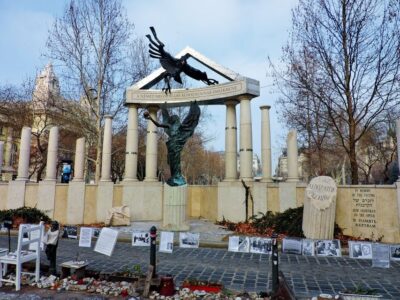
3-Hour Walking Tour About Communism (Small Group)
Read our review →
Memento Park: Official Guided Tour with Entry Ticket
Read our review →
Browse the lists this tour appears in