
Reviewed · BUDAPEST STREET ART TOURS
Art Nouveau Treasures of Budapest – Exclusive Private Tour
Budapest’s Art Nouveau is best read in its details: folk patterns on a roof, a sweep of stained glass, a bathhouse façade that turns a working building into a work of art. This private tour connects those details across the city, with a final visit to an apartment where you can see a Miksa Róth stained-glass window.
I like that art historian Miklós ties the buildings to their designers, and that the private group format can include interiors a passerby might not reach. I also like the flexible start time and the chance to focus on a style that can be easy to miss on a general city walk. One consideration: this is a walking tour that uses public transport, not private transport, and you will need to budget for transit tickets.
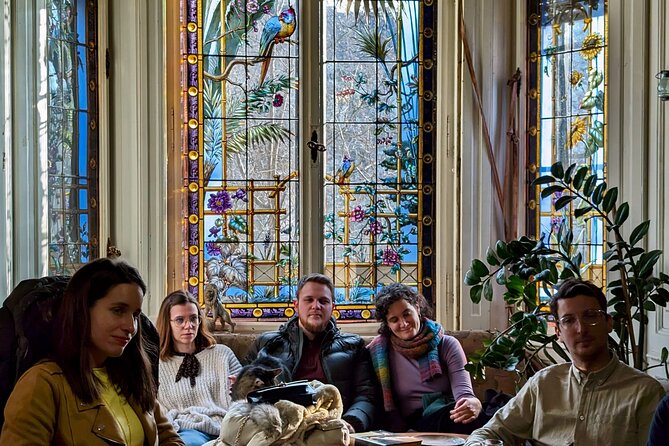
- A stained-glass finale: The tour ends in a century-old private apartment with a window by Miksa Róth.
- A landmark by Ödön Lechner: The Postal Savings Bank on Hold utca is known for colorful tiles and folk motifs.
- A private group: The $261.67 price covers up to five people, so the per-person cost falls as your group grows.
- An art-focused guide: Miklós brings an art historian’s perspective to Budapest’s Secessionist buildings.
- A flexible route: The start time can be customized, and the route may be adjusted to suit your group.
- Mostly on foot: Expect to walk and use public transport between parts of the city. Transit tickets are not included.
Why Budapest’s Art Nouveau rewards a closer look
Budapest’s Art Nouveau, often called Secessionist here, is not just a matter of pretty façades. Its architects and artists used local motifs, expressive shapes, colored tile and glass to make a distinctly Hungarian version of a wider European movement. This tour is built around that point: look closely at the buildings, then hear how the design connects with the people who made them.
The route takes in landmark architecture on both sides of the Danube and in the city center. You are not simply being driven from one photo stop to another. The experience is designed as a private walk, with public transport used as needed, so you get a feel for the streets between the buildings as well as the buildings themselves.
A private format suits this subject. You can ask why a façade uses a particular motif or how an artist’s work fits into the period, rather than keeping pace with a large group. The tour is led by Miklós, described as an art historian and professional guide. His enthusiasm for Budapest and its architecture comes through in the way he explains the city’s design, not just its dates and names.
The experience is highly rated, with a 4.9 score from 18 reviews and a recommendation rate of 100 percent. That is a promising signal, though it is still a small number of ratings. The most consistent praise is for the guide’s personable delivery and the way the tour adds context to buildings you might otherwise admire only from the street.
From Central Market Hall toward the Danube
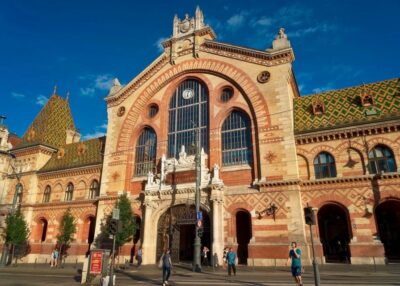
The stated meeting point is Central Market Hall, at Budapest 1093, and pickup can be arranged at your hotel or another central spot agreed with the guide. The hall is listed as the first stop, with about 20 minutes allocated and admission not included. The description does not specify that the tour enters the market, so treat it as a starting point rather than a guaranteed indoor visit.
From there, the route crosses one of Budapest’s bridges toward Gellért Hill. The walk itself is part of the appeal: the Danube gives you a sense of the city’s scale, and the bridge provides views toward the Royal Palace. The exact bridge is not named in the tour details, so ask Miklós about the route when you arrange your start time if you have a particular crossing in mind.
The tour is not a private-car experience. You will walk and use public transport where needed, and transport tickets are not included. That keeps the outing close to the city’s everyday rhythm, but it also means comfortable shoes and a little flexibility are sensible. The route may be adjusted, and minor changes can happen to keep the day running smoothly.
More street art and art nouveau tours in Budapest:
- Budapest: Street Art and Underground Movements Walking Tour
★ 5.0 · 238 reviews - Alternative Street Art Free Walking Tour of Budapest
★ 4.5 · 53 reviews - Street Art and Alternative Tour in Budapest
★ 5.0 · 52 reviews
Gellért Baths, where architecture meets daily life
The next listed stop is the St. Gellért Thermal Bath and Swimming Pool, on the western bank of the Danube beneath Gellért Hill. The bath and hotel are described as an iconic Budapest landmark, with a strong Secessionist character. Around 20 minutes are set aside here.
This is a useful stop because it shows Art Nouveau in a building with a public purpose, not only in a bank or a private home. The design is part of the experience of the place: a bathhouse can be functional and still feel carefully composed. You can look at its architecture in the context of the river and hill rather than treating it as an isolated façade.
Admission is listed as free, but that does not necessarily mean the tour includes a visit inside the baths or access to bathing facilities. The description frames the stop as an architectural look, not a spa session. If entering the building matters to you, confirm that directly before booking and do not assume you will have time for a swim.
Lechner’s tilework at the Postal Savings Bank
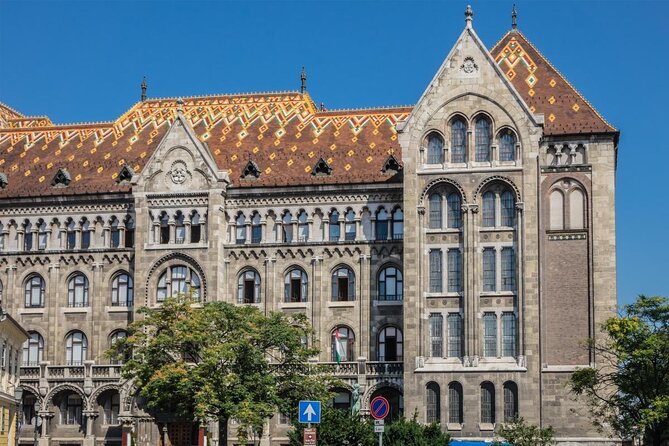
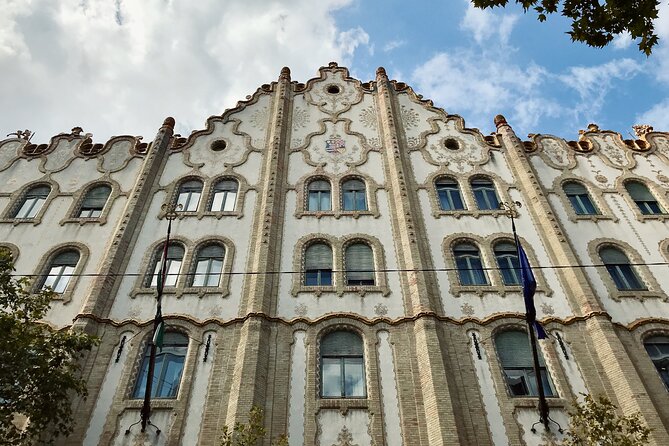
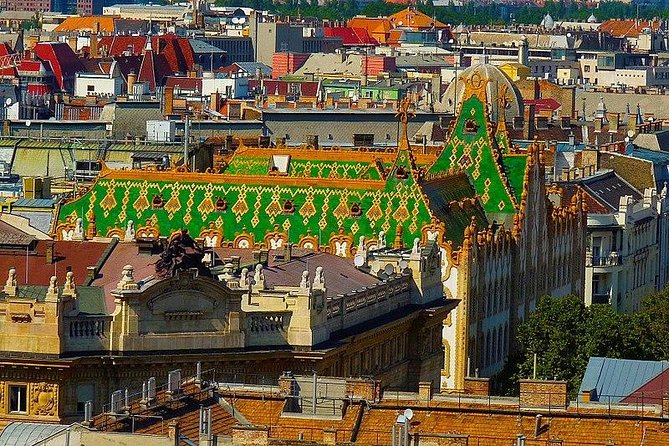
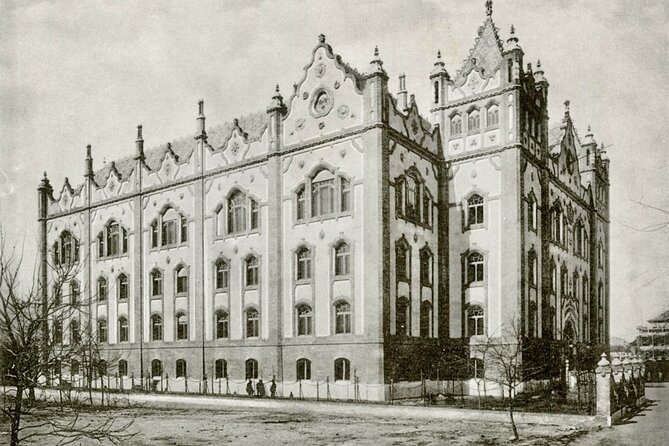
The Postal Savings Bank on Hold utca is the tour’s signature architectural stop. Designed by Ödön Lechner in 1901, it is celebrated for its colored tiles and folk-inspired motifs. About 20 minutes are allotted, and there is no admission charge listed.
Lechner’s work is a good way to understand why Budapest’s Secessionist style has its own identity. Instead of simply borrowing familiar European forms, the building draws on Hungarian patterns and applies them to a major civic institution. Even from outside, the roofline and decoration invite a closer look. With an art historian beside you, you can pay attention to how ornament works across the building rather than reducing the visit to a quick photograph.
The route information also lists a stop called Nemzeti Bank, then a separate Postal Savings Bank stop, but the accompanying description for both refers to the Postal Savings Bank on Hold utca. That makes the exact distinction between those two listed stops unclear. The stated outline can change, so it is worth asking which banking buildings are planned for your particular tour rather than expecting two separate, clearly identified visits.
Gutenberg Square and Miksa Róth’s glass
Gutenberg Square brings another kind of detail into focus: a historic building in Budapest’s Palace District, with a grand staircase and leaded glass associated with Miksa Róth. The stop is listed at about 15 minutes. It shows how stained glass could shape an interior, not merely decorate a window.
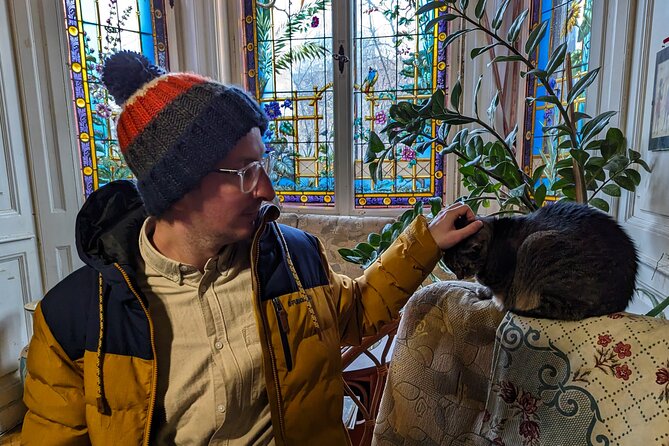
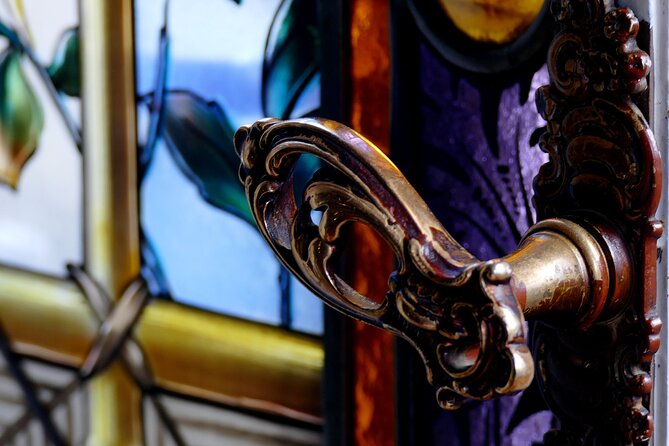
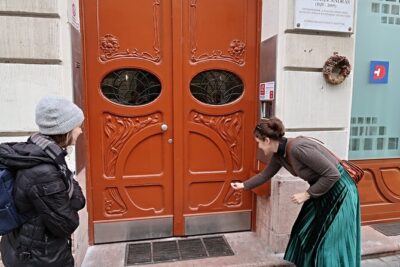
The tour’s most unusual moment comes at the end, in a century-old private apartment. There, you have the opportunity to see a stained-glass window by Róth, one of Hungary’s leading artists in the medium. This is a different sort of access from viewing a public façade. You are seeing a work in a residential setting, where the scale and light may give you a more intimate sense of how such art fitted into daily life.
The tour details describe this as the finish, with the end point given as Rákóczi tér. Because the apartment is private, this is a rare feature, but it is also a specific one: the visit is to admire the window, not a general tour of the home. If this is the main reason you are booking, confirm that the apartment visit is part of the plan for your date.
More private and custom tours in Budapest:
- Private Budapest TukTuk Tour: Custom Route, Hotel Pickup
★ 5.0 · 1,307 reviews - Budapest Essentials Private Tour Highlights and Hidden Gems
★ 5.0 · 861 reviews - Grand Segway Tour of Budapest – Private Tour with Coffee Stop
★ 5.0 · 163 reviews - Private tour from Budapest to a top hidden treasure region of Europe: Lake Balaton
★ 5.0 · 79 reviews
What the private format adds
The listed price is $261.67 for a group of up to five. At full capacity, that works out to about $52.33 per person. For two people, it is about $130.84 each, so the value improves markedly when you share the cost with family or friends.
You are paying for a private guide and an art-focused route, not transport, meals or entry to paid attractions. For someone with a strong interest in architecture, personal attention and access to the apartment window may justify the group price. If you mainly want a broad introduction to Budapest or prefer a low-cost self-guided walk, this is a more specialized and expensive choice.
The tour lasts roughly two and a half to three hours. The range likely reflects the pace of the group and route adjustments; it is not a promise of a full three hours. One person who particularly loved Art Nouveau suggested spending less time on refreshments and using the full available time for design details and extra stops. The guide’s reply explained that many people enjoy a short pause at an Art Nouveau-furnished café and that the company’s office is in a house built in 1898. If you want to prioritize architecture over a break, say so when arranging the tour.
That feedback points to a useful strength of a private outing: you can tell the guide what matters most. If you already know the broad story of Hungary and want close attention to design, ask for a more architecture-heavy approach. If you are new to the city, a little wider historical context may help the buildings make sense. The guide can personalize the experience, though the exact balance is something to discuss.
Who will get the most from this walk
This tour is a strong match for architecture fans, especially people who have come to Budapest for Art Nouveau or Secessionist design. It also suits curious visitors who want a guide to explain the details that make a building more than a handsome backdrop. Róth’s stained glass gives the route a memorable finish, while Lechner’s bank offers a clear example of local design ideas in a major public building.
It can work well for a couple, a family or a small group of friends who want to move at their own pace. The experience is private, and most people can participate. Service animals are allowed, and the route is near public transportation. Still, it involves walking and transit, so ask the provider about any mobility needs before booking; no specific accessibility details are provided.
For a general first-day orientation, this may be too specialized. The route is about architecture, with broader city history included where it helps explain the design. You will not get a full survey of Budapest’s sights, and the listed itinerary does not include a meal or a ride between stops in a private vehicle.
A few practical points before you book
The start time can be customized on request, and pickup can be arranged at your Budapest hotel or at a central meeting point. The listed starting location is Central Market Hall, while the endpoint is given as Rákóczi tér. Since the route is subject to change, confirm where you will meet and where the tour will finish when you set the time.
Bring a public transport ticket or plan to buy one separately, since it is not included. Food and drinks are also excluded unless specifically arranged. The tour is offered in English, and booking confirmation is provided at the time of booking.
Cancellation is free up to 24 hours before the start time. Changes made less than 24 hours before the tour are not accepted, and cancellations inside that window are not refundable. Keep the local start time in mind when making plans.
Should you book this Art Nouveau tour?
Book it if the architecture is a key reason you are coming to Budapest, or if you want a guide who can help you read buildings rather than simply point them out. The combination of Lechner’s tiled bank, Gellért Baths and the private-apartment visit to a Miksa Róth window gives the tour a clear focus and an unusual final stop.
Think twice if you want a broad city tour, need private transport, or would rather spend the money on a longer visit to the baths. The route’s exact sequence and the distinction between the two listed bank stops are not fully clear, so ask for details before committing. For a small group of architecture lovers, though, this is a personal, focused way to see a side of Budapest that rewards looking up and looking closely.
FAQ
How long is the tour?
It lasts approximately two and a half to three hours.
What is the price?
The price is $261.67 per group, with up to five people included.
Is the tour private?
Yes. Only your group participates.
Is the tour offered in English?
Yes, English is the listed tour language.
Does the price include public transport?
No. Public transport tickets are not included. The tour is conducted on foot and with public transport, not private transportation.
Where does the tour start and finish?
The listed start is Central Market Hall in Budapest. The end point is given as Rákóczi tér, and the tour finishes in a private apartment where you can see a Miksa Róth stained-glass window.
Can I choose the start time?
A customized start time is available on request.
Fresh additions in Budapest
- Best of Budapest Tour★ 5.0 · 7 reviews
- Be a movie star! Film Tour, Escape room, in Budapest and Etyek★ 5.0 · 3 reviews
- Shooting package 70★ 5.0 · 14 reviews
- Best Historical Sights of Budapest Tour★ 5.0 · 7 reviews
- Capital Budapest – Half Day Private Tour (4hr)★ 5.0 · 7 reviews
- BUSÓJÁRÁS Unesco Heritage Folklore Carnival in Mohács★ 5.0 · 4 reviews
- Budapest 4 Hour Tour with a Local: Private & Custom, See the City Unscripted★ 4.0 · 7 reviews
- Private Tour Around Budapest★ 5.0 · 10 reviews
Budapest Street Art Tours, compared.
Street Art and Underground Movements Walking Tour
Read our review →
Alternative Street Art Free Walking Tour of Budapest
Read our review →
Art Nouveau Tour in Budapest: 3-Hour Private Tour
Read our review →
Browse the lists this tour appears in