
Reviewed · BUDAPEST COMMUNIST HISTORY TOURS
Born Under The Red Star – Communist tour with Coffee in a Retro Bar
Budapest’s monuments don’t tell one simple story. On this three-hour walk, you’ll look at memorials to Soviet soldiers, Hungarian freedom fighters and Holocaust victims, then hear how those histories collide in the city’s public spaces.
I like two things in particular: the guide’s commentary gives these sites context, and the route reaches places you might pass without knowing what they represent. The stop for a classic soda in a Communist-themed bar adds a welcome pause, with a bit of local character.
One consideration: at $90.31 per person, this is a substantial price for a walking tour, especially since entry to St. Stephen’s Basilica and Parliament is not included. It makes the most sense if you want the historical explanation, not just a look at the buildings.
What Makes This Walk Worth Your Time
- The memorials come with context: The route connects Soviet-era monuments, the 1956 uprising and Hungary’s difficult political history.
- You’ll see more than famous façades: Stops include Liberty Square and a memorial to the 1956 revolution, places that can be easy to overlook on a first visit.
- A retro-bar pause is part of the experience: A classic soda in a Communist-themed bar is included, along with coffee or tea.
- The group is capped at 15: A smaller group can make it easier to hear the guide and ask questions.
- You finish at Liberty Square: The end point is close to memorials that sum up the competing versions of history you’ll encounter on the walk.
- The guide’s perspective is central: One couple who took the tour with Ferenc praised the historical and political context he brought to the walk.
A Three-Hour Walk Through Budapest’s Political Past
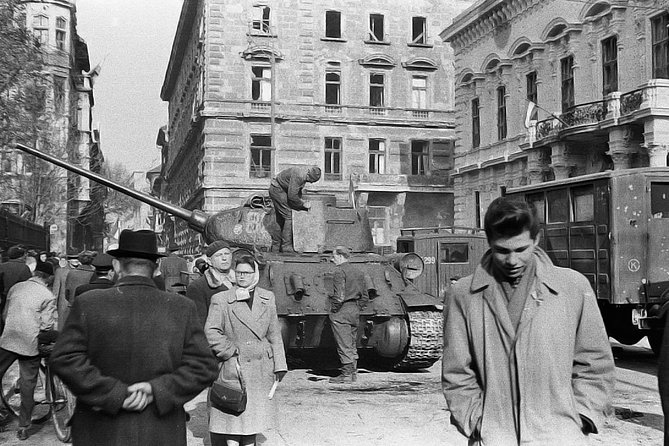
This tour is less about ticking off grand buildings and more about learning how Hungary remembers its past. Over about three hours, you move among monuments and civic landmarks that raise hard questions: Who gets commemorated? What does liberation mean when one regime gives way to another? And how does a city live with competing versions of its history?
The meeting point is the Hungarian State Opera at Andrássy út 22. From there, the walk visits the Soviet Heroic Memorial, the House of Terror, St. Stephen’s Basilica, the Liberty Statue, Liberty Square, a memorial to the 1956 uprising and the Hungarian Parliament Building. Liberty Square is the stated end point.
The route’s appeal is the guide’s commentary. A memorial can look like stone and bronze until someone explains who it honors and why its presence is disputed. The tour’s stops give you the chance to see Hungary’s twentieth-century story in public, rather than only through museum displays.
The tour is offered in English, and the group is limited to 15 people. That is small enough to feel more personal than a large bus tour, though it is still a group walk rather than a private guide. One couple found themselves as the only two participants on their tour and walked with Ferenc. That kind of small-group experience may happen, but you should not count on having the guide to yourself.
More communist history tours in Budapest:
- Budapest: Communist History Tour with House of Terror Option
★ 4.8 · 182 reviews - Communism in Hungary with a Historian
★ 5.0 · 70 reviews - Budapest: 3-Hour Walking Tour About Communism (Small Group)
★ 4.7 · 70 reviews
Soviet Heroic Memorial: A Monument with a Complicated Meaning
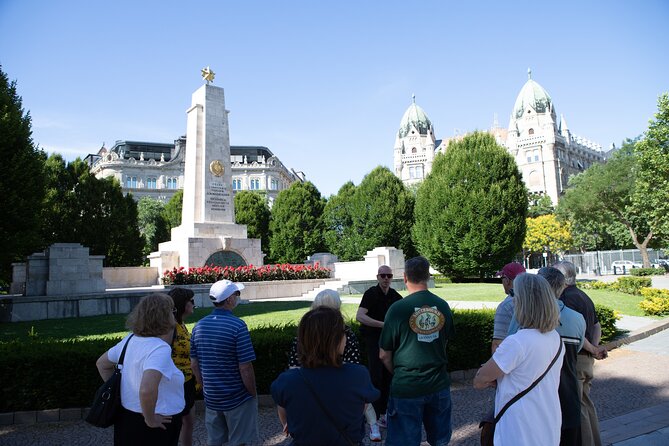
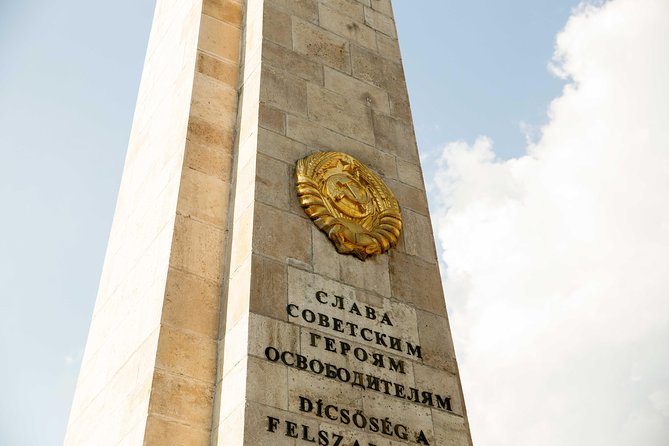
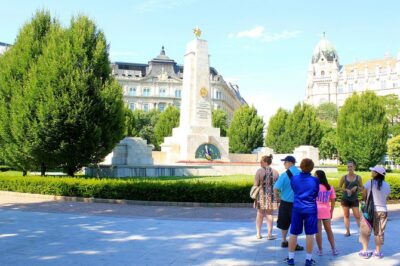
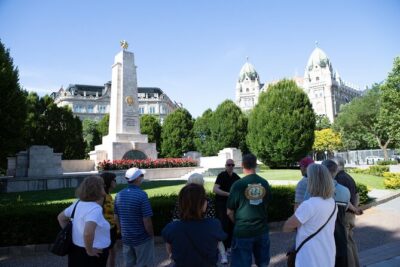
The first listed stop is the Soviet Heroic Memorial, a white obelisk in a landscaped park that commemorates Russian military personnel who served in the Second World War. You spend about 15 minutes here, and there is no admission fee.
The memorial gives the tour an immediate point of departure: Budapest’s liberation from Nazi rule and the Soviet role in it. The same period also began a new chapter of Soviet influence in Hungary, so a monument to wartime service can carry more than one meaning. This is the sort of place where a guide’s explanation matters. You’re not just seeing an obelisk; you’re beginning to consider how public memory changes when the politics around it change.
The visit is brief, so don’t expect a long, detailed examination of every inscription or event. Think of it as a first stop that sets up questions the tour will return to at Liberty Square and the 1956 memorial.
House of Terror: A Building Marked by Two Regimes
The House of Terror Museum stands at Andrássy út 60. Its exhibits address Hungary’s fascist and communist regimes, and the building also serves as a memorial to people detained, interrogated, tortured or killed there.
The tour allots about 15 minutes and lists admission as free, so this is a short visit rather than a full museum session. If you want to study the exhibits in depth, you may want to plan a separate visit. The stop still matters even if you only have a little time: the address itself is tied to the histories the museum presents, and the building helps make the cost of political repression more tangible.
I’d treat this as an introduction, not a substitute for the museum. The value here is in linking the site to the broader walking route, then deciding whether you want to return for a longer look.
St. Stephen’s Basilica: A Pause Beside the Political Story
St. Stephen’s Basilica brings a different kind of history into the walk. Named for Stephen, Hungary’s first king, the Roman Catholic basilica is known for housing his right hand in a reliquary. The tour allows about 15 minutes at the stop.
This change of subject is useful. Budapest’s past is not only a sequence of governments and uprisings; religion and national identity are part of the picture too. The basilica gives you a point of contrast with the memorials and political buildings elsewhere on the route.
Admission is not included. The listed stop is brief, so if going inside matters to you, check whether the time and entry arrangements suit your plans. You can still appreciate the building from the outside without treating this walk as a full basilica visit.
A few more Budapest tours worth booking
- Grand Segway Tour of Budapest – Private Tour with Coffee Stop
★ 5.0 · 163 reviews - Buda Castle Walking Tour with Matthias church entry, Cake&Coffee
★ 4.5 · 21 reviews - Budapest ❤️Winter Bike Tour with Coffee Stop❤️
★ 4.8 · 20 reviews
Liberty Statue: Remembering Sacrifice on Gellért Hill
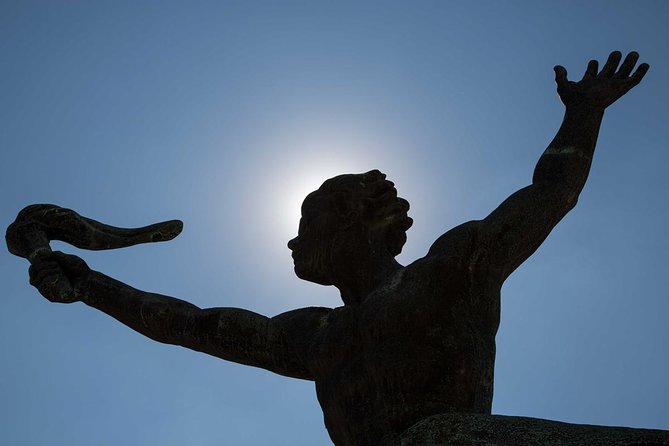
The Liberty Statue on Gellért Hill commemorates people who sacrificed their lives for Hungary’s independence, freedom and prosperity. It is one of the tour’s most direct reminders that ideas like freedom can carry different meanings across changing political eras.
The information for the tour does not specify how long this stop lasts, so the timing may be brief. That matters if you’re hoping for a long visit or want to explore Gellért Hill at your own pace. The monument’s stated purpose, however, makes it a natural part of a tour that asks how Hungary remembers both liberation and the struggle for independence.
Liberty Square: Competing Memorials in One Public Place
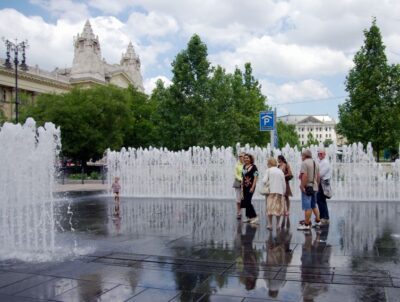
Liberty Square is the tour’s final stop and the place where several threads come together. The square is known for two controversial memorials: one commemorates Jewish victims of the Holocaust, while another honors Soviet soldiers who liberated Budapest from the Nazis in 1945. The United States Embassy and the Hungarian National Bank are also located beside the square.
You have about 15 minutes here, with no admission fee. That is enough to take in the setting and hear why the memorials are contentious, but not necessarily enough to linger over every detail. The contrast between the monuments is exactly what makes the stop valuable. The square shows how public remembrance can be contested, even when the memorials stand within a few steps of one another.
This is also the tour’s end point, so it gives you a chance to ask for the guide’s recommendations before you go. Maps and further suggestions are included, making the finish useful if you want to keep exploring independently.
The 1956 Memorial and Parliament: Revolution Beside Government
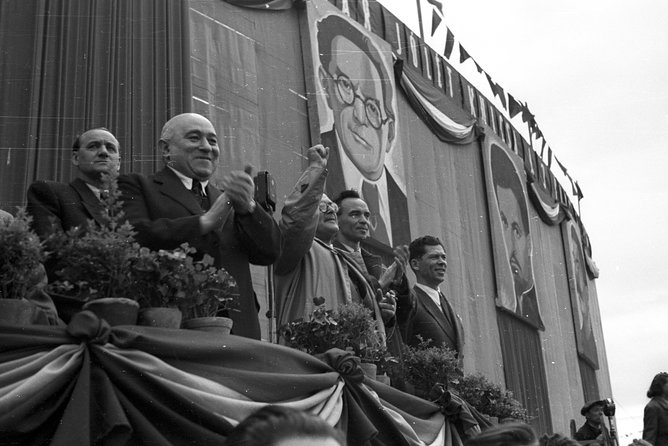
The route includes a memorial to the 1956 Hungarian Revolution and War of Independence, commemorating the people who rose against the communist regime. The stop is scheduled for about 15 minutes and has no admission fee.
The uprising is essential to understanding the tour’s political thread. Its memorial gives you a focused place to consider resistance to communist rule, after earlier stops have introduced Soviet wartime commemoration and the repression associated with later regimes. The short visit is best understood as a guide-led introduction, rather than a long period of independent study.
The Hungarian Parliament Building is another listed stop, with about 15 minutes allowed. It is the seat of Hungary’s National Assembly and one of Budapest’s major landmarks. Admission is not included, so don’t assume the tour price covers entry. Its role as the country’s legislature makes it a fitting place to close the story of memorials and political change with a look at the institution of government today.
The itinerary does not provide a separate admission price or explain whether the Parliament stop includes an interior visit. If seeing the inside is important to you, confirm that detail before booking and plan accordingly.
Coffee, Soda and the Value of the Price
The tour costs $90.31 per person. That is a fairly high price for a three-hour walk, particularly when some landmarks are only short stops and admission to the basilica and Parliament is not included. The value depends on what you want from the outing: you’re paying for a guide to connect the sites, a small group capped at 15, and the included drinks, not for a string of ticketed attractions.
A classic soda in a Communist-themed bar is included, as are coffee and tea. The bar stop adds a change of pace to a tour with serious subject matter. It also gives you a chance to take in a retro setting without having to seek it out on your own. Food and other drinks are not included unless specified.
Maps and further recommendations are part of the package, too. That can be useful if this is an early stop in your Budapest visit and you want ideas for where to go next. The tour is booked, on average, 18 days ahead, so it is sensible to plan early if your dates are fixed. Group discounts are offered.
The tour has a 5.0 rating from 10 reviews, with all reviewers recommending it. That is a small sample, so it cannot promise the same guide or group dynamic on every departure. Still, the strongest praise is specific: the historical context helped one participant appreciate Budapest more, while a couple who walked with Ferenc said the tour added a lot to their understanding of Hungary’s history and political landscape. Those are the benefits to weigh most heavily when judging the price.
Who Should Book This Budapest History Walk
I’d recommend this tour if you want more than photographs of Budapest’s best-known buildings. It suits visitors who are curious about twentieth-century Hungary, especially the overlap between Nazi occupation, Soviet influence, communist rule and the 1956 uprising. The route is also a good fit if you like learning in the streets and want a guide to help interpret monuments that might otherwise seem disconnected.
It may be less appealing if you prefer long visits inside museums, churches or government buildings. The scheduled stops are short, and admission to the basilica and Parliament is not included. You might get more from the tour if you treat it as an introduction, then return to one or two places that catch your interest.
Children must be accompanied by an adult. Service animals are allowed, and most people can participate. The tour runs in English, takes about three hours and depends on good weather. If poor weather leads to cancellation, you are offered another date or a full refund. You can cancel for a full refund up to 24 hours before the start time.
If you want a history-focused walk with a small group, a useful guide and an unusual bar stop, this is a strong way to spend part of a Budapest day. Book it for the explanation, not for included admissions or an in-depth visit to every site. If the politics behind the memorials interest you, the route offers more substance than a standard city-centre stroll.
FAQ
How long is the tour?
It lasts approximately three hours.
Where does the tour start?
It starts at the Hungarian State Opera, at Andrássy út 22 in Budapest.
Where does the tour end?
It ends at Liberty Square, or Szabadság tér.
What language is the tour offered in?
The tour is offered in English.
How large is the group?
The group has a maximum of 15 participants.
Are drinks included?
Yes. A classic soda in a Communist-themed bar is included, along with coffee and tea.
Are admission fees included?
Admission to St. Stephen’s Basilica and the Hungarian Parliament Building is not included. The other listed stops have no admission fee.
Can I cancel for a refund?
You can cancel for a full refund at least 24 hours before the start time. If bad weather cancels the tour, you are offered another date or a full refund.
Fresh additions in Budapest
- Budapest: Book A Local Host★ 5.0 · 4 reviews
- Budapest Bike Ride★ 5.0 · 11 reviews
- Budapest Private Tour with a Local, Custom Highlights & Gems★ 5.0 · 45 reviews
- Budapest All In – Full Day Tour with Lunch & Metro Pass★ 5.0 · 19 reviews
- Budapest Airport transfer from Liszt Ferenc International Airport to City Centre★ 5.0 · 5 reviews
- All About Budapest: Full Day Walking Tour with Lunch & Metro Pass★ 5.0 · 15 reviews
- Budapest Airport – Budapest City Transfer★ 4.5 · 22 reviews
- Budapest Airport Private Departure Transfer : City to Airport★ 5.0 · 54 reviews
Budapest Communist History Tours, compared.
Communist History Tour with House of Terror Option
Read our review →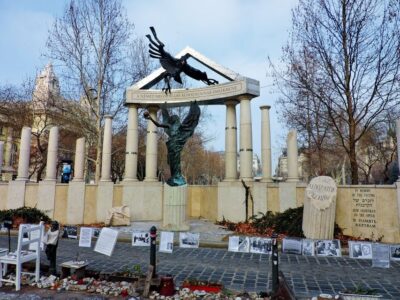
3-Hour Walking Tour About Communism (Small Group)
Read our review →
Memento Park: Official Guided Tour with Entry Ticket
Read our review →
Born Under The Red Star – The History of Communism in Hungary – Private Tour
Read our review →Browse the lists this tour appears in