
Reviewed · BUDAPEST COMMUNIST HISTORY TOURS
Communist Budapest Walking Tour
Budapest’s communist past is not confined to a museum. On this three-hour tour, you move between a square tied to the 1956 uprising, Cold War symbols, a 1970s housing estate, and the former People’s Stadium. Along the way, a historian helps explain how everyday life worked under a system that traded small liberties for obedience on major matters.
I like two things in particular: the route connects political events to ordinary homes and public spaces, and the guide can use old photographs to show how the city has changed. One consideration is the pace of ideas and walking: a past participant found the combination tiring, and the tour may feel introductory if you already know Hungary’s communist period well.
Key points to know before you book
- Bem József Square begins the story at the site of the first large demonstration of the 1956 uprising.
- Freedom Square puts Cold War symbols side by side, including the U.S. embassy, Soviet army monument, Ronald Reagan statue, and an atomic shelter entrance.
- A 1970s housing estate adds everyday context to a route otherwise focused on political landmarks.
- Old photographs help compare past and present along Dózsa György Street, once used for May Day parades.
- Metro and trolley-bus rides are part of the route, but tickets are not included in the $123 per-person price.
- The guide’s background is a major part of the experience: guides may be historians, professors, doctoral students, journalists, art critics, or published authors.
Start at Bambi Eszpresszó, then look back to 1956
The meeting point is Bambi Eszpresszó, at Frankel Leó út 2/4. The cafe is also a stop in its own right: it has kept its original 1960s interior, offering an immediate glimpse of a period when Budapest’s everyday life could feel both ordinary and constrained.
The tour then takes you to Bem József Square, where the first large demonstration of the 1956 uprising was held. This is a useful place to start because the story begins not with a general account of communism, but with a specific public space tied to people taking political action.
A guide with a historian’s approach can help connect the square to the tension between permitted daily freedoms and strict limits on major political choices. That contrast is central to understanding Goulash Communism, the name often used for Hungary’s version of the system. The tour’s focus is not only on repression, but on the compromises and gradual changes that shaped life under it.
The opening stops should suit you if you want a clear historical frame before seeing later communist-era architecture. If you already know the major events of 1956, you may want to ask your guide to go beyond the basic timeline. The route can adapt to what the group has already seen, as guide Andras did for one tour, but you should not assume every guide or departure will follow the same custom route.
More communist history tours in Budapest:
- Budapest: Communist History Tour with House of Terror Option
★ 4.8 · 182 reviews - Communism in Hungary with a Historian
★ 5.0 · 70 reviews - Budapest: 3-Hour Walking Tour About Communism (Small Group)
★ 4.7 · 70 reviews
Kossuth Square makes the revolution tangible
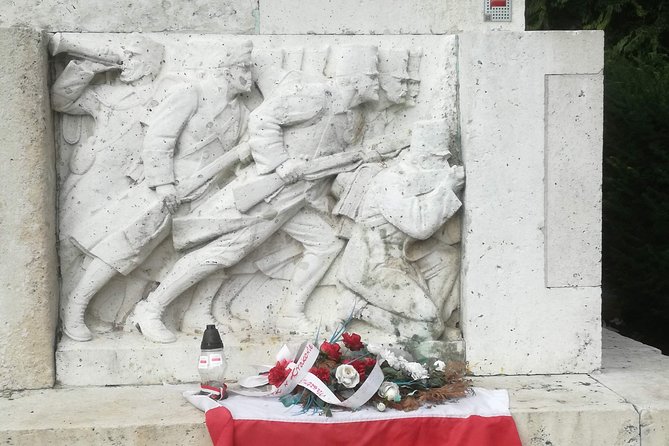
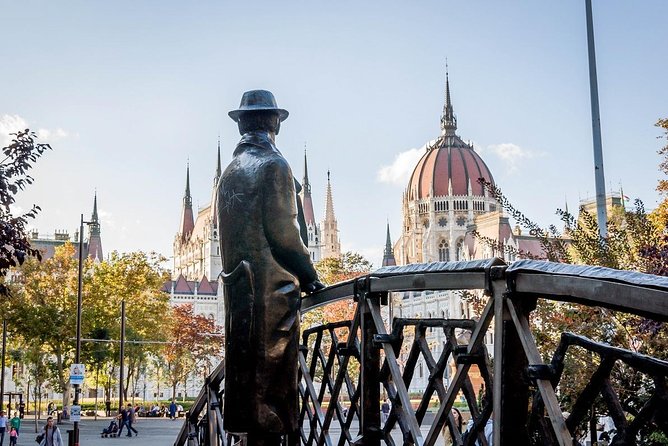
From Bem József Square, you take the metro to Kossuth Square, in front of Parliament. The square is the tour’s next major stop and a place associated with important events during the 1956 revolution. Monuments here bear witness to the political and armed conflicts of that period.
The setting matters. Political history can feel remote when it is reduced to names and dates; standing in a place where events unfolded helps give the story a physical scale. Your guide can explain what the monuments represent and how the revolution fits into the longer history of communist rule and Hungary’s eventual transition.
This is also a point where the guide’s skill makes a real difference. One person’s experience of the tour was conversational and relaxed, with the guide adjusting the discussion to the group’s existing knowledge. Another found the history too basic and had trouble recalling the role of each site afterward. If you want more than an outline, say so early: ask about daily life, the changing political system, or the path toward democracy.
The tour covers a lot in three hours, so you will not have unlimited time at each monument. Think of Kossuth Square as one chapter in a guided route, not a long, self-directed visit.
Freedom Square’s four Cold War markers
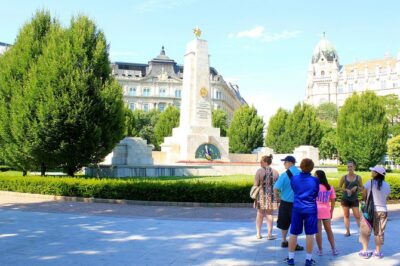
A short walk brings you to Freedom Square, where four stone structures make the Cold War visible in a compact space: the U.S. embassy, a monument to the Soviet army, a statue of President Ronald Reagan, and the entrance to a secret atomic shelter.
The contrast is the point. These sites place different powers and memories within one public setting, giving your guide a chance to explain how Budapest’s streets can hold competing accounts of the same era. The shelter entrance adds a more personal edge to the Cold War story, reminding you that international tension was not just a matter of diplomacy.
This stop works best if you look beyond each structure as an isolated landmark. Ask how the guide interprets their proximity and what each says about the period. The details supplied for the tour do not promise entry to the shelter, so treat it as a visible feature rather than an interior visit.
A 1970s housing estate shows the everyday bargain
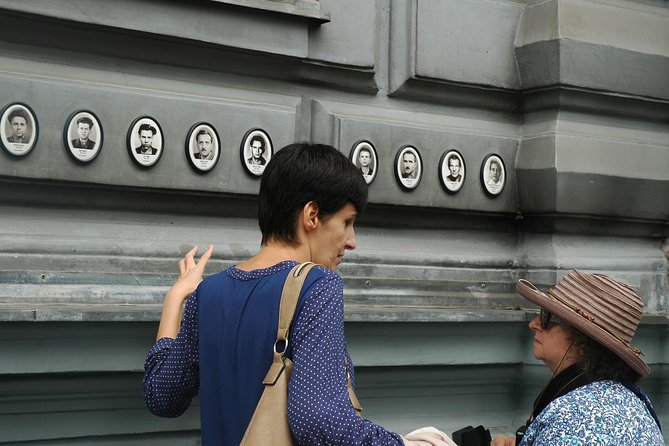
The metro takes you to a 1970s housing estate at the edge of the city center. The blocks may look drab and grey today, but the tour gives them a different context: for young Hungarian families, being awarded an apartment here could mean access to elevators and modern conveniences that older Budapest buildings lacked.
This is one of the route’s most useful stops because it shifts attention from governments and monuments to the practical conditions of home life. The housing blocks help explain why the period cannot be understood only through its restrictions. Modern conveniences mattered, even within a political system that tightly controlled major choices.
You should not expect an architectural showcase. The interest is in what the buildings meant to residents at the time, not in their appearance as picturesque sights. If you are curious about how policy touched ordinary routines, this stop offers a concrete setting for that discussion.
It also helps explain the tour’s wider theme of limited freedoms. The bargain was not simply a slogan: the tour considers how daily comfort and modest liberties could coexist with obedience on political matters. Your guide’s examples will shape how clearly that distinction comes through.
More walking tours in Budapest:
- Budapest: Buda Castle Walk with Saint Stephen’s Hall
★ 4.5 · 3,012 reviews - Big Bus Budapest Hop-On Hop-Off Bus and Walking Tour
★ 3.5 · 2,206 reviews - Budapest: Buda Castle District Walking Tour
★ 4.6 · 2,108 reviews - Budapest City Landmarks Walking Tour in 2 Hours
★ 5.0 · 2,048 reviews
Socialist Realist statues and a May Day boulevard
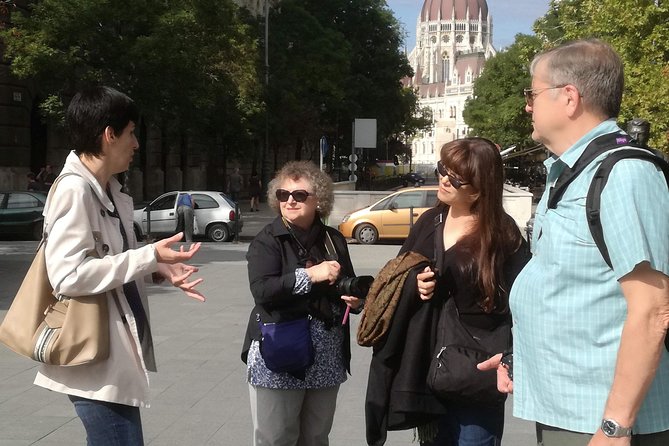
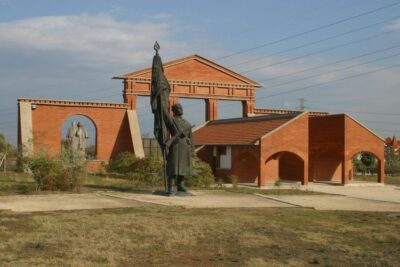
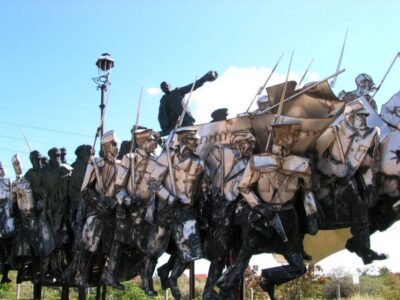
The former People’s Stadium, now Puskas Soccer Stadium, is another stop with a distinct visual character. It is one of the few places in town where you can see typical Socialist Realist statues of heroic workers, soldiers, and intellectuals, presented as figures pointing toward a bright future.
These statues are worth examining as political art, not just as old decoration. Their idealized workers and soldiers show the image the state wanted to project. A guide can help you read the poses and message, and compare those public ideals with the more complicated realities discussed at the housing estate and revolution sites.
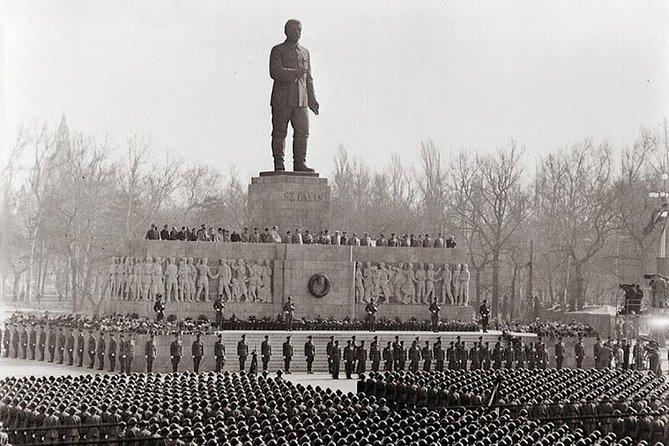
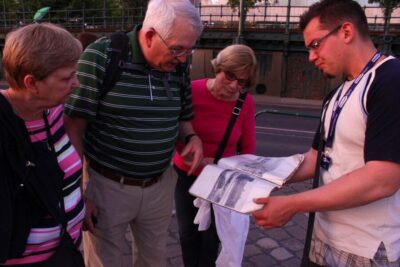
The route continues with a short ride on a trolley bus described as one of Stalin’s trolley buses, then goes to Dózsa György Street. This broad boulevard was used for May Day parades. Your guide uses an iPad and old photographs to show how the street looked during Stalin’s time beside its present appearance.
The photographs are a practical teaching tool. They can make changes in the city easier to grasp than a spoken description alone, especially if you have no prior familiarity with Budapest’s communist-era streets. Still, the tour’s value depends on how much context accompanies the images. If a particular building or parade scene catches your attention, ask what it meant at the time.
The House of Terror is an exterior stop with weight
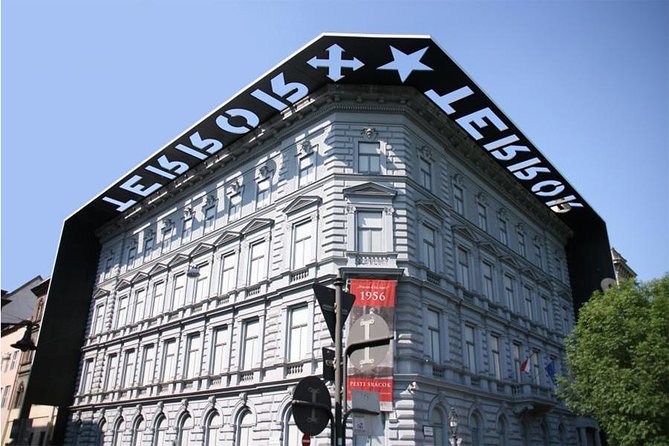
Around the corner from the boulevard is the House of Terror, a museum housed in the former headquarters of the secret services. It commemorates crimes committed under communism, especially during the Stalinist years. A slab of the Berlin Wall stands in front of the building.
The museum’s subject gives this part of the route a sharper tone than the housing estate or stadium. The building itself connects the history of state power to a specific address, while the wall fragment links Budapest’s story to the wider division of Europe during the Cold War.
The tour brings you to the building, but the information provided does not include a museum visit or entry ticket. Plan to treat this as an exterior stop and, if you want to see the exhibits, make separate plans rather than assuming the three-hour tour includes them.
What the $123 price gets you
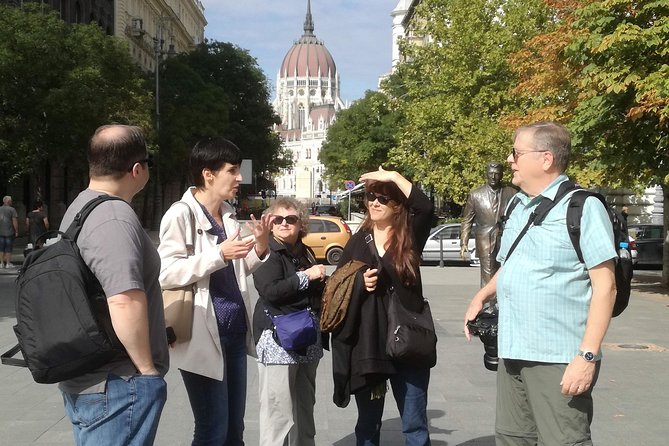
At $123 per person, this is not a low-cost city walk. You are paying for a three-hour guided route led by an English-speaking specialist, with stops spread across several parts of Budapest and a historical thread connecting them. The guide’s background may include work as a professor, doctoral student, historian, journalist, art critic, or published author.
That expertise is the main value. The sites are more meaningful when someone explains why they matter, and the old photographs and discussion of daily life add context you would not get simply by moving between monuments on your own. The tour also links political history to architecture and public space rather than staying inside a classroom-style account.
The price does not include tram or metro tickets. Since the route uses the metro and a trolley bus, set aside money for transport separately. The specific ticket costs are not provided, so check current fares before you go.
Small-group and private options are available, though the exact group size is not specified. If you value the chance to ask questions or tailor the conversation, a private or small-group format may be appealing. Check the available option and departure details before booking.
Who should take this tour?
I would recommend this route if you want an organized introduction to communist Budapest and prefer history tied to actual streets, housing, statues, and monuments. It is especially useful if you have little background on Hungary between the end of the Second World War and 1989, or if you want to understand how political change affected ordinary life.
It may be less satisfying if you already know the period well and expect a detailed account of the later communist years or the transition to democracy. One person with prior knowledge after 1968 felt the guide did not go far beyond the basics. That is a fair caution: the tour covers many stops in three hours, and the subject is broad.
You can improve the experience by telling the guide what you already know and what you most want to understand. The route has room for adaptation, though it is not guaranteed that every stop or discussion will change. Wear comfortable shoes for a walking tour, and remember that the metro and trolley-bus rides are part of the day rather than private transport.
The tour has free cancellation up to 24 hours in advance, and a reserve-now, pay-later option is available. Those terms give you some flexibility, but the real booking decision is about depth: if you want a guided overview with strong physical context, this is a good fit. If you want advanced political analysis, ask about the guide and group format before committing.
Should you book the Communist Budapest Walking Tour?
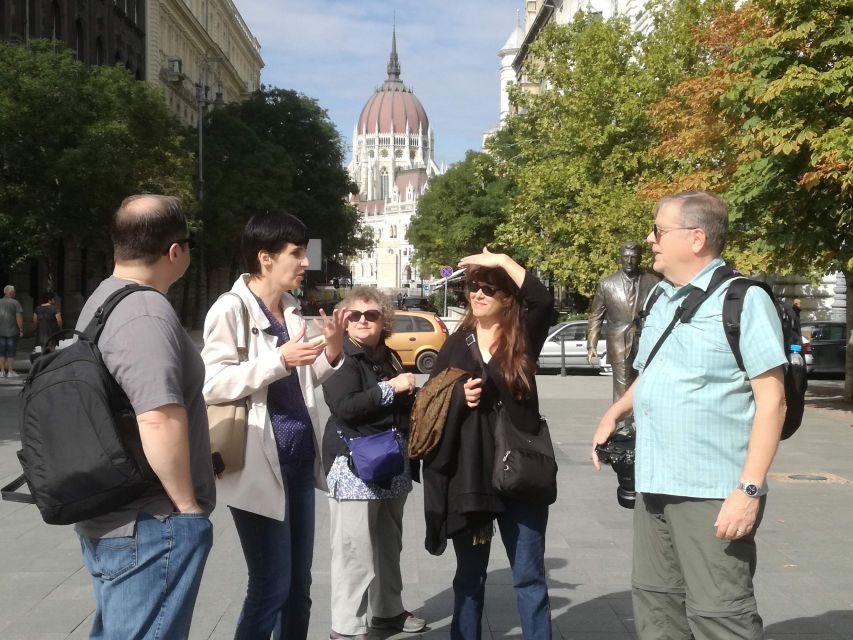
Book it if you want to connect the 1956 revolution, Cold War symbolism, everyday housing, and Socialist Realist art in one compact outing. The strongest reason to go is the historian-led interpretation, especially when the guide adapts to your interests and uses old photographs to put the city’s changes in view.
Think twice if you already have a firm grasp of Hungary’s communist period and want a more specialized discussion. At $123, you should expect more than a parade of landmarks, so make your interests clear at the start. For a first encounter with communist Budapest, the combination of political sites and ordinary places gives you a useful, grounded introduction.
FAQ
How long is the Communist Budapest Walking Tour?
The tour lasts three hours.
Where does the tour meet?
It meets at Bambi Eszpresszó, Frankel Leó út 2/4, Budapest, 1027 Hungary.
What language is the tour in?
The live tour guide speaks English.
Are public transport tickets included?
No. Tram and metro tickets are not included.
Which sites are included on the route?
Stops include Bem József Square, Kossuth Square, Freedom Square, a 1970s housing estate, the former People’s Stadium, Dózsa György Street, and the exterior of the House of Terror.
Does the tour go inside the House of Terror?
The tour description says you go around the corner to the House of Terror and notes the Berlin Wall slab outside. It does not specify museum entry.
Who leads the tour?
Guides may be professors, doctoral students, historians, journalists, art critics, or published authors. Andras is one guide named in a tour account, but the guide for a specific departure is not guaranteed.
Can I cancel or pay later?
Yes. You can cancel up to 24 hours in advance for a full refund, and a reserve-now, pay-later option is available.
Fresh additions in Budapest
- Best of Budapest Tour★ 5.0 · 7 reviews
- Best Historical Sights of Budapest Tour★ 5.0 · 7 reviews
- Be a movie star! Film Tour, Escape room, in Budapest and Etyek★ 5.0 · 3 reviews
- Shooting package 70★ 5.0 · 14 reviews
- Capital Budapest – Half Day Private Tour (4hr)★ 5.0 · 7 reviews
- BUSÓJÁRÁS Unesco Heritage Folklore Carnival in Mohács★ 5.0 · 4 reviews
- Budapest 4 Hour Tour with a Local: Private & Custom, See the City Unscripted★ 4.0 · 7 reviews
- Analog Photo Trip★ 5.0 · 5 reviews
Budapest Communist History Tours, compared.
Communist History Tour with House of Terror Option
Read our review →
3-Hour Walking Tour About Communism (Small Group)
Read our review →
Memento Park: Official Guided Tour with Entry Ticket
Read our review →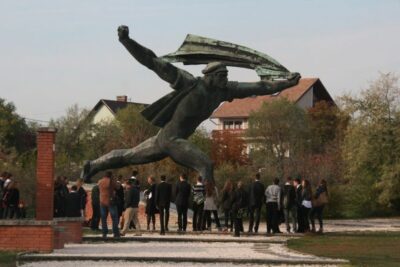
Browse the lists this tour appears in