
Reviewed · BUDAPEST JEWISH QUARTER TOURS
Past and Present of Budapest Jewish District Tour
Budapest’s Jewish District is more than a row of synagogues: it is a place where Jewish life, persecution and the neighborhood’s modern reinvention meet on the same streets. This walk links the Belle Époque, the Nazi occupation and today’s District VII, with stops at three synagogues and the last visible piece of the ghetto wall.
I like two things especially: the route puts history in its physical setting, and guides such as Eszter, Gary, Dora and Edith have been praised for clear explanations, thoughtful answers and an engaging manner. The walk also connects historical sites to present-day places like Gozsdu Passage and Szimpla Kert.
One consideration: you do not go inside any synagogue. This is an outdoor introduction, not an architectural visit, and the subject includes painful history. Expect to stop and listen as well as walk.
What to know before you go
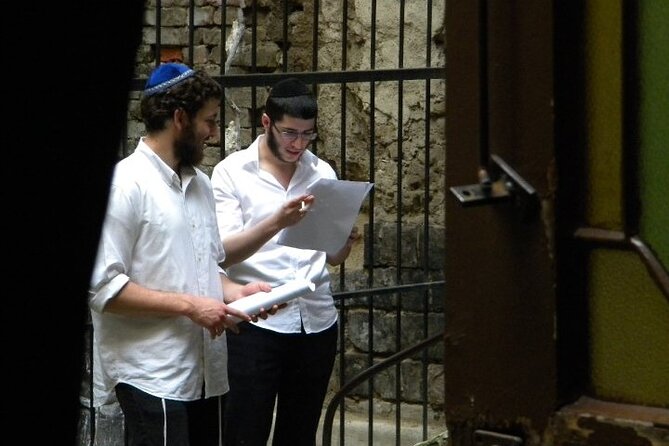
- Three synagogues, viewed from outside: The Great, Rumbach Street and Kazinczy Street synagogues anchor the route, but interior visits are not included.
- A route from past to present: Stories cover Jewish life from the Golden Age to its destruction, then turn to the neighborhood as it is now.
- Specific sites give history a location: See the Great Synagogue’s memorial courtyard and cemetery from outside, medieval city wall remains and a remnant of the ghetto wall.
- A guide-led walk with time for questions: The tour is offered in English and has a maximum group size of 25.
- A low upfront price, with donations expected: The listed price is $3.63 per person. The booking fee goes to administration, while guides rely on donations at the end.
- Plan for an outdoor experience: The walk lasts about 1 hour 45 minutes, begins at the Budapest Ferris Wheel in Erzsébet tér and ends at Szimpla Kert.
A walk through District VII’s Jewish past and present
This tour works best as an introduction to Budapest’s Jewish Quarter, rather than as a full visit to its religious buildings. Over roughly 1 hour 45 minutes, you move from Erzsébet tér through streets and courtyards in District VII, ending at the ruin bar Szimpla Kert.
The route follows a useful arc: Jewish life in Hungary during its Golden Age, restrictions and persecution, the catastrophe of the Holocaust, and the district’s present-day mix of culture, food and nightlife. That structure helps you understand the neighborhood as more than a collection of old façades.
The tone is serious, as it should be when the subject includes the destruction of Hungarian Jewish communities. But the walk also gives space to present-day Jewish life and to the district’s changing streets. Guides are not all the same, and no particular guide is guaranteed. Names praised for their clear, lively or considerate approach include Eszter, Gary, Dora, Edith, Esther, Edi, Judith, Christine, Andy, Jude and David.
More Jewish heritage tours in Budapest:
- Budapest Jewish Heritage Memorial Walking Tour & Synagogue Entry
★ 5.0 · 568 reviews - Budapest: Jewish Heritage Guided Tour with Synagogue Ticket
★ 4.8 · 533 reviews - Jewish Quarter of Budapest Walking Tour
★ 4.7 · 369 reviews
Starting at Erzsébet tér
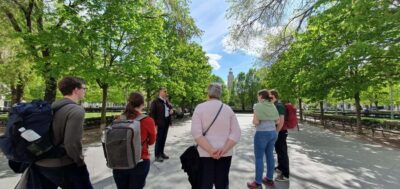
Meet your guide at the Budapest Ferris Wheel in Erzsébet tér, a central gathering point that is easy to identify. The opening stop lasts about 10 minutes. Your guide sketches the route and introduces the central theme: Jewish life in Hungary from the Belle Époque, also called the Golden Age, through its destruction.
This opening context matters. Without it, the synagogues can seem like isolated monuments. The tour instead asks you to see them as part of a community’s changing fortunes and the wider history of Budapest.
The meeting point is also practical if you are short on time. The walk does not require a long transfer out of the center, and it is near public transportation. Arrive ready to start on foot, and use this first stop to ask what the guide plans to cover.
Deák Ferenc Square and the story of rescue
At Deák Ferenc Square, the guide turns to two sharply different pieces of history. One is Gaudiopolis, a Latin name meaning City of Joy. The other is the Schutzpass, a protective document credited with saving thousands of Jewish lives.
The stop also points out remains of the medieval city wall. The guide explains how the wall marked a boundary that kept Jewish people from trading within the city limits. That detail gives the district’s history a tangible starting point: exclusion was not just an idea, but something reinforced by the organization of the city.
About 15 minutes are allotted here. This is a compact history lesson, so ask questions if you want to understand how the themes connect. The tour’s value comes partly from this kind of context, rather than from walking past buildings without knowing what they represent.
The Great Synagogue from the outside

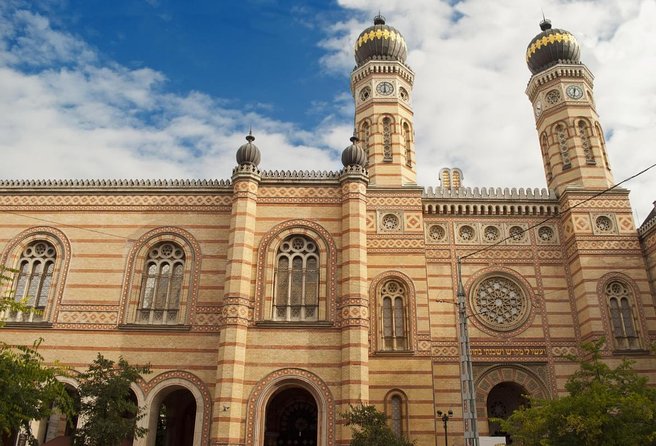
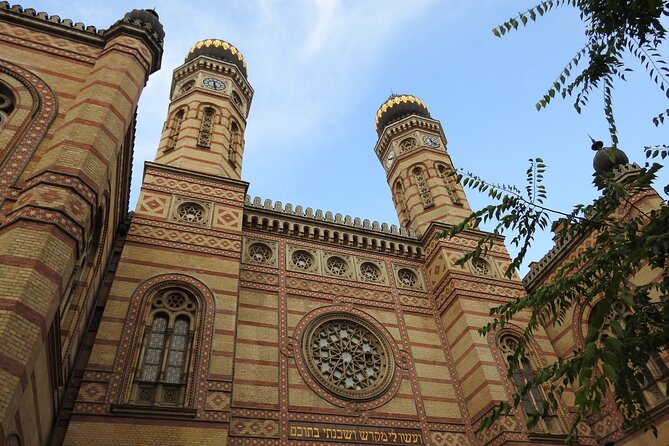
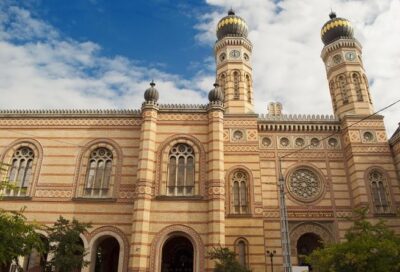
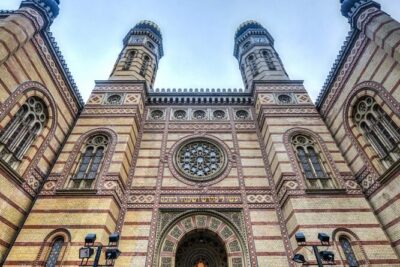
The Great, or Central, Synagogue is the route’s headline sight. It is identified as the largest synagogue in Europe, and the guide discusses the Neologue and Orthodox movements, as well as Zionism. The stop lasts around 20 minutes.
You do not enter the synagogue. Instead, you see the memorial courtyard and cemetery from outside while hearing about the building and its place in Jewish life. That distinction is important when you book: this is an exterior history stop, not a synagogue admission ticket or interior tour.
The outside visit keeps the walk within its short time frame and lets the guide connect the building to broader religious and political currents. But if seeing the interior is a priority, plan a separate visit. The walking tour gives you orientation and context, not the full architectural experience.
More Budapest tours in Budapest:
- Budapest: City Highlights Cruise with Welcome Drink
★ 4.6 · 35,610 reviews - Budapest: Unlimited Prosecco, Beer and Aperol Spritz Cruise
★ 4.8 · 25,310 reviews - Budapest: Széchenyi Spa Day Ticket with Optional Upgrades
★ 4.3 · 23,911 reviews - Budapest: Nighttime or Daytime Sightseeing Cruise
★ 4.2 · 21,062 reviews
Rumbach Street Synagogue and the district’s changing streets
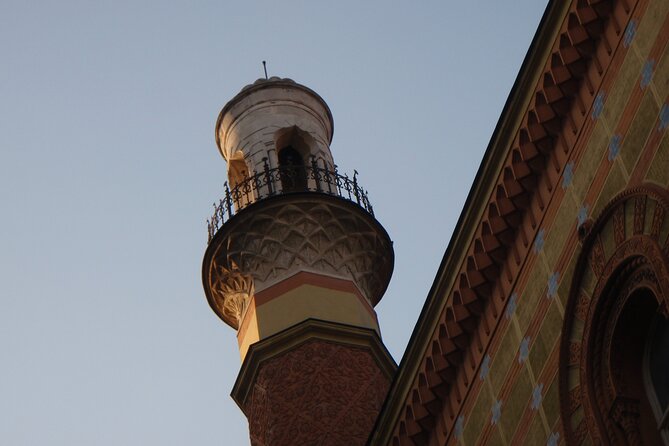
The next stop is Rumbach Street Synagogue, where the guide discusses its restoration and points out its murals. The route also takes in urban street art, a reminder that the district is not frozen in one historical period.
You will not go inside this synagogue either. The stop is about 15 minutes, enough for an exterior look and an explanation of the building’s place among the district’s religious sites. If you are especially interested in architectural detail, you may want more time here than the tour can offer.
Still, the contrast between a restored synagogue and nearby street art makes this part of the walk useful. The district’s present-day appearance is part of the story, not a distraction from it.
Gozsdu Passage and a remnant of the ghetto wall
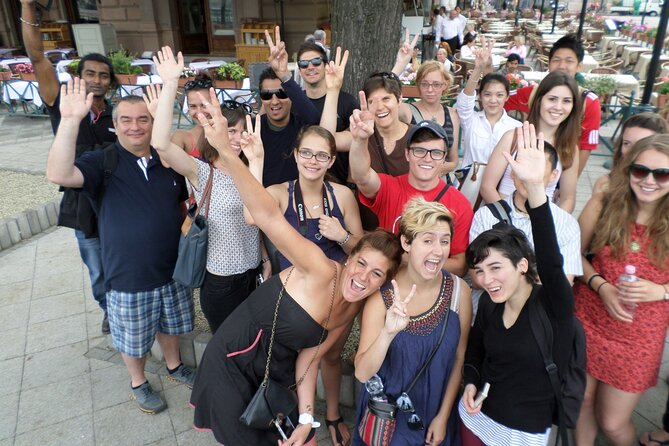
At Gozsdu Udvar, the route shifts toward the passage’s current role as a center for entertainment, food, culture and markets. The guide also explains its past and points out what is described as the last piece of the ghetto wall.
This is one of the most striking contrasts on the walk. A passage used today for social life sits alongside a physical reminder of confinement and persecution. The history can feel especially immediate here because the past and present occupy the same small stretch of the district.
The stop lasts about 15 minutes. Don’t expect a long visit to the shops or restaurants; the focus remains on interpretation and orientation. If you want to return to Gozsdu Passage later for a meal or a closer look, the tour gives you a useful starting point.
Kazinczy Street Synagogue and living Jewish practice
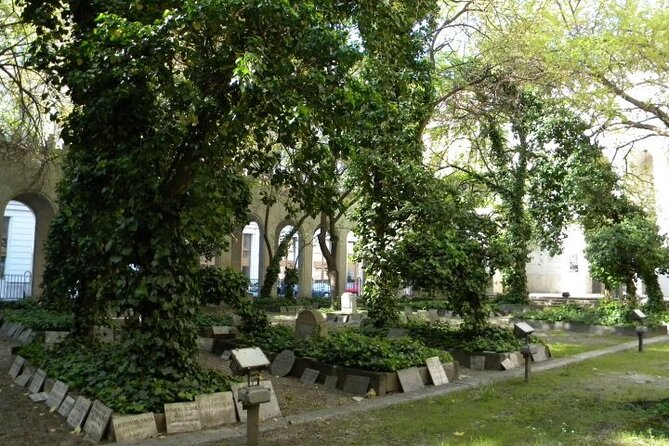
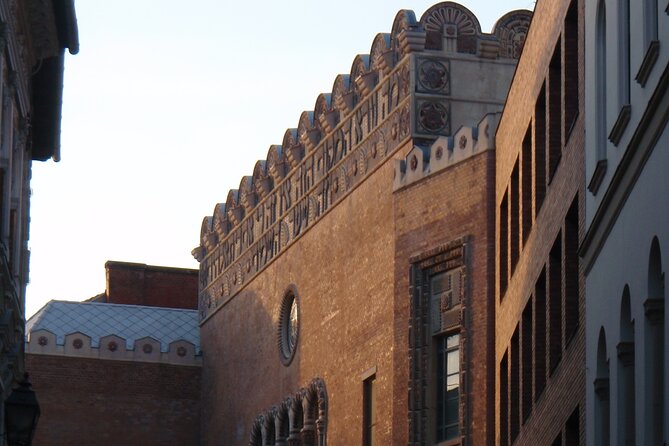
At Kazinczy Street Synagogue, the guide introduces the Orthodox community associated with the building. The tour information describes a community of around 50 to 60 families and includes discussion of kosher food and the Jewish ritual bath.
Again, this is an exterior stop, not an interior visit. The 15 minutes here offer a glimpse of religious life and practice alongside the earlier discussion of Jewish history. That balance helps the walk avoid treating Jewish culture only as something belonging to the past.
The conversation about kosher food and ritual bathing may be particularly useful if you want to understand how daily practice connects to community life. This is a short introduction, though, rather than a detailed study of religious observance.
Ending at Szimpla Kert
The final stop is Szimpla Kert, one of Budapest’s ruin bars. Before wrapping up, the guide points out more murals and street art, mentions pop-up exhibitions and gives a final orientation to the area.
This ending reinforces the tour’s past-and-present theme. The route does not close at a museum or a memorial, but in a place associated with the district’s contemporary culture. Szimpla Kert has no entry fee, so you can stay afterward if you want to look around.
The endpoint is also practical. You finish in the Jewish District, with the guide’s final suggestions fresh in mind and the option to continue exploring on your own.
What the price does, and does not, include
The listed price is $3.63 per person, but it is best understood as a small booking charge rather than the guide’s pay. The booking fee supports administration and does not contribute to the guide’s earnings. Guides depend on donations at the end, and the amount is your choice.
That arrangement keeps the upfront cost low, but it is worth understanding before you join. Bring a way to donate if you value the experience, and decide for yourself what feels appropriate. Group discounts are available, and the ticket is mobile.
The low price is good value if what you want is a guided overview of the district and its history. It is less useful if you expect synagogue admission, an extended architectural tour or a highly personal account of every street. The walk covers a lot in less than two hours, so it necessarily favors breadth over depth.
Pace, group size and guide style
Groups are capped at 25 people, which is large enough to include a range of questions but small enough for a guide to address the group in the street. The walk is described as suitable for most people. One guide, Edi, was specifically praised for a clear voice and a pace comfortable for seniors, while other comments emphasize that the tour involves standing and listening.
Comfortable walking shoes are a sensible choice. The route is outdoors and includes several stops where you remain standing as the guide speaks. If you have difficulty hearing in a group, try to position yourself close to the guide, especially on busy streets.
The guides’ manner can shape the experience. Many are praised for being friendly, organized, engaging and ready to answer questions. Gary, Eszter and Dora are among the names singled out for passion or clear explanations. One concern raised about a particular tour was a fast pace that left people behind, so it is reasonable to tell your guide at the start if you need a slower walk.
The subject also calls for a guide who can handle difficult material with care. The best fit for you will be someone who puts facts in context and makes room for questions, not someone who rushes through dates. Use the opening stop to gauge the pace and speak up if the group is moving too quickly.
Who will get the most from this walk
I’d choose this tour if you want a structured first look at Budapest’s Jewish history and the streets where it unfolded. It suits visitors who like walking tours, want a local guide to connect the landmarks, or are deciding which sites to explore in more depth afterward.
It is also a good choice if you have limited time. In under two hours, you see three major synagogue exteriors, the memorial courtyard and cemetery outside the Great Synagogue, Gozsdu Passage, street art and the ghetto wall remnant. The route can prompt useful next steps, such as returning to a synagogue or seeking out other Jewish heritage sites.
Consider a different plan if entering a synagogue is essential to you, or if you want a personal family history rather than a broad historical overview. One person felt the account was too general and wanted more local stories; that is a fair expectation to manage. This walk covers the community’s wider history and key places, not a private, deeply specialized tour.
Should you book the Budapest Jewish District Tour?
Book it if you want an affordable, guided introduction that links Budapest’s Jewish past to the district you see today. Its strongest features are the clear route, the three synagogue stops and the guide’s ability to answer questions. The subject is weighty, but the walk gives it a place and a shape.
Skip it if you are expecting to go inside the synagogues or spend a long time on architecture. For most people, the best approach is to treat this as an orientation walk, then return independently to the sites that interest you most. The experience is booked, on average, about 10 days in advance, so plan ahead if your schedule is tight. Free cancellation is available up to 24 hours before the start.
FAQ
How long is the tour?
The walk lasts approximately 1 hour 45 minutes.
Where does the tour start?
Meet at the Budapest Ferris Wheel in Erzsébet tér, Budapest, 1051.
Where does the tour end?
The tour ends at Szimpla Kert, Kazinczy u. 14, Budapest, 1075.
Does the tour enter the synagogues?
No. The Great, Rumbach Street and Kazinczy Street synagogues are visited from outside. At the Great Synagogue, you see the memorial courtyard and cemetery from outside.
What language is the tour offered in?
The tour is offered in English.
How many people can join the group?
The maximum group size is 25 people.
What is included in the price?
The listed price is $3.63 per person and includes the booking fee. The fee goes toward administration and does not contribute to the guide’s earnings.
Are tips included?
No. Guides depend on donations at the end of the tour, and the amount is your choice.
Can I cancel for a refund?
Yes. You can cancel at least 24 hours before the experience starts for a full refund. Cancellations made less than 24 hours beforehand are not refunded.
Fresh additions in Budapest
- Best of Budapest Tour★ 5.0 · 7 reviews
- Be a movie star! Film Tour, Escape room, in Budapest and Etyek★ 5.0 · 3 reviews
- Shooting package 70★ 5.0 · 14 reviews
- Best Historical Sights of Budapest Tour★ 5.0 · 7 reviews
- Capital Budapest – Half Day Private Tour (4hr)★ 5.0 · 7 reviews
- BUSÓJÁRÁS Unesco Heritage Folklore Carnival in Mohács★ 5.0 · 4 reviews
- Budapest 4 Hour Tour with a Local: Private & Custom, See the City Unscripted★ 4.0 · 7 reviews
- Analog Photo Trip★ 5.0 · 5 reviews
Budapest Jewish Quarter Tours, compared.
Budapest Jewish Heritage Memorial Walking Tour & Synagogue Entry
Read our review →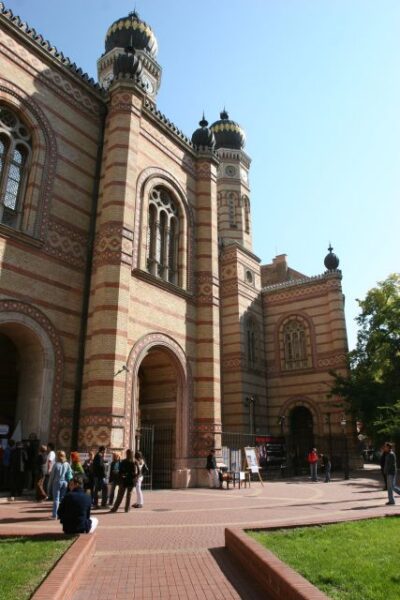
Jewish Heritage Guided Tour with Synagogue Ticket
Read our review →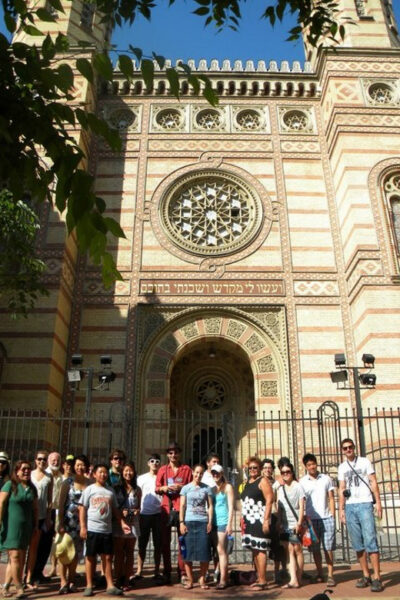
Budapest Dohany Synagogue & Hungarian Jewish Museum & free extras
Read our review →
Jewish History Guided Walking Tour with Historian
Read our review →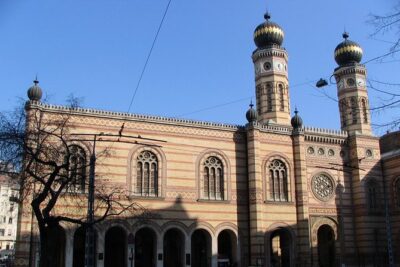
Budapest Dohany, Heroes’, Rumbach synagogues & Jewish Ghetto Tour
Read our review →Browse the lists this tour appears in