
Reviewed · BUDAPEST JEWISH QUARTER TOURS
Budapest Dohany, Heroes’, Rumbach synagogues & Jewish Ghetto Tour
The Great Synagogue’s striped brickwork, the delicate Moorish design of Rumbach Synagogue and the quiet weight of the former ghetto make this a walk with more to it than pretty buildings. You follow the story of Hungarian Jewish life from its religious and architectural variety to the Holocaust and the people who risked their lives to save others.
I like two things especially: you see the interiors of major synagogues, not just their façades, and guides such as Milan and David connect the history to personal and family stories. One point to watch: the tour is listed as including Heroes’ Square in its name, but the described route does not go there. The Kazinczy Synagogue is a stop, but its entry ticket is not included.
Key points before you book
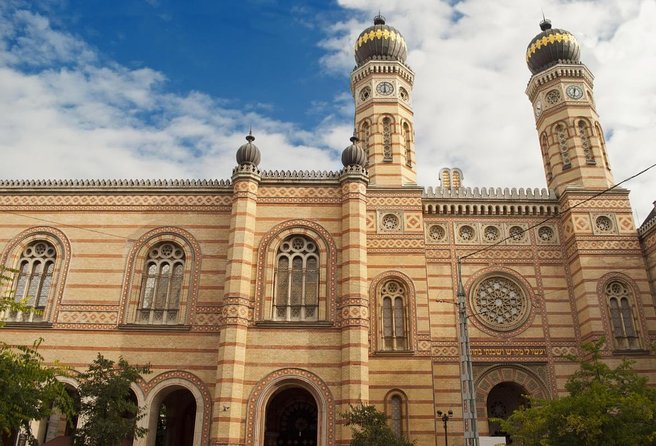
- The Great Synagogue is the main opening visit: Entry is included, with time to hear about Neologue Jewry and the synagogue’s architecture.
- Rumbach Synagogue gets a generous visit: Its restored Moorish interior is one of the tour’s key sights.
- The Holocaust story is central: The route includes the Tree of Life Memorial, the ghetto cemetery and the Carl Lutz Memorial.
- You walk through a living neighborhood: Kiraly Street, Gozsdu Courtyard, Dob Street and Kazinczy Street add context beyond the monuments.
- Kazinczy Synagogue admission costs extra: The synagogue is part of the route, but its ticket is not included.
- Heroes’ Square is not on the described route: If it is a priority, plan a separate visit.
What this Jewish Quarter walk helps you understand
Budapest’s Jewish Quarter is not simply a collection of historic buildings. It is a place where religious communities, commerce, culture and trauma meet on the same streets. A good guide helps you read those layers, and that is the real value of this tour.
You hear about the Hungarian Jewish community’s different traditions, including Neologue and Orthodox Judaism, while seeing how those distinctions appear in synagogue design and community life. That context makes the architecture more than a sequence of photo stops. It helps explain why the Great Synagogue, Rumbach and Kazinczy look and feel so different.
The Holocaust is treated as a major part of the walk, not a brief aside. You visit memorials and a cemetery on the former ghetto grounds, while hearing about people who helped save Hungarian Jews. Guides named in past tours include Milan, David and Miky, also spelled Micky in some accounts. Your guide may differ, but personal stories and thoughtful answers are a recurring strength of the experience.
The walk lasts about 2 hours and 20 minutes and is offered in English. The group can have up to 35 people, so this is not a private visit. It is a useful format if you want a clear introduction and the chance to ask questions, though people who prefer quiet, self-paced museum time may find the guide’s commentary takes up much of the schedule.
More Jewish heritage tours in Budapest:
- Budapest Jewish Heritage Memorial Walking Tour & Synagogue Entry
★ 5.0 · 568 reviews - Budapest: Jewish Heritage Guided Tour with Synagogue Ticket
★ 4.8 · 533 reviews - Jewish Quarter of Budapest Walking Tour
★ 4.7 · 369 reviews
Starting at the Great Synagogue on Dohány Street
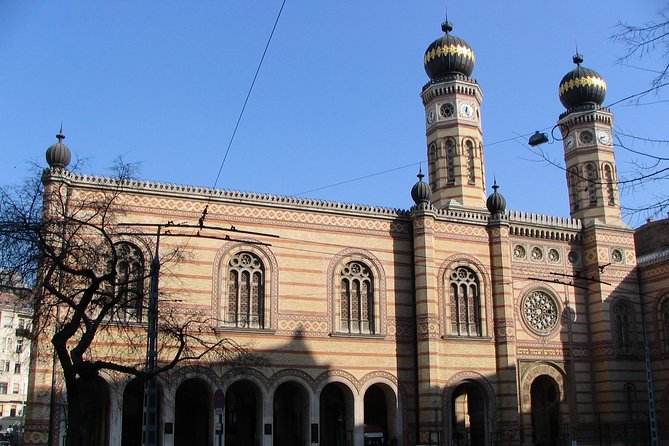
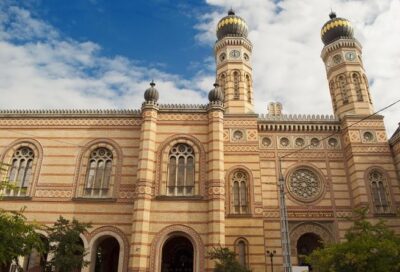
The tour begins at the Great, or Central, Synagogue on Dohány Street. This is Europe’s largest Jewish temple, and the first stop sets the scale and tone for the rest of the walk. You have about 30 minutes inside, with admission included.
The building dates to the 1850s and is a striking blend of styles. Look closely at the patterned brick exterior and the architectural details that make the synagogue unlike the more familiar European designs you may have seen elsewhere. Inside, your guide explains the history of Hungarian Jewry and the Neologue community, a branch of Hungarian Judaism with its own local character.
The organ is another detail to notice. Franz Liszt played it, a small but vivid link between the synagogue and Budapest’s wider musical life. The guide’s explanation of religious and cultural differences can be especially useful if you have little background in Hungarian Jewish history. Even if you know the broad outline, the local distinctions give the visit depth.
One practical tip: the Great Synagogue complex includes a museum in its basement. The tour’s scheduled visit is limited, and the museum is not specifically listed as part of the guided program. If it matters to you, ask your guide whether you can see it during or after the tour, and allow extra time rather than assuming it is covered.
Remembering the Holocaust at the Tree of Life
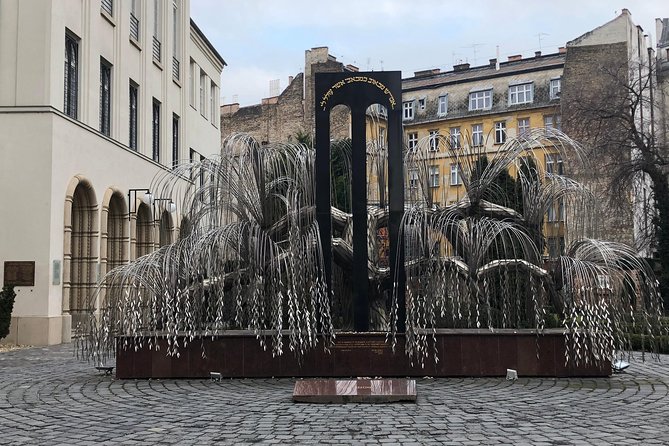
Next, you visit the Raoul Wallenberg Holocaust Memorial Park, with about 20 minutes for the memorials and cemetery. The Emmanuel Tree of Life is a central feature: its metal leaves carry the names of people killed in the Holocaust. It offers a personal focus within a site that commemorates mass loss.
The Holocaust cemetery lies on the grounds of the former Budapest ghetto and is the resting place of more than 2,000 victims. This is a sobering stop, and the guide’s historical framing matters. You learn about the Hungarian Holocaust and the Righteous Gentiles who risked their own lives to save tens of thousands of Hungarian Jews.
Raoul Wallenberg is among the people whose actions are remembered here. The tour later includes the Carl Lutz Memorial, extending the discussion of those who helped protect Jewish people during the Holocaust. The subject is painful, but the walk gives it space and context rather than treating the memorials as quick photo stops.
Inside Rumbach Street Synagogue
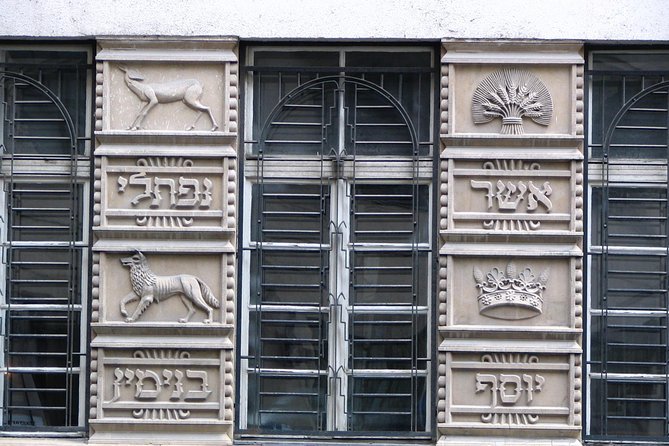
Rumbach Street Synagogue is a highlight for both architecture and atmosphere. The Viennese architect Otto Wagner designed it in 1872, and its Moorish style gives the building a different character from the Great Synagogue. After years of restoration, it has reopened to visitors.
You have about 45 minutes here, the longest single stop on the route. That time allows your guide to discuss the synagogue’s history and design without rushing straight back outdoors. Its interior is a particular pleasure for anyone interested in how architecture expresses a community’s identity and changing fortunes.
The synagogue’s restored state also makes this visit feel distinct from a walk past a landmark. You can take in the decorative details and consider the building as a working part of the neighborhood’s Jewish story. If you are choosing this tour for synagogue interiors, Rumbach helps justify the price.
The program ends at Rumbach Street Synagogue, at Rumbach Sebestyén Street 13. The route also describes a stop at Kazinczy Street Synagogue, so the precise order or timing may vary. Keep that in mind if you have a tight schedule afterward.
More Budapest tours in Budapest:
- Budapest: City Highlights Cruise with Welcome Drink
★ 4.6 · 35,610 reviews - Budapest: Unlimited Prosecco, Beer and Aperol Spritz Cruise
★ 4.8 · 25,310 reviews - Budapest: Széchenyi Spa Day Ticket with Optional Upgrades
★ 4.3 · 23,911 reviews - Budapest: Nighttime or Daytime Sightseeing Cruise
★ 4.2 · 21,062 reviews
Kiraly Street and Gozsdu Courtyard
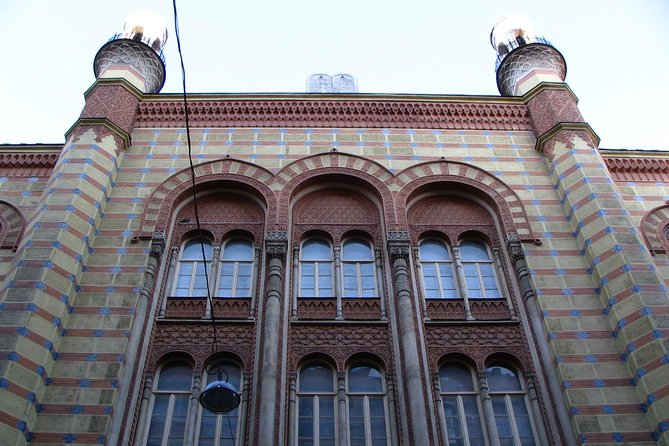
Between the synagogues, the tour walks along Kiraly Street, once a commercial center and an important part of Jewish life in Pest. Today, shops and cultural venues line the street. Your guide helps connect the present-day activity with the neighborhood’s past, when Jewish commerce and community life shaped this part of the city.
Gozsdu Courtyard adds another layer. The passage once held food and salami shops, including kosher businesses, as well as apartments. Today it is known for cultural activity, independent products, food and drink. The stop lasts about 10 minutes, enough to understand the change in use but not to settle in for a meal or browse at leisure.
The route also points out the Spinoza Theater, restaurant and cultural venue, named for the 17th-century Jewish Dutch philosopher of Portuguese Sephardi origin. This small stop ties the district to a wider story of Jewish thought and culture. You see the venue from the street rather than attending a performance.
There is also a mention of a well-known place for kosher flodni, a traditional Hungarian Jewish cake. That does not mean the group has a dedicated tasting break. The schedule is fairly full, so if sampling flodni is important, plan to return on your own after the tour rather than counting on time to buy it during the walk.
Dob Street, Kazinczy Street and the Orthodox community
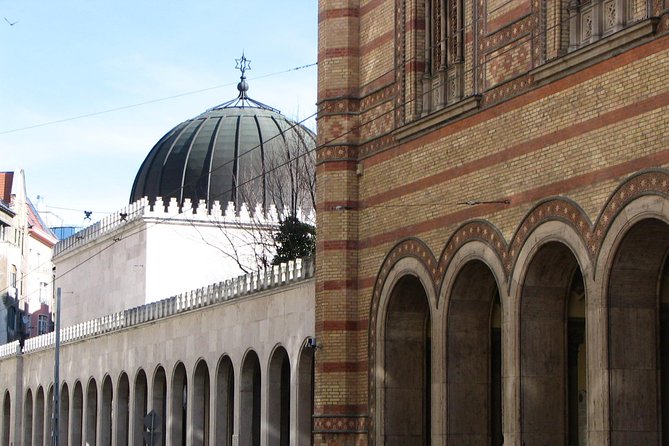
Dob Street runs parallel to Kiraly Street and once cut through the center of the Budapest ghetto. Today, it is again part of the district’s active Jewish life. Your guide discusses the street’s past and the revival of Hungarian Jewish orthodoxy, a shift that helps you see the neighborhood as a present-day community rather than a memorial zone alone.
Kazinczy Street is often called Budapest’s cultural street. It is also home to the Hungarian Orthodox Jewish Center, with a synagogue, mikveh, kosher restaurants and cafés, schools, a butcher and food shops. The area makes clear that religious life is not confined to historic landmarks.
The Kazinczy Street Synagogue is an early 20th-century example of Budapest’s Secession style, the local form of Art Nouveau. It serves the traditional Orthodox community, and its design adds a useful contrast to the Great Synagogue and Rumbach.
Here is the important ticket detail: admission to Kazinczy is not included. The tour includes entry to the Great Synagogue and Rumbach, but the Kazinczy ticket is marked separately. Do not assume that seeing the synagogue on the route means you will enter it. If entering all three is essential, check what access is planned for your date.
Guides, pace and group size
The guide can make or break a history walk, and this is where the experience earns much of its value. Guides who have led it include Milan, David and Miky. Their approach has been described through clear explanations of Jewish traditions, synagogue architecture and the geography of the neighborhood, with personal or family stories that bring the subject closer to home.
Milan, in particular, has been noted for adapting to different levels of background knowledge and answering questions in detail. David has also been singled out for mixing historical information with personal stories and humor. These names are useful to know, but they are not a promise that a particular guide will lead your departure.
The tour is advertised for a maximum of 35 people. That is a sizeable group for synagogue interiors, so stay close enough to hear and be ready to move when the guide does. The walk itself is manageable for most people, and one person who had recently undergone hip surgery found the walking workable. Still, the route is on foot, and the schedule is compact.
Expect more explanation than free time. One person may find the tour talk-heavy, especially if they prefer to explore independently. If you enjoy asking questions and want a guide to connect the sites into a clear story, that same pace is an advantage.
Is $63.52 good value?
At $63.52 per person, this is not a bare-bones neighborhood stroll. The price includes fees and entry to the Great Synagogue and Rumbach Synagogue, two major interiors that would be the main reason to book this particular guided route. You also get a guide to explain the distinctions among Hungarian Jewish communities and the meaning of the memorial sites.
Value depends on how you like to travel. If you only want to wander the streets, look at façades and stop for food, you can cover much of the neighborhood on your own for less. If you want the historical context, the guided explanations and access to the two included synagogue interiors, the fee is easier to justify.
A few limits matter. The Kazinczy Synagogue ticket is extra, and the tour does not promise time for a flodni purchase. The Great Synagogue basement museum is also worth asking about rather than assuming it is part of the guided visit. And despite the tour’s name, Heroes’ Square is not on the described itinerary.
The tour is recommended by 96% of participants and has a 4.8 rating from 200 reviews. Those figures suggest a strong track record, but they do not remove the practical caveats: synagogue access can change, the group may be large, and the walk is centered on Jewish history rather than general Budapest sightseeing.
Dress, timing and a few useful details
Wear clothing that covers your shoulders and reaches your knees when entering the synagogues. Head coverings for men are available at entry, and knee-covering clothing can be purchased on site if needed. Regular clothing is fine, but dressing appropriately from the start saves fuss and keeps the focus on the visit.
Synagogues may close temporarily without notice. If one closure affects the program, an alternative visiting time is offered, but refunds are not offered in that case because the tour is sold as a package. If all the synagogues close unexpectedly, you are offered another time or date, or a full refund.
The meeting point is Dohány Street 2-4, and the stated ending point is Rumbach Sebestyén Street 13. The activity is near public transportation, service animals are allowed, and most people can participate. You receive confirmation at booking. Free cancellation is available up to 24 hours before the start; poor weather cancellations result in an alternative date or a full refund.
Should you book this tour?
Book it if you want a guided introduction to Budapest’s Jewish history, value time inside the Great and Rumbach synagogues, and are ready for a serious discussion of the Holocaust alongside architecture and present-day community life. The strongest reason to go is the guide’s ability to connect those subjects, especially through local and family stories.
Skip it if you want a mostly self-guided walk, a relaxed café break, or a visit to Heroes’ Square. This is a focused history tour, not a broad city highlights circuit. If you book, dress for synagogue entry, ask about the basement museum and Kazinczy access, and leave room afterward for a slower return to the neighborhood’s food and shops.
FAQ
How long is the tour?
It lasts approximately 2 hours and 20 minutes.
Is the tour offered in English?
Yes. The tour is offered in English.
Which synagogue admissions are included?
Admission to the Great Synagogue and Rumbach Street Synagogue is included. Kazinczy Street Synagogue is listed as a stop, but its admission is not included.
Does the tour visit Heroes’ Square?
Heroes’ Square is not included in the described route, despite appearing in the tour’s name.
What should I wear to enter the synagogues?
Shoulders must be covered and clothing must reach the knee. Head coverings for men are available at entry, and knee-covering clothing can be purchased on site.
Where does the tour start and end?
It starts at Budapest, Dohány Street 2-4, and the stated end point is Rumbach Street Synagogue, Rumbach Sebestyén Street 13.
Can I cancel the tour for a refund?
You can cancel for a full refund up to 24 hours before the start time. If the tour is canceled because of poor weather, you are offered a different date or a full refund.
Fresh additions in Budapest
- Best of Budapest Tour★ 5.0 · 7 reviews
- Be a movie star! Film Tour, Escape room, in Budapest and Etyek★ 5.0 · 3 reviews
- Shooting package 70★ 5.0 · 14 reviews
- Best Historical Sights of Budapest Tour★ 5.0 · 7 reviews
- Capital Budapest – Half Day Private Tour (4hr)★ 5.0 · 7 reviews
- BUSÓJÁRÁS Unesco Heritage Folklore Carnival in Mohács★ 5.0 · 4 reviews
- Budapest 4 Hour Tour with a Local: Private & Custom, See the City Unscripted★ 4.0 · 7 reviews
- Analog Photo Trip★ 5.0 · 5 reviews
Budapest Jewish Quarter Tours, compared.
Budapest Jewish Heritage Memorial Walking Tour & Synagogue Entry
Read our review →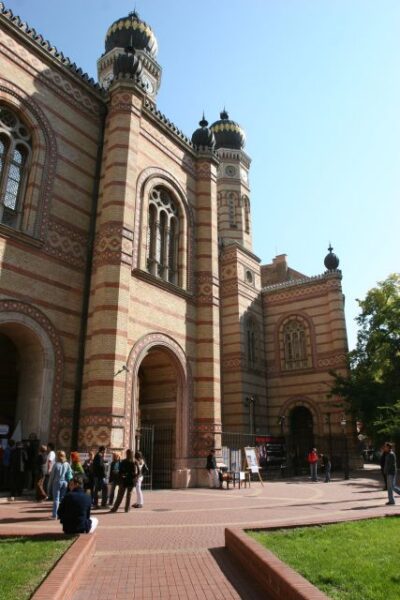
Jewish Heritage Guided Tour with Synagogue Ticket
Read our review →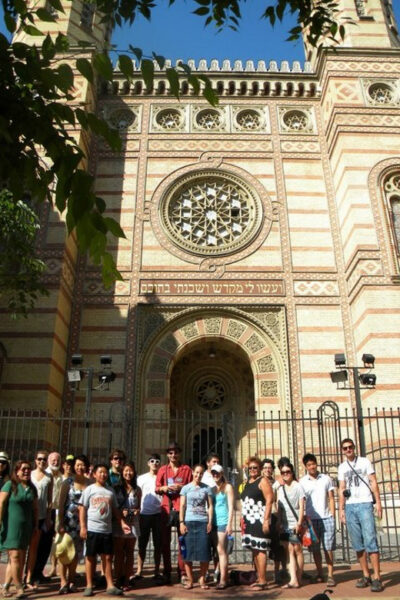
Past and Present of Budapest Jewish District Tour
Read our review →
Budapest Dohany Synagogue & Hungarian Jewish Museum & free extras
Read our review →
Jewish History Guided Walking Tour with Historian
Read our review →Browse the lists this tour appears in